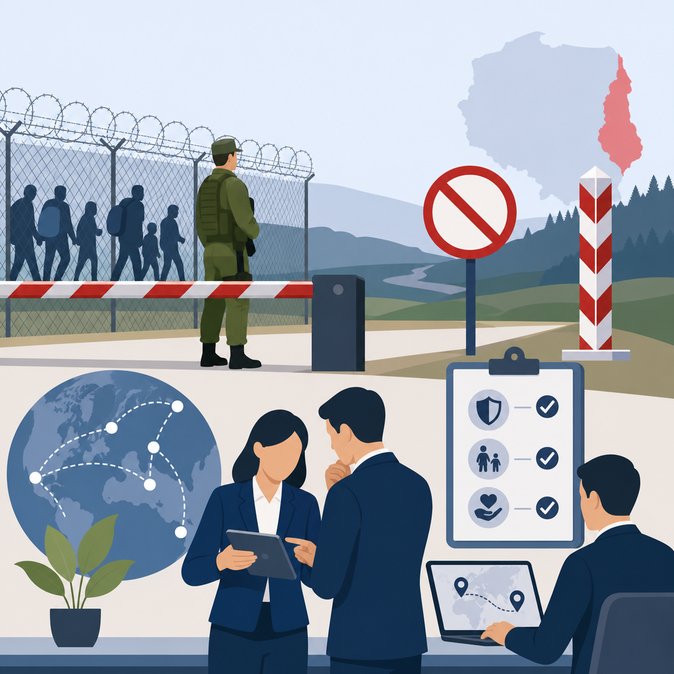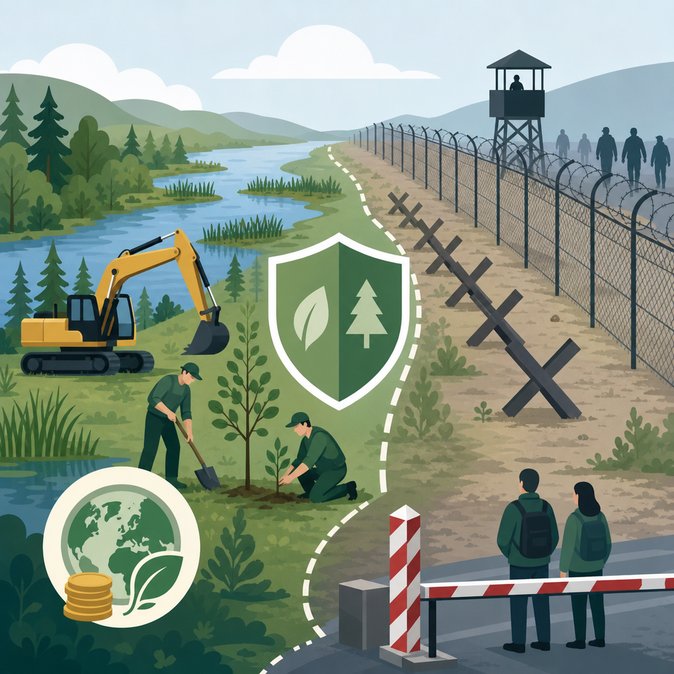
At a joint press conference on 25 May, the Ministries of Climate & Environment and Defence presented the nature-based component of Poland’s ‘Tarcza Wschód’ (Eastern Shield) programme, a multi-billion-euro project designed to harden the country’s 700-kilometre eastern border while meeting EU climate goals. The initiative will channel PLN 450 million (about €100 million) in EU funds this month alone toward wetland restoration, forest management changes and other measures intended to make cross-border movement of hostile forces—and, by extension, irregular migrants—more difficult.
![‘Eastern Shield’: Warsaw unveils €450 million eco-defence plan to reinforce 700 km frontier]()
For travellers and businesses that may face new documentation checks as border protocols evolve, VisaHQ can help simplify visa and permit applications. The service’s Poland portal (https://www.visahq.com/poland/) offers real-time guidance on Schengen visas, work permits and other consular requirements, ensuring staff, contractors and visitors can adjust quickly to regulatory changes tied to the Eastern Shield programme.
Forests within 50 km of the frontier will see clear-cuts restricted, deadwood deliberately left in place and drainage halted to create natural obstacles. In the five-kilometre strip immediately adjacent to the border, full logging bans will apply. Officials said the strategy complements the Ministry of Defence’s €10 billion physical fortifications programme announced earlier this year—together forming what Vice-Defence Minister Cezary Tomczyk called “a green wall of deterrence.” Regional parks, municipal governments and NGOs can apply from 29 May for project grants under the EU’s FEnIKS fund; proposals that explicitly integrate defence utility will receive priority. Companies involved in engineering, forestry, environmental-consulting and logistics services are therefore eyeing fresh contract opportunities, though stakeholders also highlight possible permitting delays for existing cross-border infrastructure projects if conservation rules tighten. From a mobility perspective, tighter ecosystem protections and new exclusion zones could affect planned road-widening, railway upgrades and pipeline corridors that straddle the border with Belarus, Ukraine and the Baltic states. Employers relying on shuttle services for commuters in frontier towns should watch for seasonal access restrictions while renovation works unfold. The government emphasises that the nature-based measures comply with EU environmental directives, positioning Poland as a pilot case for “dual-use” green-defence projects. Brussels officials, according to Climate Minister Paulina Hennig-Kloska, have already expressed interest in replicating the concept along other external EU borders.
For travellers and businesses that may face new documentation checks as border protocols evolve, VisaHQ can help simplify visa and permit applications. The service’s Poland portal (https://www.visahq.com/poland/) offers real-time guidance on Schengen visas, work permits and other consular requirements, ensuring staff, contractors and visitors can adjust quickly to regulatory changes tied to the Eastern Shield programme.
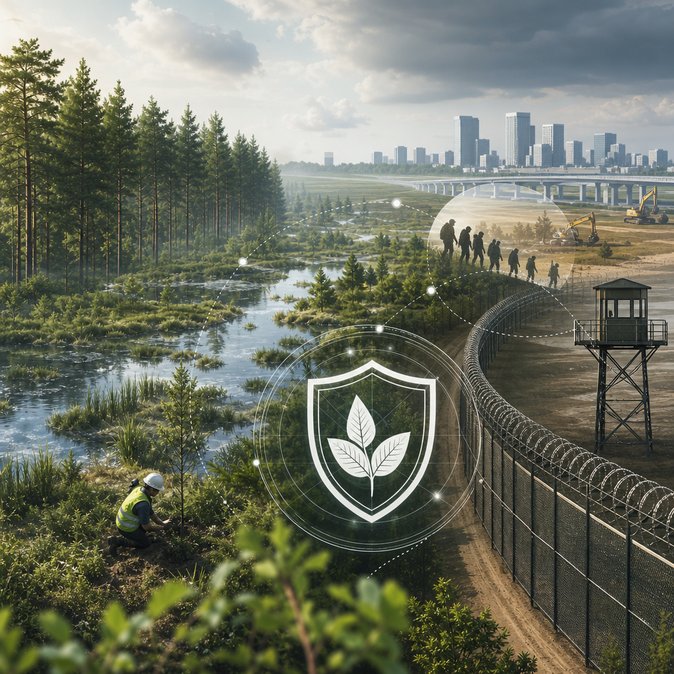
Forests within 50 km of the frontier will see clear-cuts restricted, deadwood deliberately left in place and drainage halted to create natural obstacles. In the five-kilometre strip immediately adjacent to the border, full logging bans will apply. Officials said the strategy complements the Ministry of Defence’s €10 billion physical fortifications programme announced earlier this year—together forming what Vice-Defence Minister Cezary Tomczyk called “a green wall of deterrence.” Regional parks, municipal governments and NGOs can apply from 29 May for project grants under the EU’s FEnIKS fund; proposals that explicitly integrate defence utility will receive priority. Companies involved in engineering, forestry, environmental-consulting and logistics services are therefore eyeing fresh contract opportunities, though stakeholders also highlight possible permitting delays for existing cross-border infrastructure projects if conservation rules tighten. From a mobility perspective, tighter ecosystem protections and new exclusion zones could affect planned road-widening, railway upgrades and pipeline corridors that straddle the border with Belarus, Ukraine and the Baltic states. Employers relying on shuttle services for commuters in frontier towns should watch for seasonal access restrictions while renovation works unfold. The government emphasises that the nature-based measures comply with EU environmental directives, positioning Poland as a pilot case for “dual-use” green-defence projects. Brussels officials, according to Climate Minister Paulina Hennig-Kloska, have already expressed interest in replicating the concept along other external EU borders.