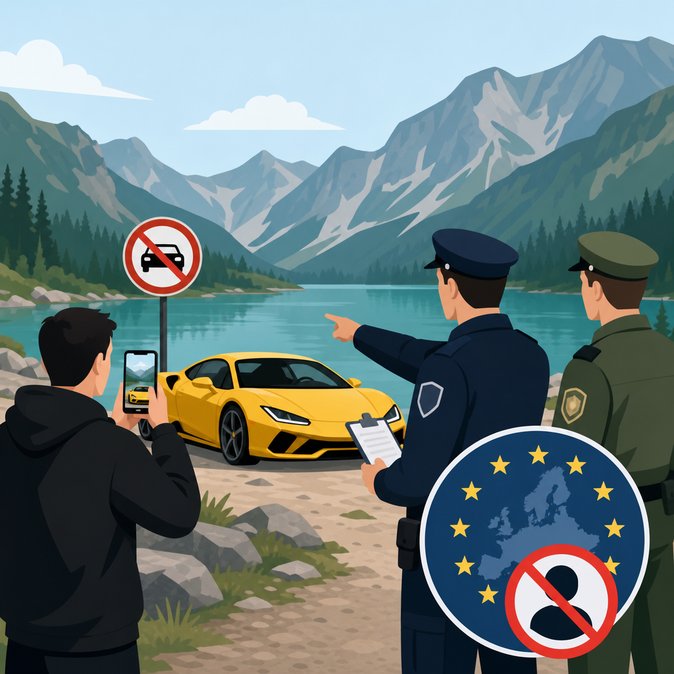
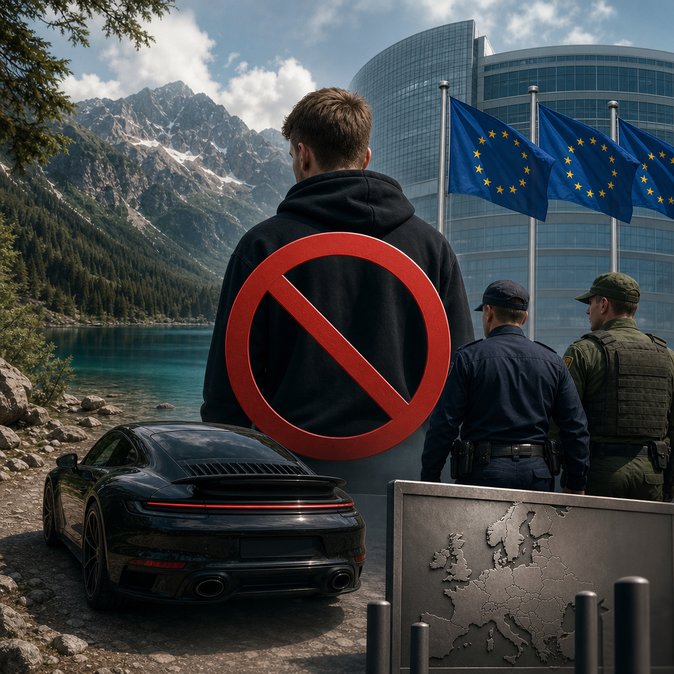
Polish authorities have moved swiftly to bar Ukrainian social-media personality Andriy Gavryliv from re-entering the country—and, by extension, the entire Schengen Area—after he drove a Chevrolet Corvette eight kilometres along a hikers-only route to the Morskie Oko mountain lake and posted the exploit to Instagram. The incident, which occurred on 22 May but went viral over the weekend, triggered a police investigation and a formal request to the Border Guard for a five-year entry ban. Under Poland’s Act on Foreigners, law-enforcement bodies can ask the Commander of the Border Guard to add a non-EU national to the national list of undesirable persons whenever a public-order offence is deemed serious. Once the entry ban is uploaded to the Schengen Information System (SIS II), it automatically applies across all 26 member states, turning what began as a local traffic violation into a continent-wide mobility restriction. The influencer has already left Poland, eliminating the need for deportation, but the listing will prevent him from obtaining a Schengen visa or crossing an external border checkpoint until 2031. The case has ignited debate over proportionality: the driver received only a 100-złoty (€23) fine and eight penalty points, well below the 5,000-złoty maximum. Environmental NGOs argue that tougher immigration sanctions send a clear deterrent message to would-be thrill-seekers who put conservation zones at risk. Tourism operators, however, fear the video—already seen by 2 million viewers—could cast Poland as an over-policed destination just as the summer season begins.
![Five-Year Schengen Ban Sought for Ukrainian Influencer after Illegal Car ‘Stunt’ in Tatra National Park]()
For those concerned about how incidents like this might influence their own travel plans, VisaHQ offers clear guidance and fast-track visa services for Poland and the wider Schengen Area. Its dedicated page (https://www.visahq.com/poland/) provides real-time entry requirements, expert assistance with applications, and advice on mitigating the impact of SIS II alerts or previous infractions, ensuring both leisure and business travellers stay compliant.
For companies that move talent or organise incentive trips to Poland’s alpine south, the episode is a reminder that seemingly minor infractions can escalate into long-term immigration obstacles. Mobility teams should review orientation materials to emphasise local park regulations and to warn that Schengen-wide bans are possible for offences ranging from shoplifting to off-road driving in protected areas. Practical advice from immigration lawyers includes instructing foreign assignees to carry proof of purpose (hotel bookings, business invitations) when travelling near sensitive zones and to consult corporate security hotlines before engaging in recreational activities that could breach municipal bylaws. The Border Guard is expected to confirm the final SIS II entry later this week; once active, the ban can only be lifted through an appeal to an administrative court in Warsaw.
For those concerned about how incidents like this might influence their own travel plans, VisaHQ offers clear guidance and fast-track visa services for Poland and the wider Schengen Area. Its dedicated page (https://www.visahq.com/poland/) provides real-time entry requirements, expert assistance with applications, and advice on mitigating the impact of SIS II alerts or previous infractions, ensuring both leisure and business travellers stay compliant.
For companies that move talent or organise incentive trips to Poland’s alpine south, the episode is a reminder that seemingly minor infractions can escalate into long-term immigration obstacles. Mobility teams should review orientation materials to emphasise local park regulations and to warn that Schengen-wide bans are possible for offences ranging from shoplifting to off-road driving in protected areas. Practical advice from immigration lawyers includes instructing foreign assignees to carry proof of purpose (hotel bookings, business invitations) when travelling near sensitive zones and to consult corporate security hotlines before engaging in recreational activities that could breach municipal bylaws. The Border Guard is expected to confirm the final SIS II entry later this week; once active, the ban can only be lifted through an appeal to an administrative court in Warsaw.