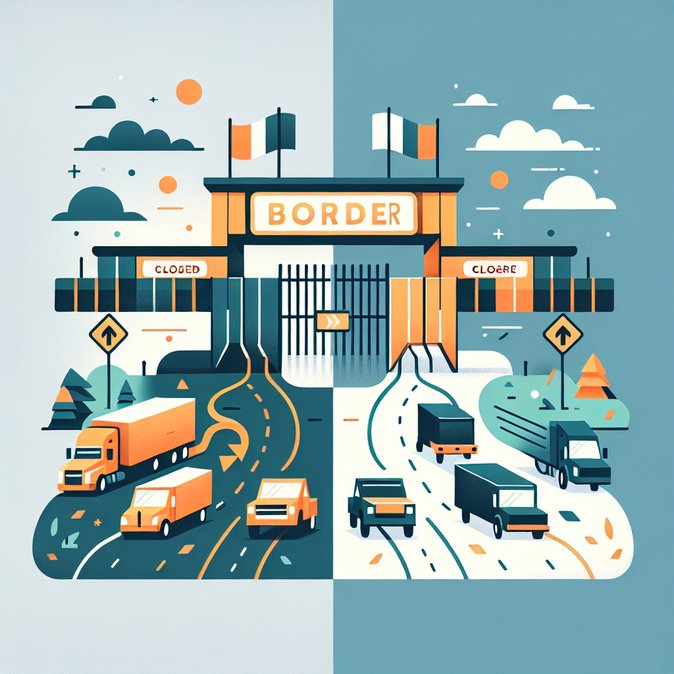
The Canada Border Services Agency (CBSA) has confirmed that the seasonal port of entry at Four Falls, New Brunswick—shuttered since May 2020—will remain closed permanently. The decision, announced on May 11, follows an operational review that cited low traffic volumes (about 8,000 travellers per season), overlapping service by nearby crossings and the absence of a corresponding U.S. port opposite Four Falls. Travellers and transport companies must now divert to Andover (24-hour service) or Gillespie Portage (07:00–19:00), both within 15 km.
![CBSA permanently closes Four Falls, New Brunswick land border crossing]()
Whether you’re re-routing a vacation or coordinating a corporate driver, VisaHQ can help ensure your documentation is still in order. The company’s portal (https://www.visahq.com/canada/) offers real-time visa and travel compliance guidance for Canada and dozens of other destinations, simplifying applications and flagging any additional permits you might need before approaching an alternative crossing.
Commercial carriers using preset driver routings should update electronic logging devices and customs documentation to avoid costly mis-declarations or penalties for failing to report. The closure aligns with Ottawa’s CA$1.3-billion Border Plan, which concentrates resources on higher-volume crossings and invests in technology and enforcement between ports of entry. CBSA notes that frontline staffing and surveillance assets will be re-deployed to priority corridors, part of a broader strategy to curb illicit cross-border activity while maintaining trade fluidity. Local businesses that relied on Four Falls for tourism traffic may feel an immediate pinch, but regional economic development agencies are working on signage, digital mapping updates and outreach to minimise disruption. For corporate mobility teams, the key takeaway is to audit driver directions, GPS databases and traveller briefings—especially for U.S. employees unfamiliar with Atlantic Canada’s secondary crossings.

Whether you’re re-routing a vacation or coordinating a corporate driver, VisaHQ can help ensure your documentation is still in order. The company’s portal (https://www.visahq.com/canada/) offers real-time visa and travel compliance guidance for Canada and dozens of other destinations, simplifying applications and flagging any additional permits you might need before approaching an alternative crossing.
Commercial carriers using preset driver routings should update electronic logging devices and customs documentation to avoid costly mis-declarations or penalties for failing to report. The closure aligns with Ottawa’s CA$1.3-billion Border Plan, which concentrates resources on higher-volume crossings and invests in technology and enforcement between ports of entry. CBSA notes that frontline staffing and surveillance assets will be re-deployed to priority corridors, part of a broader strategy to curb illicit cross-border activity while maintaining trade fluidity. Local businesses that relied on Four Falls for tourism traffic may feel an immediate pinch, but regional economic development agencies are working on signage, digital mapping updates and outreach to minimise disruption. For corporate mobility teams, the key takeaway is to audit driver directions, GPS databases and traveller briefings—especially for U.S. employees unfamiliar with Atlantic Canada’s secondary crossings.