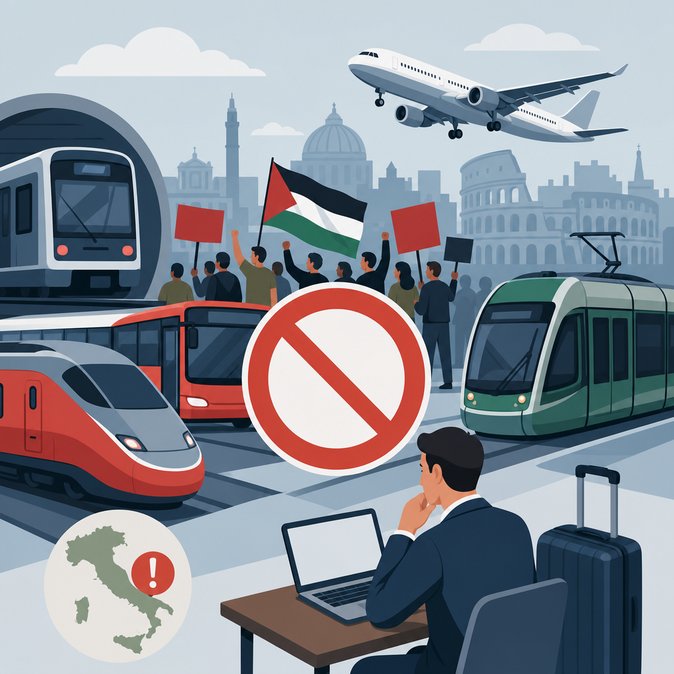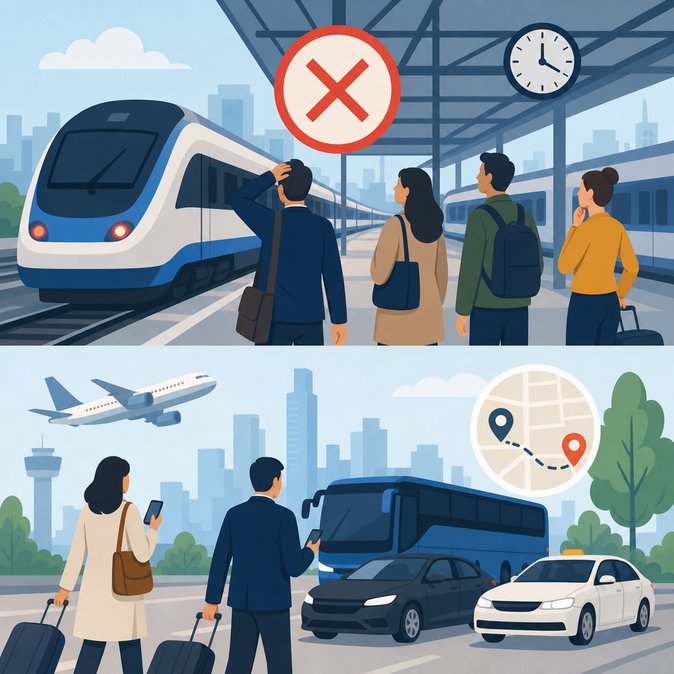
A 24-hour national rail stoppage by staff of Ferrovie dello Stato, Trenord and Italo—running from 21:00 on 17 May to 20:59 on 18 May—has officially concluded, but operating companies warn of continuing knock-on delays and rolling stock repositioning problems through the morning of 19 May. The walk-out, led by USB, FIT-CISL and other unions, disrupted hundreds of regional and long-distance services, forcing travellers onto crowded alternative buses and highway taxis. RFI confirmed that some overnight ‘Frecce’ sets are still out of position, requiring timetable tweaks until at least midday Tuesday. Milan-Malpensa airport relied on emergency coach links after the Malpensa Express service was partially suspended.
![Nation-wide rail strike ends, residual delays hit Italian business travellers on 19 May]()
If you’re still arranging paperwork to enter Italy amid these transport uncertainties, VisaHQ can streamline the process. Their digital platform allows you to complete Italian visa applications online, track progress in real time and receive prompt support—so you can focus on adapting your itinerary instead of queueing at consulates. Learn more at https://www.visahq.com/italy/
Trenitalia published lists of guaranteed trains, but peak-hour frequencies were nevertheless cut by up to 40 %. For multinational companies the timing was awkward: auditors flying in for end-of-quarter closings and tech-sector delegates heading to the Rome CyberTech Summit faced missed connections. Several mobility managers told the Italian Business Travel Association (AITMM) they reverted to same-day car rentals despite high demand triggered by the strike. The Ministry of Infrastructure’s strike observatory notes that May 2026 is one of the most strike-dense months in recent years, with another general walk-out already filed for 29 May. Employers with frequent inter-city travel should therefore build a ‘strike buffer’ of at least four hours into domestic itineraries and encourage staff to download operator apps for live re-booking options. Travellers arriving in Italy today should check real-time updates before relying on rail transfers from Fiumicino or Linate, and consider the fast-track taxi lanes recently introduced in Rome and Milan to ease airport access during disruptions.

If you’re still arranging paperwork to enter Italy amid these transport uncertainties, VisaHQ can streamline the process. Their digital platform allows you to complete Italian visa applications online, track progress in real time and receive prompt support—so you can focus on adapting your itinerary instead of queueing at consulates. Learn more at https://www.visahq.com/italy/
Trenitalia published lists of guaranteed trains, but peak-hour frequencies were nevertheless cut by up to 40 %. For multinational companies the timing was awkward: auditors flying in for end-of-quarter closings and tech-sector delegates heading to the Rome CyberTech Summit faced missed connections. Several mobility managers told the Italian Business Travel Association (AITMM) they reverted to same-day car rentals despite high demand triggered by the strike. The Ministry of Infrastructure’s strike observatory notes that May 2026 is one of the most strike-dense months in recent years, with another general walk-out already filed for 29 May. Employers with frequent inter-city travel should therefore build a ‘strike buffer’ of at least four hours into domestic itineraries and encourage staff to download operator apps for live re-booking options. Travellers arriving in Italy today should check real-time updates before relying on rail transfers from Fiumicino or Linate, and consider the fast-track taxi lanes recently introduced in Rome and Milan to ease airport access during disruptions.