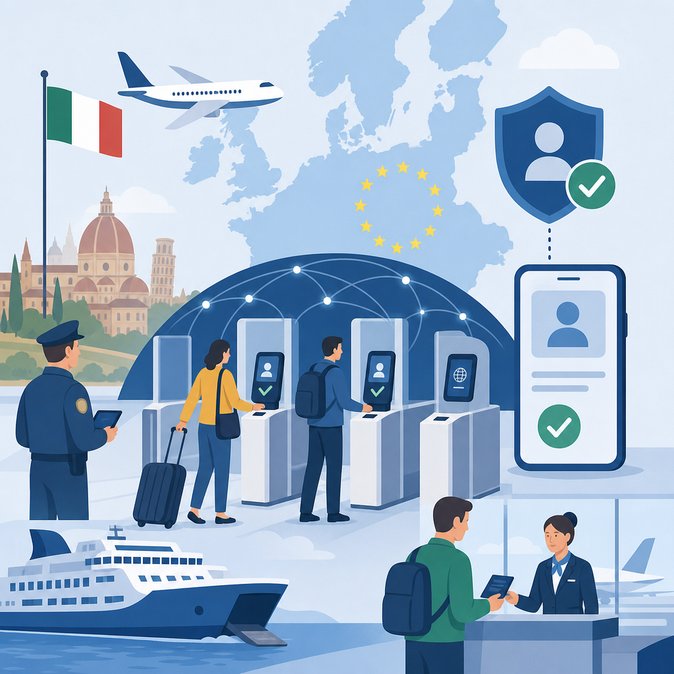
The European Commission today (18 May 2026) released its fifth annual “State of the Schengen Area” report, offering the first comprehensive assessment since the Entry/Exit System (EES) became fully operational across all external borders in April. The report notes a 26 % drop in illegal crossings in 2025 and a decade-high 28 % return rate for migrants without legal stay, trends the Commission links to more digitalised border management. For Italy—gateway to the bloc’s southern land, air and maritime frontiers—the EES milestone means carriers, ferry operators and port authorities must now verify third-country visa holders against a shared biometric database before boarding, adding new compliance steps for travel managers. According to the report, member states recorded more than 66 million EES-logged crossings in the system’s first six weeks, with 32 000 travellers refused entry for non-compliance. The Commission also previews the European Travel Information and Authorisation System (ETIAS), scheduled to go live in late 2026. Once active, ETIAS will require visa-exempt nationals—such as US or UK travellers headed to Milan or Rome on short business trips—to obtain a €7 electronic clearance in advance. Companies that rotate staff into Italy on 90-day Schengen stays should budget extra lead-time and update self-booking tools to capture the authorisation number. To navigate these shifting requirements more smoothly, travel coordinators can lean on specialist platforms like VisaHQ. Through its dedicated Italy page (https://www.visahq.com/italy/), the service provides up-to-the-minute guidance on EES and ETIAS, automated document checks and application support, helping businesses keep travellers compliant while minimising administrative hassle. In parallel, Brussels plans new legislation to digitise return procedures and expand Frontex support, while urging member states to improve data quality for overstayer enforcement. The report singles out Cyprus’ pending Schengen accession process and notes continuing work on Ireland’s partial participation. For mobility managers, the message is clear: Schengen’s future hinges on tech-enabled compliance, and Italy—as a major gateway—will be among the first to feel both the operational burden and the security benefits. Practically, employers should audit HRIS and travel-tech stacks to ensure passport data can flow into carrier-based EES and forthcoming ETIAS APIs. Training for assignees on facial-recognition e-gates at airports such as Rome Fiumicino should also be refreshed, given the system’s biometric capture requirements.