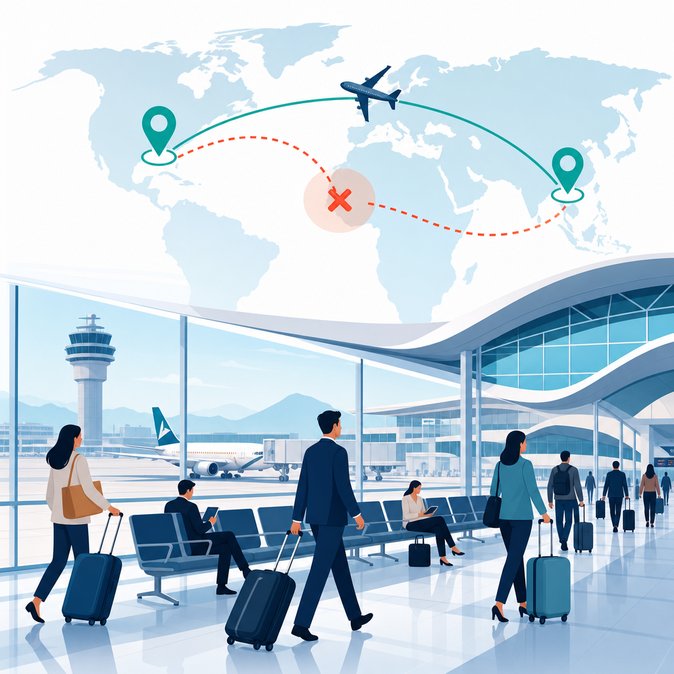
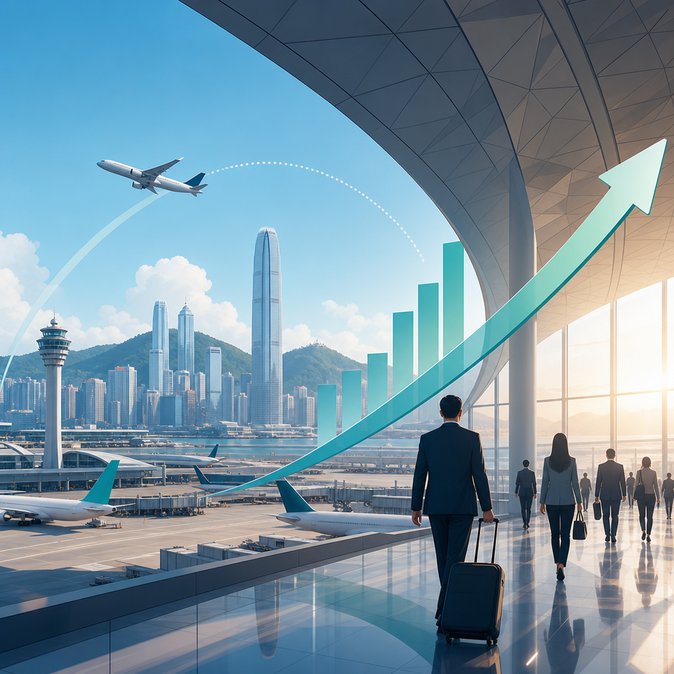
Hong Kong International Airport (HKIA) has reported its strongest month since the full post-pandemic reopening, handling 5.74 million passengers in March, a 19.6 % year-on-year jump, according to figures released on 18 May by Airport Authority Hong Kong. The growth was fuelled by an unexpected spike in transfer and transit traffic to and from Europe after airlines chose longer but safer routings that avoided Middle-East hotspots. Combined with robust demand on Southeast Asian and mainland Chinese routes, the detours pushed total flight movements up 2.7 % to 34,100. The traffic rebound means that in the first quarter HKIA welcomed 16.67 million passengers, up 14.3 % from the same period in 2025.
![HKIA passenger throughput climbs 19.6 % to 5.74 million as Middle-East detours lift Europe traffic]()
For organisations sending personnel through the city, VisaHQ can simplify the paperwork side of the journey: its Hong Kong platform (https://www.visahq.com/hong-kong/) offers fast online processing for visas and travel documents, real-time tracking and expert support, ensuring that last-minute deployments match the airport’s newly abundant seat capacity without delays at the border.
Twelve-month rolling numbers show 63.05 million passengers and 399,450 flight movements, both in double-digit growth territory, underscoring Hong Kong’s return as a regional aviation hub. For corporate mobility managers the figures matter for two reasons. First, they confirm that seat capacity is rapidly normalising, making it easier to secure last-minute inventory for assignments, project work and crew rotations. Second, the strong transfer flows reaffirm Hong Kong’s value as a one-stop gateway between Asia-Pacific and Europe at a time when many carriers are still re-routing around conflict zones. Airport commercial teams are already leveraging the momentum. Concessionaires in the refreshed Terminal 1 east-hall have been offered short-term pop-up space to capture the higher dwell times created by earlier flight connections. Meanwhile, the Airport Authority is accelerating digital immigration-e-channel upgrades promised for the summer peak, aiming to shave an average two minutes off arrival processing for e-passport holders. The upshot for multinationals is clear: after three turbulent years, Hong Kong’s primary port of entry is again handling volumes that support frequent-business-traveller schedules and a wider spread of intercontinental services. Companies relocating staff or routing regional meetings through the city can plan with greater confidence that capacity and processing times will keep improving through the remainder of 2026.
For organisations sending personnel through the city, VisaHQ can simplify the paperwork side of the journey: its Hong Kong platform (https://www.visahq.com/hong-kong/) offers fast online processing for visas and travel documents, real-time tracking and expert support, ensuring that last-minute deployments match the airport’s newly abundant seat capacity without delays at the border.
Twelve-month rolling numbers show 63.05 million passengers and 399,450 flight movements, both in double-digit growth territory, underscoring Hong Kong’s return as a regional aviation hub. For corporate mobility managers the figures matter for two reasons. First, they confirm that seat capacity is rapidly normalising, making it easier to secure last-minute inventory for assignments, project work and crew rotations. Second, the strong transfer flows reaffirm Hong Kong’s value as a one-stop gateway between Asia-Pacific and Europe at a time when many carriers are still re-routing around conflict zones. Airport commercial teams are already leveraging the momentum. Concessionaires in the refreshed Terminal 1 east-hall have been offered short-term pop-up space to capture the higher dwell times created by earlier flight connections. Meanwhile, the Airport Authority is accelerating digital immigration-e-channel upgrades promised for the summer peak, aiming to shave an average two minutes off arrival processing for e-passport holders. The upshot for multinationals is clear: after three turbulent years, Hong Kong’s primary port of entry is again handling volumes that support frequent-business-traveller schedules and a wider spread of intercontinental services. Companies relocating staff or routing regional meetings through the city can plan with greater confidence that capacity and processing times will keep improving through the remainder of 2026.