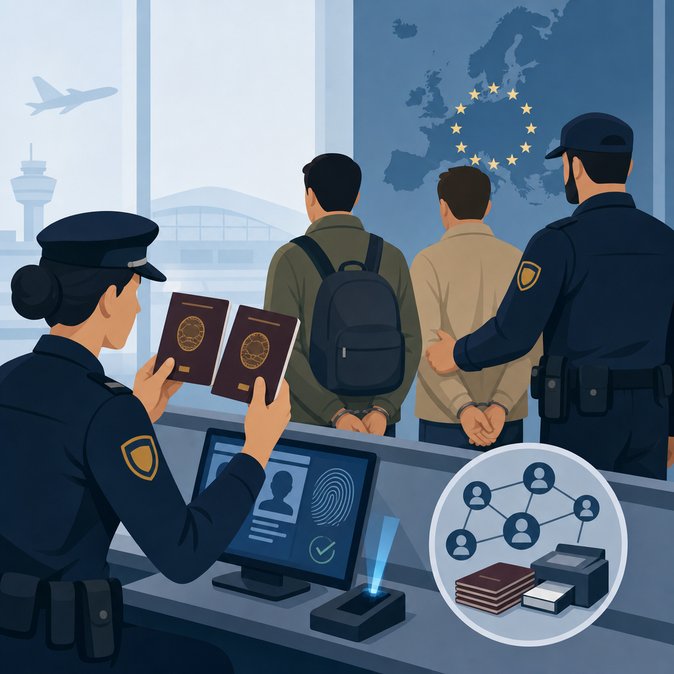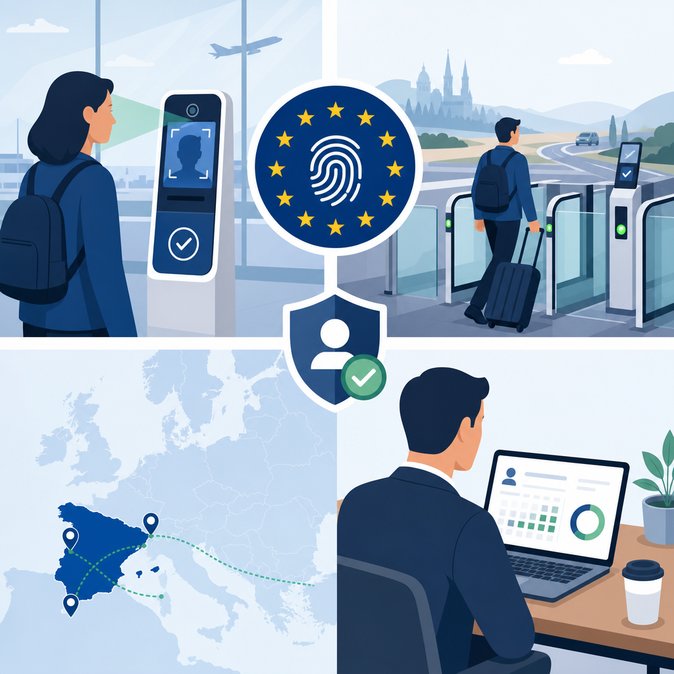
Spain’s border posts are now fully connected to the European Union’s new Entry/Exit System (EES), the biometric border-control platform that has been phased in since October 2025. According to figures released in Brussels on 18 May, the EES has already recorded more than 66 million crossings by non-EU nationals and refused entry to around 32,000 travellers across the Schengen Area. For travellers entering Spain by air or land, the most visible change is the replacement of passport stamps with a digital record that captures facial images, fingerprints and travel history the first time a third-country national enters. On subsequent trips the automated gates retrieve the file in seconds, cutting manual checks but also flagging overstays instantly. Madrid-Barajas, Barcelona-El Prat and Málaga-Costa del Sol airports all confirmed to local media that their e-gates are now running exclusively on EES, with peak-hour wait times down by 15-20 percent compared with Easter 2025.
![EU Entry/Exit System Blocks 32,000 Arrivals in First Six Months as Spain Completes Roll-Out]()
For travellers who want extra reassurance when navigating Spain’s new digital border, VisaHQ’s dedicated Spain portal (https://www.visahq.com/spain/) offers clear guidance on EES requirements, ETIAS pre-authorisation, and traditional visa options. The platform’s step-by-step tools and live support help business and leisure visitors gather the right documents, track permitted-stay days and avoid costly overstays, making the transition to biometric controls far smoother.
Airlines report smoother boarding for connecting Schengen flights, as travellers no longer need an additional Spanish exit stamp. However, the system is already altering travel behaviour. Immigration lawyers in Spain say business visitors are asking for detailed printouts of their permitted stay because the new “90/180-day” counter is now enforced automatically. Companies rotating staff through Madrid or Valencia must adjust rota planning to avoid accidental overstays that trigger automatic alerts. Tour operators handling Latin-American cruise turn-arounds in Barcelona also warn clients that failure to enrol biometrics on arrival can mean missing the ship if kiosks are congested. Spanish data-protection groups continue to raise concerns over long-term storage of biometric data, while hauliers using the busy La Junquera land border with France complain that early-morning freight queues have lengthened until truck-driver enrolment is completed. The Interior Ministry says most teething issues will be resolved before the sister ETIAS travel-authorisation system goes live in 2027. For global mobility managers the message is clear: ensure non-EU assignees and frequent travellers understand the new process, keep copies of EES receipts, and build greater flexibility into travel calendars while the technology beds in.

For travellers who want extra reassurance when navigating Spain’s new digital border, VisaHQ’s dedicated Spain portal (https://www.visahq.com/spain/) offers clear guidance on EES requirements, ETIAS pre-authorisation, and traditional visa options. The platform’s step-by-step tools and live support help business and leisure visitors gather the right documents, track permitted-stay days and avoid costly overstays, making the transition to biometric controls far smoother.
Airlines report smoother boarding for connecting Schengen flights, as travellers no longer need an additional Spanish exit stamp. However, the system is already altering travel behaviour. Immigration lawyers in Spain say business visitors are asking for detailed printouts of their permitted stay because the new “90/180-day” counter is now enforced automatically. Companies rotating staff through Madrid or Valencia must adjust rota planning to avoid accidental overstays that trigger automatic alerts. Tour operators handling Latin-American cruise turn-arounds in Barcelona also warn clients that failure to enrol biometrics on arrival can mean missing the ship if kiosks are congested. Spanish data-protection groups continue to raise concerns over long-term storage of biometric data, while hauliers using the busy La Junquera land border with France complain that early-morning freight queues have lengthened until truck-driver enrolment is completed. The Interior Ministry says most teething issues will be resolved before the sister ETIAS travel-authorisation system goes live in 2027. For global mobility managers the message is clear: ensure non-EU assignees and frequent travellers understand the new process, keep copies of EES receipts, and build greater flexibility into travel calendars while the technology beds in.