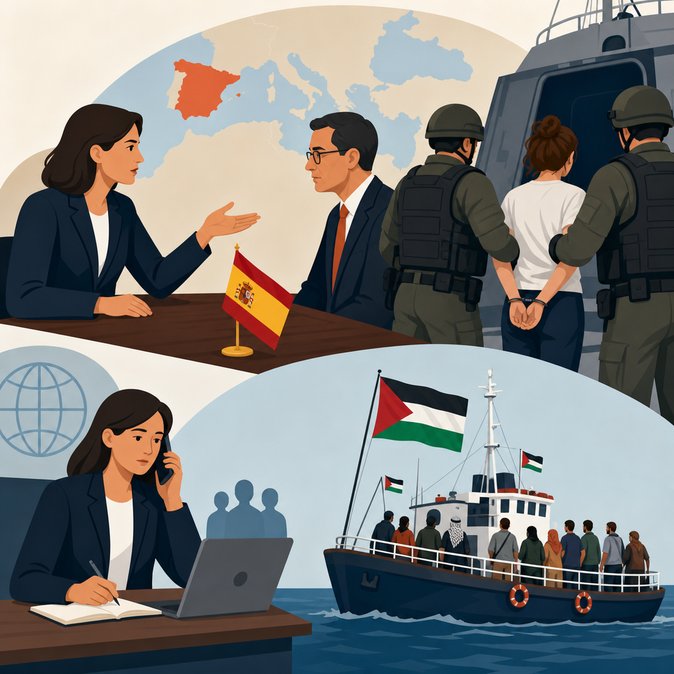
Spain has lodged a formal protest with Israel after between 10 and 20 Spanish citizens were detained when the Israeli Navy intercepted a solidarity flotilla bound for Gaza on 17–18 May. Foreign Minister José Manuel Albares told reporters on Monday evening that the activists were held “illegally” in international waters and that Spain demands their immediate release and safe passage home. The incident centres on the vessel *Perseverance*, part of a multinational convoy attempting to breach Israel’s naval blockade of Gaza. According to organisers, 46 Spaniards were among the passengers distributed across several boats. Israeli authorities said the ships were warned to divert to Ashdod port; when they refused, commandos boarded and towed them in. While most nationals were processed and deported within hours, Spanish officials say at least a dozen remain in custody awaiting deportation hearings. Spain’s Ministry of Foreign Affairs summoned Israel’s chargé d’affaires in Madrid on 18 May to convey what Albares called “our energetic and categorical condemnation”. Consular teams have been dispatched to Israel to provide legal assistance, and emergency hotlines have been activated for relatives.
![Madrid Summons Israeli Envoy After Spanish Activists Detained in Gaza Flotilla Raid]()
In this context, Spanish travellers planning trips to Israel, the Palestinian Territories or any other high-risk destination can benefit from VisaHQ’s expedited visa and passport services. The platform (https://www.visahq.com/spain/) offers real-time updates on entry rules, helps secure the necessary documentation, and supports both individual adventurers and corporate mobility teams in navigating complex travel requirements with greater confidence.
The episode revives diplomatic friction between the two countries and raises questions about the limits of citizen activism abroad, as well as employers’ duty-of-care obligations when staff participate in politically sensitive missions on personal leave. Risk consultants note that Spanish multinationals with operations in Israel or the Palestinian Territories should review their travel-security policies. Insurance providers may exclude cover if travellers knowingly enter exclusion zones. Companies are advised to register employees’ private trips that involve high-risk regions so they can coordinate crisis response if needed. From a mobility perspective, the case underscores the importance of rapid consular engagement and the value of keeping copies of passports and travel documents accessible to designated emergency contacts—best practice that expatriate managers should reiterate in pre-trip briefings.

In this context, Spanish travellers planning trips to Israel, the Palestinian Territories or any other high-risk destination can benefit from VisaHQ’s expedited visa and passport services. The platform (https://www.visahq.com/spain/) offers real-time updates on entry rules, helps secure the necessary documentation, and supports both individual adventurers and corporate mobility teams in navigating complex travel requirements with greater confidence.
The episode revives diplomatic friction between the two countries and raises questions about the limits of citizen activism abroad, as well as employers’ duty-of-care obligations when staff participate in politically sensitive missions on personal leave. Risk consultants note that Spanish multinationals with operations in Israel or the Palestinian Territories should review their travel-security policies. Insurance providers may exclude cover if travellers knowingly enter exclusion zones. Companies are advised to register employees’ private trips that involve high-risk regions so they can coordinate crisis response if needed. From a mobility perspective, the case underscores the importance of rapid consular engagement and the value of keeping copies of passports and travel documents accessible to designated emergency contacts—best practice that expatriate managers should reiterate in pre-trip briefings.