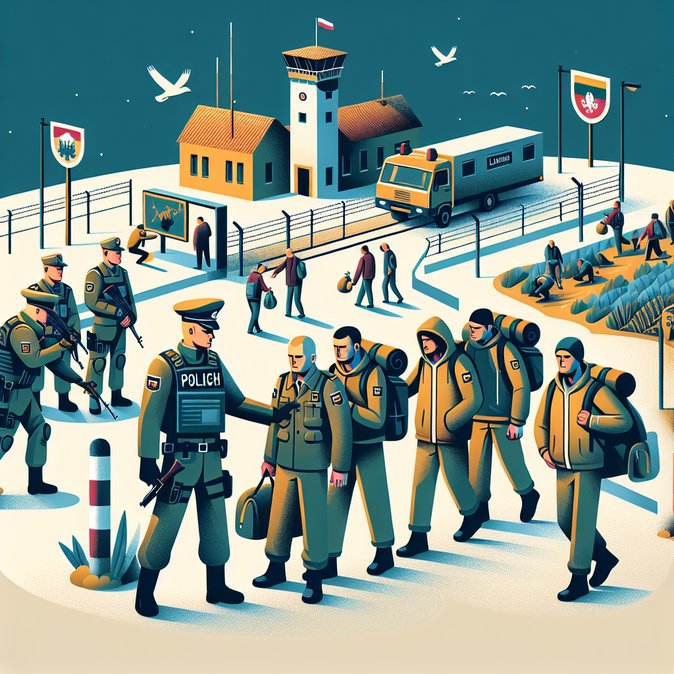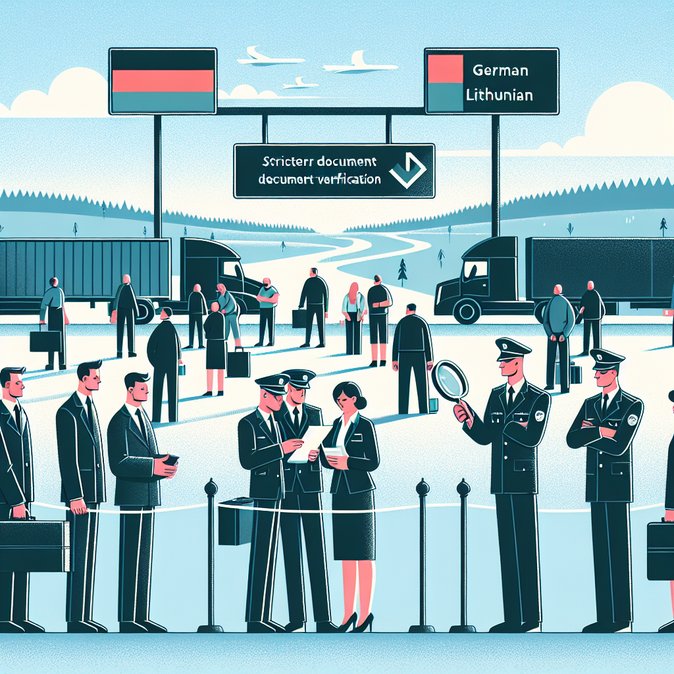
The Polish Border Guard (Straż Graniczna) published fresh statistics on 12 May confirming that temporary checks on the frontiers with Germany and Lithuania remain in full force. Officers inspected more than 4,000 travellers and 2,700 vehicles at the Lithuanian border on 11 May, detaining 19 individuals and refusing entry to two. On the German frontier, 3,700 travellers and 1,700 vehicles were examined, resulting in four refusals of entry. The data come one month after Poland re-introduced internal Schengen controls under an MSWiA regulation valid until 1 October 2026.
![Polish Border Guard reports thousands of checks as internal Schengen controls enter second month]()
Travellers who need assistance verifying documentation or securing the correct visas can streamline the process by consulting VisaHQ, an online visa and passport service that handles Polish and wider Schengen applications for both individuals and corporate mobility teams. The platform’s step-by-step tools and live support can cut down on preparation time and reduce the risk of refusals; more information is available at https://www.visahq.com/poland/
The ministry cites organised-crime and migration pressures as justification. Checks are being reinforced by police units, military gendarmes and Territorial Defence troops, creating a multi-agency presence that logistics firms say adds 15–30 minutes to average crossing times. For cross-border commuters and supply-chain managers the message is clear: plan for sporadic queues and carry proof of employment or residence to expedite secondary inspections. Companies moving just-in-time components between Poznań and Berlin should consider earlier dispatch to buffer potential delays. Carriers hauling perishable goods may apply for ‘green-lane’ procedures, but approval is discretionary and subject to on-site traffic volume. Although detention figures remain low, the policy’s extension suggests that business travellers should continue to factor in document checks when crossing what was, until recently, an open Schengen border. HR teams moving expatriates between Polish and German sites are advised to ensure that staff carry original IDs and that residence cards are valid beyond October.

Travellers who need assistance verifying documentation or securing the correct visas can streamline the process by consulting VisaHQ, an online visa and passport service that handles Polish and wider Schengen applications for both individuals and corporate mobility teams. The platform’s step-by-step tools and live support can cut down on preparation time and reduce the risk of refusals; more information is available at https://www.visahq.com/poland/
The ministry cites organised-crime and migration pressures as justification. Checks are being reinforced by police units, military gendarmes and Territorial Defence troops, creating a multi-agency presence that logistics firms say adds 15–30 minutes to average crossing times. For cross-border commuters and supply-chain managers the message is clear: plan for sporadic queues and carry proof of employment or residence to expedite secondary inspections. Companies moving just-in-time components between Poznań and Berlin should consider earlier dispatch to buffer potential delays. Carriers hauling perishable goods may apply for ‘green-lane’ procedures, but approval is discretionary and subject to on-site traffic volume. Although detention figures remain low, the policy’s extension suggests that business travellers should continue to factor in document checks when crossing what was, until recently, an open Schengen border. HR teams moving expatriates between Polish and German sites are advised to ensure that staff carry original IDs and that residence cards are valid beyond October.