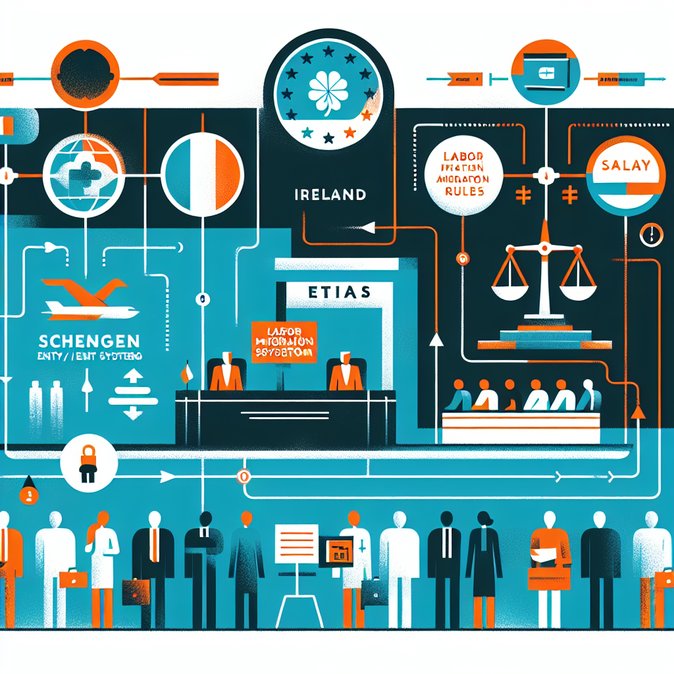
Speaking on Europe Day (9 May), Foreign Affairs Minister Helen McEntee said Ireland’s six-month Presidency of the Council of the European Union — which starts on 1 July 2026 — will place “people movement and competitiveness” at its core. In a press statement, McEntee highlighted the Presidency team’s intention to steer final technical work on the EU’s Entry/Exit System (EES) and to push for business-friendly implementation of the new European Travel Information and Authorisation System (ETIAS) slated for late 2026. While the announcement was largely celebratory, mobility specialists note that chairing Council working groups gives Ireland a rare chance to shape operational details that will affect the day-to-day travel of Irish citizens and the 300,000 foreign nationals working in the State.
![Ireland marks Europe Day and outlines mobility priorities for upcoming EU Council Presidency]()
For businesses and individual travellers preparing for the EES and ETIAS roll-outs, VisaHQ’s Ireland portal (https://www.visahq.com/ireland/) offers up-to-date guidance on entry requirements, digital authorisations and supporting documentation, helping HR departments and frequent flyers cut through bureaucracy before departure.
Dublin has already signalled support for proposals that would allow small airports such as Shannon to phase in EES kiosks over a longer period and to prioritise transatlantic pre-clearance lanes for frequent flyers. The Department of Enterprise, Trade and Employment confirmed to Global Mobility News that it will use the Presidency to showcase Ireland’s new Roadmap on Minimum Annual Remuneration for work-permit holders, arguing that predictable salary thresholds across the bloc are essential for fair competition. HR teams leasing talent into Ireland should therefore expect fresh benchmarking data and possible voluntary codes of practice on salary transparency. Corporates should begin mapping how draft Council conclusions could translate into tighter carrier liability rules, common carrier sanctions for EES non-compliance, and potential reciprocity talks with the United States on visa-free travel. Engagement opportunities will include town-hall meetings in every county under the Presidency’s ‘County Pairing’ initiative, giving regional employers a direct line to negotiators in Brussels.

For businesses and individual travellers preparing for the EES and ETIAS roll-outs, VisaHQ’s Ireland portal (https://www.visahq.com/ireland/) offers up-to-date guidance on entry requirements, digital authorisations and supporting documentation, helping HR departments and frequent flyers cut through bureaucracy before departure.
Dublin has already signalled support for proposals that would allow small airports such as Shannon to phase in EES kiosks over a longer period and to prioritise transatlantic pre-clearance lanes for frequent flyers. The Department of Enterprise, Trade and Employment confirmed to Global Mobility News that it will use the Presidency to showcase Ireland’s new Roadmap on Minimum Annual Remuneration for work-permit holders, arguing that predictable salary thresholds across the bloc are essential for fair competition. HR teams leasing talent into Ireland should therefore expect fresh benchmarking data and possible voluntary codes of practice on salary transparency. Corporates should begin mapping how draft Council conclusions could translate into tighter carrier liability rules, common carrier sanctions for EES non-compliance, and potential reciprocity talks with the United States on visa-free travel. Engagement opportunities will include town-hall meetings in every county under the Presidency’s ‘County Pairing’ initiative, giving regional employers a direct line to negotiators in Brussels.