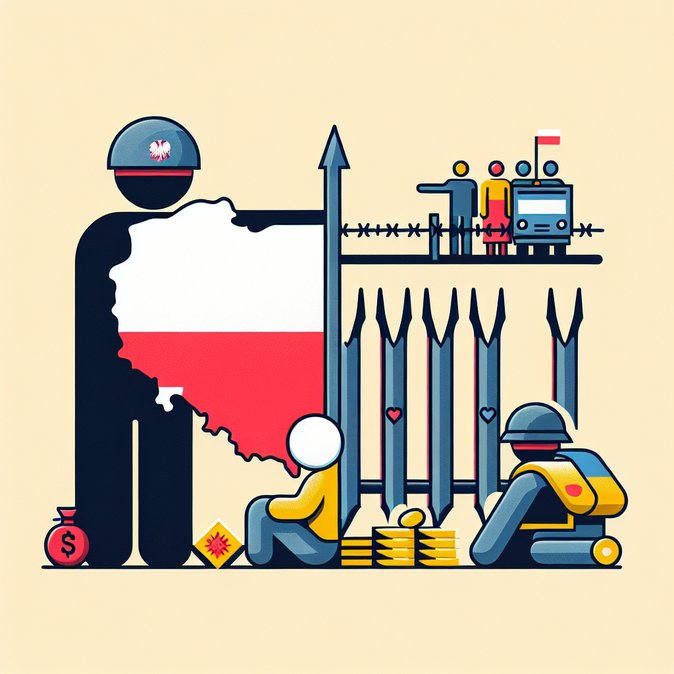
Border-Guard officers from the Czeremcha and Świebodzin posts, backed by cyber-crime investigators, arrested a 41-year-old Ukrainian national on 7 May in western Poland. Prosecutors allege he coordinated a network that helped at least 124 migrants from Asia and Africa cross Poland’s eastern frontier illegally, then move onward toward Germany. Investigators say clients from Iran, Iraq, Syria, Afghanistan, Eritrea and several other countries paid up to €4,000 each for forged documents and transport.
![Ukrainian Suspect Held for Smuggling 124 Migrants Across Polish Border]()
Travelers and companies seeking legitimate passage into Poland should ensure all visas and supporting documents are in order. VisaHQ’s online platform (https://www.visahq.com/poland/) streamlines the application process for Polish and Schengen visas, offers up-to-date entry requirements, and provides dedicated support—helping individuals and corporate mobility teams avoid the pitfalls that smugglers exploit.
The ring allegedly exploited gaps along the green border with Belarus before regrouping on the Polish side, where drivers picked migrants up in unmarked vans. Nineteen accomplices have already been charged; more arrests are expected. If convicted, the suspect faces up to eight years in prison and a deportation order. The case illustrates how smuggling groups continue to adapt despite a 96 % drop in recorded crossings from Belarus since Warsaw introduced “zero-tolerance” push-back rules last year. For corporate security teams the incident underscores the importance of route-risk assessments for staff travelling near exclusion zones and for logistics providers operating along east-west corridors. Companies may also face stricter cargo inspections as authorities tighten controls to disrupt illicit networks.

Travelers and companies seeking legitimate passage into Poland should ensure all visas and supporting documents are in order. VisaHQ’s online platform (https://www.visahq.com/poland/) streamlines the application process for Polish and Schengen visas, offers up-to-date entry requirements, and provides dedicated support—helping individuals and corporate mobility teams avoid the pitfalls that smugglers exploit.
The ring allegedly exploited gaps along the green border with Belarus before regrouping on the Polish side, where drivers picked migrants up in unmarked vans. Nineteen accomplices have already been charged; more arrests are expected. If convicted, the suspect faces up to eight years in prison and a deportation order. The case illustrates how smuggling groups continue to adapt despite a 96 % drop in recorded crossings from Belarus since Warsaw introduced “zero-tolerance” push-back rules last year. For corporate security teams the incident underscores the importance of route-risk assessments for staff travelling near exclusion zones and for logistics providers operating along east-west corridors. Companies may also face stricter cargo inspections as authorities tighten controls to disrupt illicit networks.