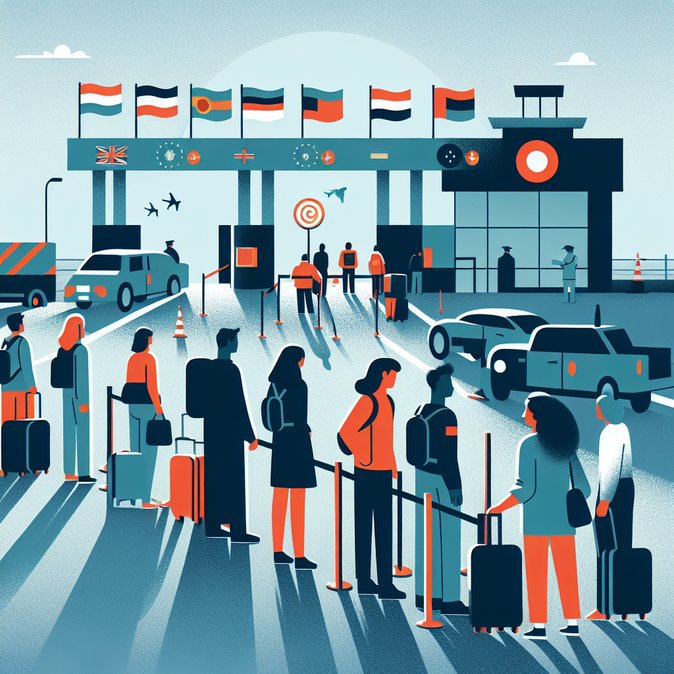
Polish daily *Rzeczpospolita* published fresh statistics on 7 May revealing that nearly 1.3 million travellers have been stopped for inspection at the German and Lithuanian borders since temporary controls were re-introduced in July 2025. Over the six-month review period, 924 people were refused entry, while 505 suspected smugglers or traffickers were detained, many linked to drug- and human-smuggling rings. The controls—initially a response to Germany’s own checks targeting arrivals from Poland—were prolonged again last week until 1 October 2026.
![Data Show 924 Foreigners Refused Entry as Poland Extends Internal Border Checks]()
For companies and individuals unsure how the evolving rules affect visa-free days or special travel documents, VisaHQ can step in: the firm’s Polish portal (https://www.visahq.com/poland/) offers instant Schengen-day calculators, customised document lists and application handling, helping travellers and mobility managers sidestep last-minute compliance issues at these newly reinforced borders.
Interior-ministry officials argue the measures are justified by the ‘operational success’ of identifying 29 individuals flagged as security threats in EU databases and confiscating large quantities of narcotics. Business-travel groups remain divided. Logistics firms moving just-in-time parts across the *Autobahn* corridor complain of increased transit times and paperwork, whereas security analysts contend that the Schengen ‘safety valve’ has curtailed people-smuggling via the Suwałki corridor. For mobility managers the takeaway is clear: inter-EU land travel between Poland, Germany and Lithuania will continue to involve random passport checks, vehicle inspections and possible delays at 29 road and rail crossings. Companies should budget extra transit time, ensure drivers carry proof of Schengen-compliant stay (visa or 90/180-day calculations) and monitor future extensions.

For companies and individuals unsure how the evolving rules affect visa-free days or special travel documents, VisaHQ can step in: the firm’s Polish portal (https://www.visahq.com/poland/) offers instant Schengen-day calculators, customised document lists and application handling, helping travellers and mobility managers sidestep last-minute compliance issues at these newly reinforced borders.
Interior-ministry officials argue the measures are justified by the ‘operational success’ of identifying 29 individuals flagged as security threats in EU databases and confiscating large quantities of narcotics. Business-travel groups remain divided. Logistics firms moving just-in-time parts across the *Autobahn* corridor complain of increased transit times and paperwork, whereas security analysts contend that the Schengen ‘safety valve’ has curtailed people-smuggling via the Suwałki corridor. For mobility managers the takeaway is clear: inter-EU land travel between Poland, Germany and Lithuania will continue to involve random passport checks, vehicle inspections and possible delays at 29 road and rail crossings. Companies should budget extra transit time, ensure drivers carry proof of Schengen-compliant stay (visa or 90/180-day calculations) and monitor future extensions.