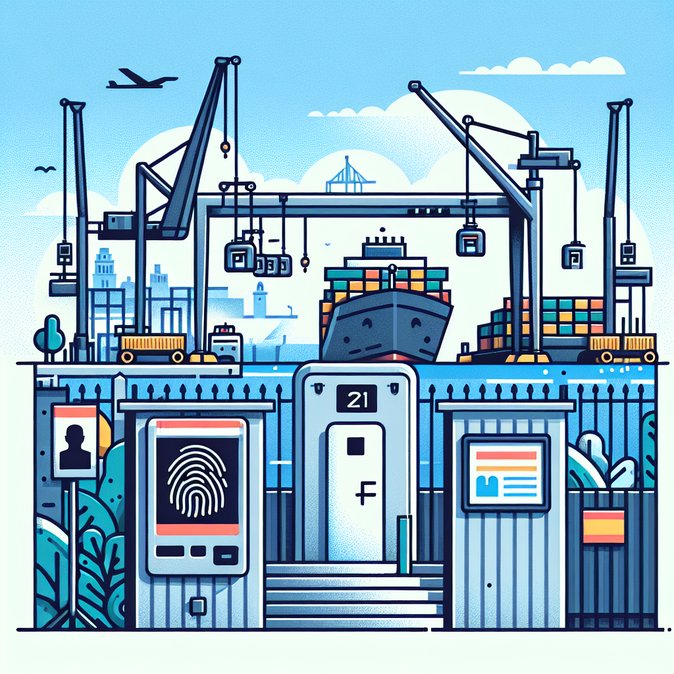
Spain’s maritime gateways are catching up with their airport counterparts as the EU’s Entry/Exit System (EES) expands to seaports. The Port Authority of Motril—linking Andalusia with North Africa—has awarded a USD 2.9 million contract to SIA-Indra to install containerized biometric cabins that will capture fingerprints, facial images and passport data from non-EU travellers before boarding or disembarkation. Each self-service module will house multiple kiosks supervised by National Police officers. Data will feed directly into the EU-wide EES database, eliminating manual passport stamps and tightening overstay monitoring. Funding is 75 percent covered by the EU’s Internal Security Fund, with the remainder financed by Puertos del Estado.
![Port of Motril to deploy EU Entry/Exit biometric kiosks ahead of summer ferry rush]()
Travellers who want to be certain their documentation meets the new biometric and entry requirements can turn to VisaHQ for help. The platform provides real-time updates on Spain’s visa and travel regulations, assists with paperwork completion and offers courier options for submitting applications—see https://www.visahq.com/spain/ for details.
Roll-out is timed for late June, when ferry traffic for the annual Operación Paso del Estrecho (OPE) peaks at more than three million passenger movements across the Strait of Gibraltar. For shipping lines and tour operators, the change means building extra buffer time into schedules and advising passengers—especially first-time North-African visitors—to pre-register via the official EES app where available. The port authority says returning travellers will clear faster because biometric templates remain valid for roughly two years, but initial enrolment takes two to three minutes per person. The Motril project is a pilot for Spain’s smaller international ports such as Almería and Alicante, which will tender similar systems later this year. Authorities insist the technology will not slow freight, as truck drivers will use dedicated lanes with handheld readers. Nevertheless, mobility managers moving project cargo or group tours should monitor early-summer performance figures and adjust contingency plans if queues build. Beyond operations, the upgrade signals that ETIAS—Europe’s travel-authorisation scheme for visa-exempt nationals—remains on track for late 2026. Companies shuttling staff between Spain and North Africa are advised to map both requirements into their travel policies now, to avoid last-minute disruptions.

Travellers who want to be certain their documentation meets the new biometric and entry requirements can turn to VisaHQ for help. The platform provides real-time updates on Spain’s visa and travel regulations, assists with paperwork completion and offers courier options for submitting applications—see https://www.visahq.com/spain/ for details.
Roll-out is timed for late June, when ferry traffic for the annual Operación Paso del Estrecho (OPE) peaks at more than three million passenger movements across the Strait of Gibraltar. For shipping lines and tour operators, the change means building extra buffer time into schedules and advising passengers—especially first-time North-African visitors—to pre-register via the official EES app where available. The port authority says returning travellers will clear faster because biometric templates remain valid for roughly two years, but initial enrolment takes two to three minutes per person. The Motril project is a pilot for Spain’s smaller international ports such as Almería and Alicante, which will tender similar systems later this year. Authorities insist the technology will not slow freight, as truck drivers will use dedicated lanes with handheld readers. Nevertheless, mobility managers moving project cargo or group tours should monitor early-summer performance figures and adjust contingency plans if queues build. Beyond operations, the upgrade signals that ETIAS—Europe’s travel-authorisation scheme for visa-exempt nationals—remains on track for late 2026. Companies shuttling staff between Spain and North Africa are advised to map both requirements into their travel policies now, to avoid last-minute disruptions.