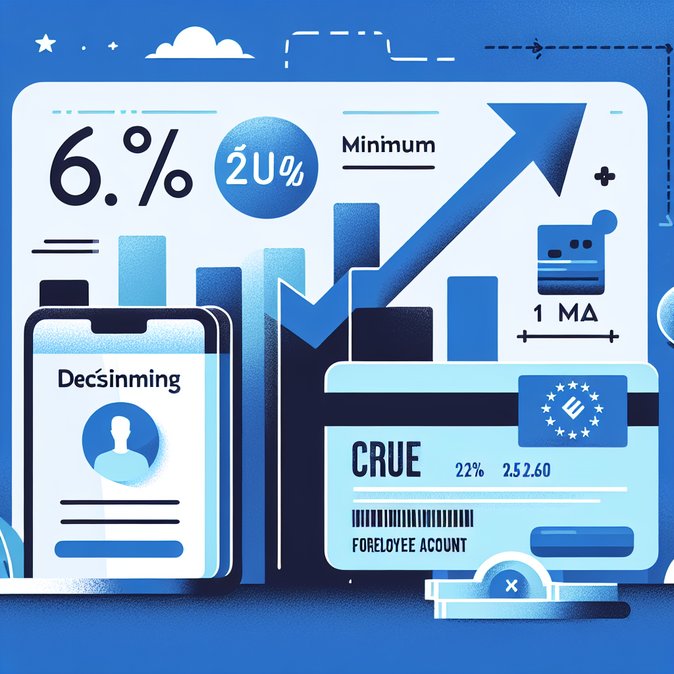
The Czech Republic has kicked off May with one of the most consequential immigration updates of the year. An official notice from the Ministry of Industry and Trade confirms that, effective 1 May 2026, employers sponsoring an EU Blue Card must now guarantee a gross monthly wage of at least CZK 73,823—6.6 percent more than in the previous 12-month cycle. The increase, published under EU Directive 2021/1883, keeps Czechia in line with the rule that the Blue Card wage must equal 1.5 times the national average salary. For would-be assignees in IT, engineering and healthcare, the higher bar may look steep, but it still leaves Prague cheaper than Berlin or Amsterdam, where Blue Card minima already exceed €3,500.
![Czechia lifts EU Blue Card salary floor to CZK 73,823 and unveils online “Foreigner Account”]()
Whether you are an HR manager benchmarking budgets or a specialist planning your own relocation, VisaHQ can remove much of the guesswork. Through its Czech Republic portal (https://www.visahq.com/czech-republic/), the company pre-screens contracts against the CZK 73,823 threshold, assembles compliant documents and files Blue Card or Employee Card applications through the new Foreigner Account, sparing applicants weeks of back-and-forth with authorities.
The salary change arrives alongside a broader digitalisation drive that Interior Minister Vít Rakušan has dubbed “Digital Czechia.” From this week, employers and foreign nationals can create a secure online “Foreigner Account” to lodge applications, upload contracts and track case status. Officials promise that automation will cut straightforward Blue Card processing times from the statutory 90 days to “well under one month.” Employers will also find refreshed templates for labour-market tests and binding job offers on the portal, reducing the risk of paperwork being rejected for minor errors. For HR and mobility managers the message is two-fold. First, check any pending Blue Card files—the new wage applies to applications that were submitted before 1 May but remain undecided. If the contract on file is below the fresh threshold, officers will issue a request for updated remuneration or refuse the permit outright. Second, review assignment cost projections. While Czechia remains cost-competitive, the higher payroll burden could nudge companies towards the quicker but less flexible Employee Card. Expats.cz notes that many firms already default to the Employee Card because it is processed locally rather than through consulates, but warns that doing so deprives talent of intra-EU mobility rights granted by the Blue Card. Practically, staff arriving on or after 1 May should travel with printed copies of their updated employment contracts and the portal’s electronic submission receipt. Existing Blue Card holders have until their next renewal to meet the new wage, yet immigration advisers are encouraging proactive amendments to avoid last-minute scrambles. For families, the change is largely neutral: dependants’ residence permits remain linked to the principal applicant’s status, not to specific salary levels. In the longer term, the digital Foreigner Account could be the bigger game-changer. The Interior Ministry says it will expand the platform this summer to cover Employee Cards and Permanent Residence filings, and will pilot an AI-based document-checking tool that flags missing pages before an applicant can click “submit.” If the system works, Czechia could leapfrog many EU counterparts still reliant on in-person appointments and paper files—good news for multinationals with large mobility pipelines into Central Europe.
Whether you are an HR manager benchmarking budgets or a specialist planning your own relocation, VisaHQ can remove much of the guesswork. Through its Czech Republic portal (https://www.visahq.com/czech-republic/), the company pre-screens contracts against the CZK 73,823 threshold, assembles compliant documents and files Blue Card or Employee Card applications through the new Foreigner Account, sparing applicants weeks of back-and-forth with authorities.
The salary change arrives alongside a broader digitalisation drive that Interior Minister Vít Rakušan has dubbed “Digital Czechia.” From this week, employers and foreign nationals can create a secure online “Foreigner Account” to lodge applications, upload contracts and track case status. Officials promise that automation will cut straightforward Blue Card processing times from the statutory 90 days to “well under one month.” Employers will also find refreshed templates for labour-market tests and binding job offers on the portal, reducing the risk of paperwork being rejected for minor errors. For HR and mobility managers the message is two-fold. First, check any pending Blue Card files—the new wage applies to applications that were submitted before 1 May but remain undecided. If the contract on file is below the fresh threshold, officers will issue a request for updated remuneration or refuse the permit outright. Second, review assignment cost projections. While Czechia remains cost-competitive, the higher payroll burden could nudge companies towards the quicker but less flexible Employee Card. Expats.cz notes that many firms already default to the Employee Card because it is processed locally rather than through consulates, but warns that doing so deprives talent of intra-EU mobility rights granted by the Blue Card. Practically, staff arriving on or after 1 May should travel with printed copies of their updated employment contracts and the portal’s electronic submission receipt. Existing Blue Card holders have until their next renewal to meet the new wage, yet immigration advisers are encouraging proactive amendments to avoid last-minute scrambles. For families, the change is largely neutral: dependants’ residence permits remain linked to the principal applicant’s status, not to specific salary levels. In the longer term, the digital Foreigner Account could be the bigger game-changer. The Interior Ministry says it will expand the platform this summer to cover Employee Cards and Permanent Residence filings, and will pilot an AI-based document-checking tool that flags missing pages before an applicant can click “submit.” If the system works, Czechia could leapfrog many EU counterparts still reliant on in-person appointments and paper files—good news for multinationals with large mobility pipelines into Central Europe.