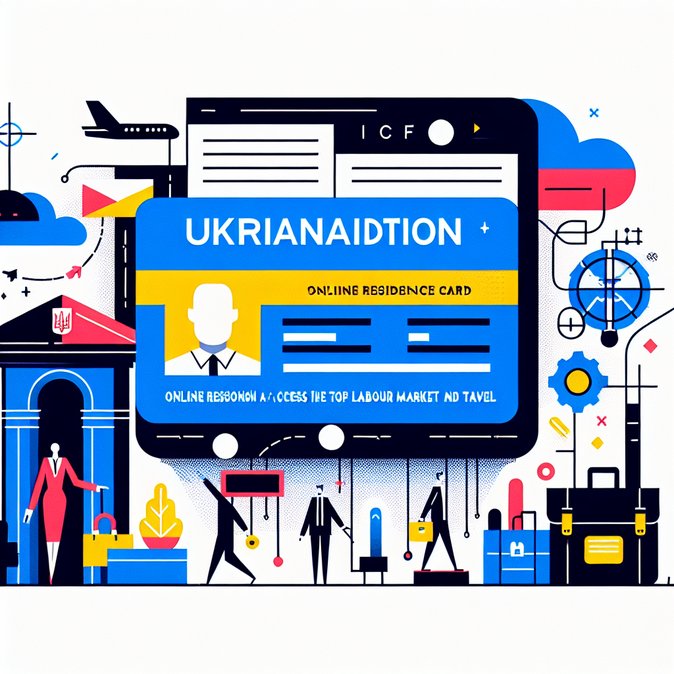
Poland’s long-awaited switch to fully digital immigration processing reached a new milestone on 4 May 2026, when the Office for Foreigners (UdSC) began accepting on-line applications for the special three-year temporary-residence card for Ukrainians known as the CUKR card. The card is aimed at nearly one million Ukrainian nationals who have been living in Poland under temporary-protection rules introduced after the February 2022 Russian invasion of Ukraine. Under the new system, eligible applicants must log into the government’s Moduł Obsługi Spraw (MOS) portal using the national e-ID gateway (login.gov.pl), complete the dedicated CUKR e-form, upload scans of supporting documents and sign the filing electronically with a trusted profile, qualified e-signature or e-ID card. The shift means no more standing in line at voivodeship offices—an important step forward for both assignees and the HR teams that support them.
![Poland Opens Online Applications for 3-Year ‘CUKR’ Residence Cards for Ukrainians]()
VisaHQ can streamline this transition even further. Through our Poland portal (https://www.visahq.com/poland/), applicants and corporate mobility teams can access up-to-date checklists, document-preparation tools and live support to navigate MOS registration, e-signature set-up and follow-up with the UdSC, ensuring that every CUKR submission is complete and compliant.
Once the application is accepted, the applicant receives an electronic confirmation and is later summoned only once—to collect the physical card. The CUKR card converts an individual’s temporary-protection stay into a three-year temporary-residence permit that confers unrestricted access to Poland’s labour market and the right to run a business on the same terms as Polish citizens. It also grants Schengen travel for up to 90 days per 180-day period and counts toward the five-year qualification period for EU long-term-resident status, making it particularly attractive for multinational companies with regional talent based in Poland. To qualify, an applicant must: (1) hold PESEL-UKR status on 4 June 2025, (2) still possess PESEL-UKR status on the application date and (3) have maintained that status continuously for at least 365 days. Filing is free, but applicants pay the standard PLN 340 stamp duty plus PLN 100 for card production. UdSC stresses that cards will be refused if an applicant appears in the Schengen Information System for refusal of entry or poses a national-security risk. For global-mobility managers the message is clear: advise Ukrainian employees to create MOS accounts, secure a trusted e-signature and file well before the 4 March 2027 statutory cut-off. Early adoption avoids last-minute bottlenecks and ensures uninterrupted work authorisation and travel flexibility.

VisaHQ can streamline this transition even further. Through our Poland portal (https://www.visahq.com/poland/), applicants and corporate mobility teams can access up-to-date checklists, document-preparation tools and live support to navigate MOS registration, e-signature set-up and follow-up with the UdSC, ensuring that every CUKR submission is complete and compliant.
Once the application is accepted, the applicant receives an electronic confirmation and is later summoned only once—to collect the physical card. The CUKR card converts an individual’s temporary-protection stay into a three-year temporary-residence permit that confers unrestricted access to Poland’s labour market and the right to run a business on the same terms as Polish citizens. It also grants Schengen travel for up to 90 days per 180-day period and counts toward the five-year qualification period for EU long-term-resident status, making it particularly attractive for multinational companies with regional talent based in Poland. To qualify, an applicant must: (1) hold PESEL-UKR status on 4 June 2025, (2) still possess PESEL-UKR status on the application date and (3) have maintained that status continuously for at least 365 days. Filing is free, but applicants pay the standard PLN 340 stamp duty plus PLN 100 for card production. UdSC stresses that cards will be refused if an applicant appears in the Schengen Information System for refusal of entry or poses a national-security risk. For global-mobility managers the message is clear: advise Ukrainian employees to create MOS accounts, secure a trusted e-signature and file well before the 4 March 2027 statutory cut-off. Early adoption avoids last-minute bottlenecks and ensures uninterrupted work authorisation and travel flexibility.