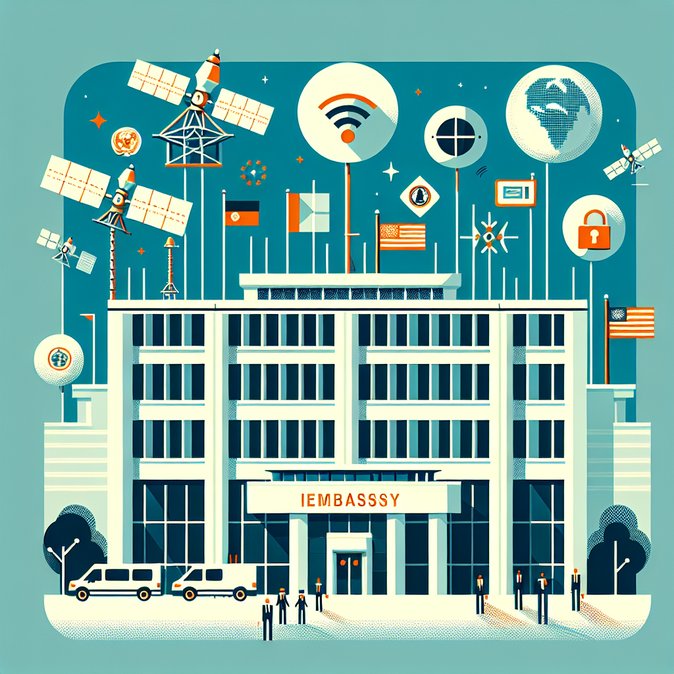
Austria’s Foreign Ministry confirmed on 4 May that three members of the Russian Embassy in Vienna have been declared personae non gratae and ordered to leave the country within 48 hours. The expulsions follow an Austrian counter-intelligence probe into what investigators called a “forest of antennas” mounted on the roofs of the embassy’s main chancery and a separate diplomatic compound in Donaustadt. According to officials, the powerful receivers were capable of vacuuming up satellite-based data traffic from the scores of international organisations headquartered in the Austrian capital, including the IAEA, UNIDO, OPEC and the OSCE. Vienna’s move is significant because the country has long been regarded as one of Europe’s more permissive landscapes for foreign intelligence activity—a by-product of its Cold-War neutrality and its role as a diplomatic hub. Until 2022 Austria had never expelled more than one Russian diplomat at a time; the latest decision brings the total number removed since Moscow’s full-scale invasion of Ukraine to fourteen. For global mobility managers and corporate security teams the episode is more than a spy-vs-spy drama. Russian diplomatic posts in Vienna process visas for Austrian executives travelling to Eurasian markets, and tit-for-tat reprisals from Moscow often target consular operations. In previous waves of expulsions, Russia responded by scaling back visa-issuing capacity or halting biometric enrolment at its missions abroad, creating unexpected delays for business travellers.
![Austria Expels Three Russian Diplomats Over Suspected Antenna-Based Spying]()
To help companies navigate exactly this sort of disruption, VisaHQ’s Austria portal (https://www.visahq.com/austria/) tracks live changes at Russian and other consulates, offers alternative application routes, and provides courier submission services, ensuring travellers can secure the documents they need even when official channels become bottlenecked.
The affair also accelerates Austria’s push to modernise its espionage legislation. A draft bill now before parliament would criminalise spying against EU institutions and international bodies based in Austria—closing a well-known loophole that has frustrated law-enforcement for decades. Once enacted, the reforms could lead to more proactive surveillance-equipment inspections around diplomatic premises and critical infrastructure, potentially affecting future accreditation processes for foreign mission staff. In the shorter term, employers should brief travellers on the possibility of slower Russian visa processing and monitor any Kremlin retaliation that could include restrictions on Austrian diplomats in Moscow or tightened entry rules for Austrian nationals.

To help companies navigate exactly this sort of disruption, VisaHQ’s Austria portal (https://www.visahq.com/austria/) tracks live changes at Russian and other consulates, offers alternative application routes, and provides courier submission services, ensuring travellers can secure the documents they need even when official channels become bottlenecked.
The affair also accelerates Austria’s push to modernise its espionage legislation. A draft bill now before parliament would criminalise spying against EU institutions and international bodies based in Austria—closing a well-known loophole that has frustrated law-enforcement for decades. Once enacted, the reforms could lead to more proactive surveillance-equipment inspections around diplomatic premises and critical infrastructure, potentially affecting future accreditation processes for foreign mission staff. In the shorter term, employers should brief travellers on the possibility of slower Russian visa processing and monitor any Kremlin retaliation that could include restrictions on Austrian diplomats in Moscow or tightened entry rules for Austrian nationals.