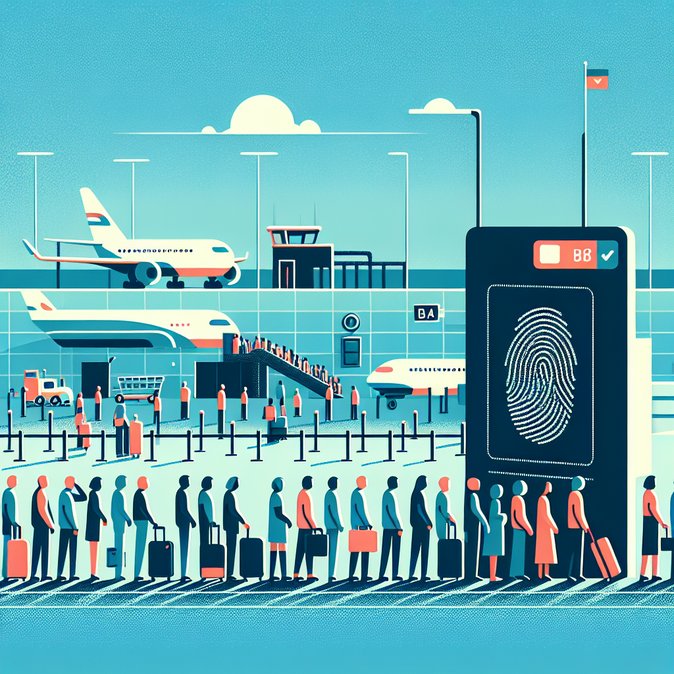
Europe’s largest low-cost carrier has fired the opening shot in what is likely to become the summer’s hottest mobility debate. In a letter sent on 29 April and published by ITV News on 30 April, Ryanair asks the 29 Schengen and associated states that have activated the EU Entry/Exit System (EES) to suspend mandatory biometric border checks until 1 September. The airline says that, barely three weeks after the 10 April switch-on, queues of one-to-three hours are building at multiple airports and some passengers are already missing flights.
![Ryanair urges EU governments—including Austria—to suspend new Entry/Exit System until September]()
Travellers eager to avoid last-minute surprises can lean on VisaHQ for practical support. The company’s Austria portal (https://www.visahq.com/austria/) offers real-time updates on passport validity rules, blank-page requirements, ETIAS developments and courier renewal services—making sure both business and leisure passengers reach the EES kiosks with confidence instead of confusion.
For Austria, the demand lands at a sensitive moment. Vienna-Schwechat, Salzburg and Innsbruck airports moved to full EES compliance on 10 April, just as the spring travel wave began. Airport operator Flughafen Wien has acknowledged sporadic bottlenecks at the automatic kiosks and has redeployed staff from quieter terminals to help guide travellers through the process. Business-travel management companies report that door-to-gate itineraries have had to be padded by up to 90 minutes—an unwelcome cost for corporations that rely on tight day-trip schedules between Vienna and other European centres. Ryanair’s letter praises Greece—which paused EES until autumn—as a model and argues that airports already have a legal basis (Article 23 of Regulation EU 2025/1534) to seek a suspension during peak periods. Austrian industry groups are split. The Austrian Hotel Association backs a pause, warning that long immigration queues could deter inbound tourists during the May and August holiday peaks. The Austrian Business Travel Association, by contrast, fears that a blanket suspension would delay the learning curve and simply push the chaos into the autumn conference season. Practically, nothing changes unless Austria’s interior ministry applies for an opt-out. Mobility managers should therefore continue to brief travellers to arrive early, ensure passports have at least two blank pages for the new entry/exit stamps that accompany the biometric record, and register Advance Passenger Information accurately to avoid manual processing. Companies rotating expatriate staff after the 30-June half-year may also wish to stagger travel dates to mitigate the risk of missed connections. Longer term, the controversy underlines the importance of Austria’s parallel investment in Smart Borders technology and the forthcoming ETIAS travel authorisation. Whether the government yields to Ryanair’s call or not, more automation—not less—appears inevitable for anyone crossing Austria’s external Schengen frontiers.

Travellers eager to avoid last-minute surprises can lean on VisaHQ for practical support. The company’s Austria portal (https://www.visahq.com/austria/) offers real-time updates on passport validity rules, blank-page requirements, ETIAS developments and courier renewal services—making sure both business and leisure passengers reach the EES kiosks with confidence instead of confusion.
For Austria, the demand lands at a sensitive moment. Vienna-Schwechat, Salzburg and Innsbruck airports moved to full EES compliance on 10 April, just as the spring travel wave began. Airport operator Flughafen Wien has acknowledged sporadic bottlenecks at the automatic kiosks and has redeployed staff from quieter terminals to help guide travellers through the process. Business-travel management companies report that door-to-gate itineraries have had to be padded by up to 90 minutes—an unwelcome cost for corporations that rely on tight day-trip schedules between Vienna and other European centres. Ryanair’s letter praises Greece—which paused EES until autumn—as a model and argues that airports already have a legal basis (Article 23 of Regulation EU 2025/1534) to seek a suspension during peak periods. Austrian industry groups are split. The Austrian Hotel Association backs a pause, warning that long immigration queues could deter inbound tourists during the May and August holiday peaks. The Austrian Business Travel Association, by contrast, fears that a blanket suspension would delay the learning curve and simply push the chaos into the autumn conference season. Practically, nothing changes unless Austria’s interior ministry applies for an opt-out. Mobility managers should therefore continue to brief travellers to arrive early, ensure passports have at least two blank pages for the new entry/exit stamps that accompany the biometric record, and register Advance Passenger Information accurately to avoid manual processing. Companies rotating expatriate staff after the 30-June half-year may also wish to stagger travel dates to mitigate the risk of missed connections. Longer term, the controversy underlines the importance of Austria’s parallel investment in Smart Borders technology and the forthcoming ETIAS travel authorisation. Whether the government yields to Ryanair’s call or not, more automation—not less—appears inevitable for anyone crossing Austria’s external Schengen frontiers.