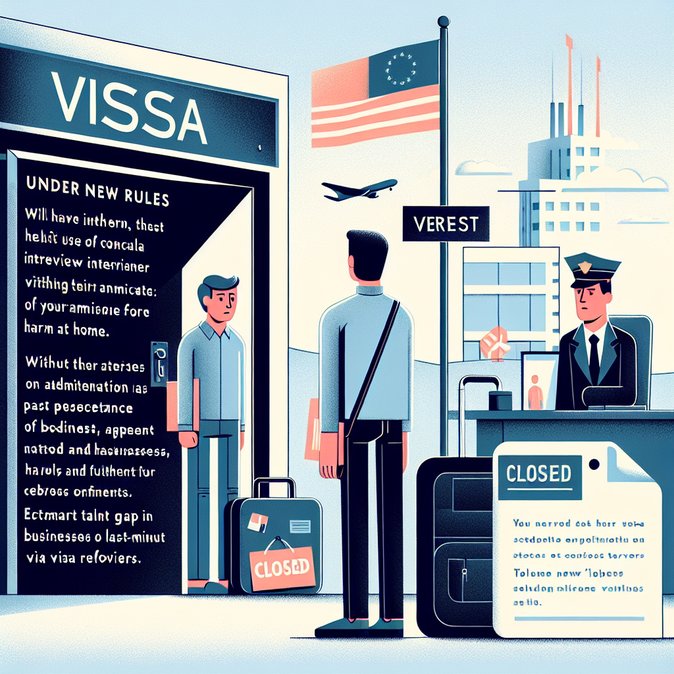
A worldwide cable sent by the U.S. Department of State on April 28—and publicly confirmed on April 30—mandates that consular officers ask all non-immigrant visa applicants two new questions: whether they have experienced persecution at home and whether they fear future harm if they return. An affirmative answer now requires an automatic refusal under section 214(b) on the grounds that the applicant may seek U.S. protection.
![State Department Instructs Consulates to Deny Visas When Applicants Admit Fear of Returning Home]()
For travelers and HR teams who suddenly find themselves navigating this tougher landscape, VisaHQ can be an invaluable ally. Through its real-time tracking of consular policies and step-by-step application tools, VisaHQ (https://www.visahq.com/united-states/) helps applicants and employers spot potential 214(b) red flags early, assemble the correct documentation, and secure appointments faster—often preventing costly refusals or last-minute itinerary changes.
The directive operationalizes language in President Donald Trump’s 2025 executive order aimed at curbing what the administration labels “asylum shopping.” Until now, fear-based screening occurred only after arrival—during airport credible-fear interviews or formal asylum applications. Front-loading the assessment effectively forces would-be students, tourists and business travelers to waive confidentiality about persecution claims, a move refugee advocates say violates international norms. Practically, the rule introduces fresh uncertainty for companies that host interns, trainees or visiting managers from politically unstable regions. A truthful response could torpedo a B-1/B-2 or J-1 visa—even if the individual’s U.S. trip is short-term. Immigration lawyers are advising clients to prepare for increased refusals and to consider alternate mobility strategies such as remote work hubs or assignments in third countries. The policy also complicates future adjustment-of-status filings. Attorneys note that an applicant who answered “no” abroad but later files an asylum claim inside the United States will face credibility challenges. Conversely, a “yes” answer abroad becomes part of the permanent consular record, accessible to adjudicators at USCIS and CBP. Multiple lawsuits are expected, with plaintiffs likely to argue that the blanket refusals contravene statutes guaranteeing individualized assessments. Until the courts weigh in, global mobility teams should screen travelers for possible fear-of-return issues well before visa interviews and build extra lead time into project schedules.

For travelers and HR teams who suddenly find themselves navigating this tougher landscape, VisaHQ can be an invaluable ally. Through its real-time tracking of consular policies and step-by-step application tools, VisaHQ (https://www.visahq.com/united-states/) helps applicants and employers spot potential 214(b) red flags early, assemble the correct documentation, and secure appointments faster—often preventing costly refusals or last-minute itinerary changes.
The directive operationalizes language in President Donald Trump’s 2025 executive order aimed at curbing what the administration labels “asylum shopping.” Until now, fear-based screening occurred only after arrival—during airport credible-fear interviews or formal asylum applications. Front-loading the assessment effectively forces would-be students, tourists and business travelers to waive confidentiality about persecution claims, a move refugee advocates say violates international norms. Practically, the rule introduces fresh uncertainty for companies that host interns, trainees or visiting managers from politically unstable regions. A truthful response could torpedo a B-1/B-2 or J-1 visa—even if the individual’s U.S. trip is short-term. Immigration lawyers are advising clients to prepare for increased refusals and to consider alternate mobility strategies such as remote work hubs or assignments in third countries. The policy also complicates future adjustment-of-status filings. Attorneys note that an applicant who answered “no” abroad but later files an asylum claim inside the United States will face credibility challenges. Conversely, a “yes” answer abroad becomes part of the permanent consular record, accessible to adjudicators at USCIS and CBP. Multiple lawsuits are expected, with plaintiffs likely to argue that the blanket refusals contravene statutes guaranteeing individualized assessments. Until the courts weigh in, global mobility teams should screen travelers for possible fear-of-return issues well before visa interviews and build extra lead time into project schedules.