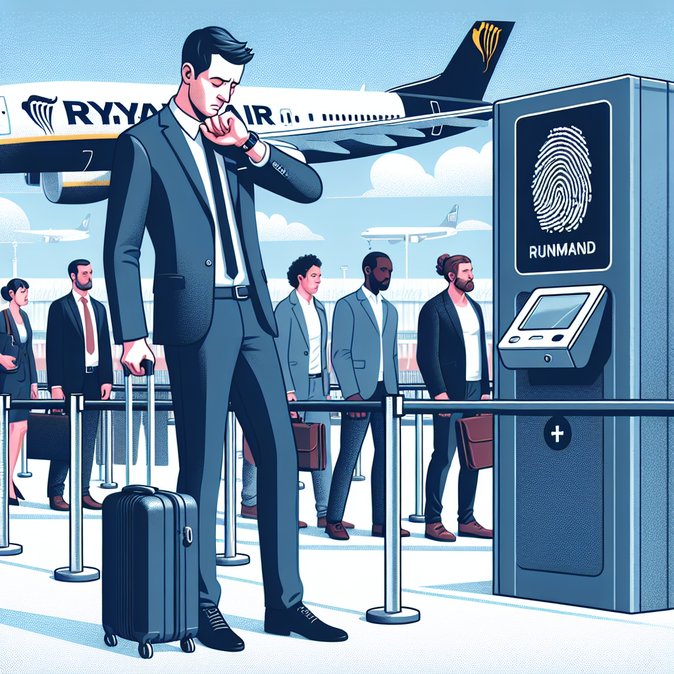
Low-cost carrier Ryanair has written to Interior Minister Laurent Nuñez requesting that France suspend implementation of the European Entry/Exit System (EES) until September 2026. In a letter dated April 30, the airline argues that the biometric border regime—requiring non-EU travellers to provide fingerprints and a facial image on arrival—remains “half-baked” and is already producing one-to-two-hour queues at Beauvais, Marseille and Nantes.
The plea echoes a similar call from airport operator Groupe ADP, which warned of chronic congestion if the system goes live in its current state.
![Ryanair Urges France to Freeze EU Entry/Exit System Ahead of Peak Summer]()
For travellers trying to navigate the ever-changing border requirements, VisaHQ can provide end-to-end support. Its France hub (https://www.visahq.com/france/) tracks EES developments in real time and helps individuals and corporate mobility teams secure the correct visas, scan supporting documents, and schedule consular appointments—cutting down uncertainty before they even reach the airport.
Although long-stay visa-holders and residents are theoretically exempt, they are still being funnelled into manual lanes because the PARAFE e-gates cannot yet read the new enrolment status. Ryanair’s operations chief Neal McMahon says families risk missing flights and that France should invoke the postponement clause in EU Regulation 2025/1534—just as Greece has done—to safeguard the summer peak. For corporate travel managers, the standoff creates uncertainty around process times at French borders. If Paris ignores the request, mobility teams must brief assignees from visa-waiver countries (UK, US, Australia, etc.) that first entry could take 30-60 minutes longer while kiosks capture biometrics. Companies with commuting staff on British ‘Brexit’ cards should also prepare them for possible manual checks. Should the suspension be granted, France would join several member states delaying EES until after 30 September. That would give airports time to install more self-service booths, train police aux frontières on troubleshooting, and roll out the ‘Travel to Europe’ pre-registration app that is already live in Portugal and Sweden. Either outcome demands action: travellers should arrive earlier, and HR teams should factor potential missed connections into duty-of-care planning. Meanwhile, vendors offering expedited-lane services are likely to see a surge in corporate demand as businesses look for guaranteed throughput during a volatile rollout.
The plea echoes a similar call from airport operator Groupe ADP, which warned of chronic congestion if the system goes live in its current state.
For travellers trying to navigate the ever-changing border requirements, VisaHQ can provide end-to-end support. Its France hub (https://www.visahq.com/france/) tracks EES developments in real time and helps individuals and corporate mobility teams secure the correct visas, scan supporting documents, and schedule consular appointments—cutting down uncertainty before they even reach the airport.
Although long-stay visa-holders and residents are theoretically exempt, they are still being funnelled into manual lanes because the PARAFE e-gates cannot yet read the new enrolment status. Ryanair’s operations chief Neal McMahon says families risk missing flights and that France should invoke the postponement clause in EU Regulation 2025/1534—just as Greece has done—to safeguard the summer peak. For corporate travel managers, the standoff creates uncertainty around process times at French borders. If Paris ignores the request, mobility teams must brief assignees from visa-waiver countries (UK, US, Australia, etc.) that first entry could take 30-60 minutes longer while kiosks capture biometrics. Companies with commuting staff on British ‘Brexit’ cards should also prepare them for possible manual checks. Should the suspension be granted, France would join several member states delaying EES until after 30 September. That would give airports time to install more self-service booths, train police aux frontières on troubleshooting, and roll out the ‘Travel to Europe’ pre-registration app that is already live in Portugal and Sweden. Either outcome demands action: travellers should arrive earlier, and HR teams should factor potential missed connections into duty-of-care planning. Meanwhile, vendors offering expedited-lane services are likely to see a surge in corporate demand as businesses look for guaranteed throughput during a volatile rollout.