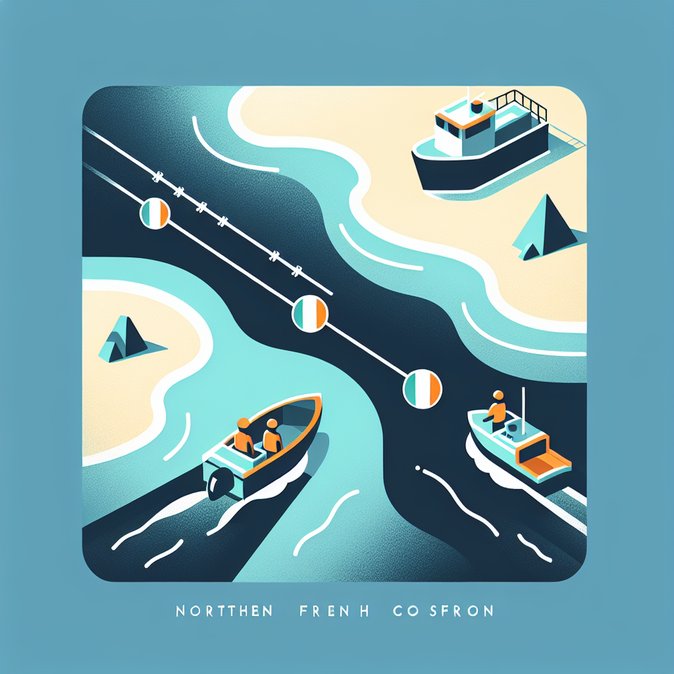
For the first time since the Channel-crossing crisis began, France’s maritime gendarmerie has been formally authorised to stop small migrant boats at sea and escort them back to port. An internal directive dated 25 November 2025—but revealed only this week—sets out a phased plan for interceptions that has now moved from trials to full deployment. According to testimony before a French parliamentary inquiry into the 2003 Le Touquet Treaty, the new tactics have already been used at least seven times, including three operations earlier this month off Gravelines, Leffrinckoucke and Zuydcoote. Until now, France had confined its efforts to land-based prevention, arguing that manoeuvres at sea risk capsizing the overcrowded inflatables used by smugglers. Growing British pressure—and a fresh €766 million UK funding pledge—has changed the calculus. Officers will now attempt to “surround migrant boats before they become too crowded,” then tow or escort them to the nearest French harbour for police processing. Senior officials insist that preserving life remains the priority and say no casualties have been recorded so far. The move is highly significant for border-control cooperation. More than 6,000 people have already reached southern England in 2026, frustrating London’s attempts to deter irregular arrivals. Interceptions allow France to demonstrate tougher enforcement while avoiding politically explosive push-backs in British waters. For business travellers and cross-Channel freight operators, the policy aims to reduce ad-hoc maritime rescue zones that have forced commercial shipping to divert. Human-rights groups, however, warn that rapid interceptions may deny asylum-seekers a chance to lodge protection claims and could push smugglers toward even riskier routes.
![France Authorises Maritime Interceptions to Curb English Channel Crossings]()
For those navigating the rapidly evolving cross-Channel travel rules—whether corporate mobility teams, logistics managers or individual passengers—VisaHQ can streamline the visa and documentation process, offer up-to-date guidance on French entry requirements and help mitigate last-minute surprises. Explore tailored solutions at https://www.visahq.com/france/
Companies sending staff through Calais or Dover should monitor any knock-on disruption—French police have indicated that beach patrols will be reinforced and temporary access restrictions to some coastal roads are possible during large-scale operations. In practical terms, mobility managers should brief travellers on potential delays near embarkation points, keep vehicle documentation handy for spot checks and allow extra time for Eurotunnel or ferry connections. Organisations with cross-border supply chains may also wish to review contingency plans in case operations spill over into the commercial lanes of the Strait of Dover.
For those navigating the rapidly evolving cross-Channel travel rules—whether corporate mobility teams, logistics managers or individual passengers—VisaHQ can streamline the visa and documentation process, offer up-to-date guidance on French entry requirements and help mitigate last-minute surprises. Explore tailored solutions at https://www.visahq.com/france/
Companies sending staff through Calais or Dover should monitor any knock-on disruption—French police have indicated that beach patrols will be reinforced and temporary access restrictions to some coastal roads are possible during large-scale operations. In practical terms, mobility managers should brief travellers on potential delays near embarkation points, keep vehicle documentation handy for spot checks and allow extra time for Eurotunnel or ferry connections. Organisations with cross-border supply chains may also wish to review contingency plans in case operations spill over into the commercial lanes of the Strait of Dover.