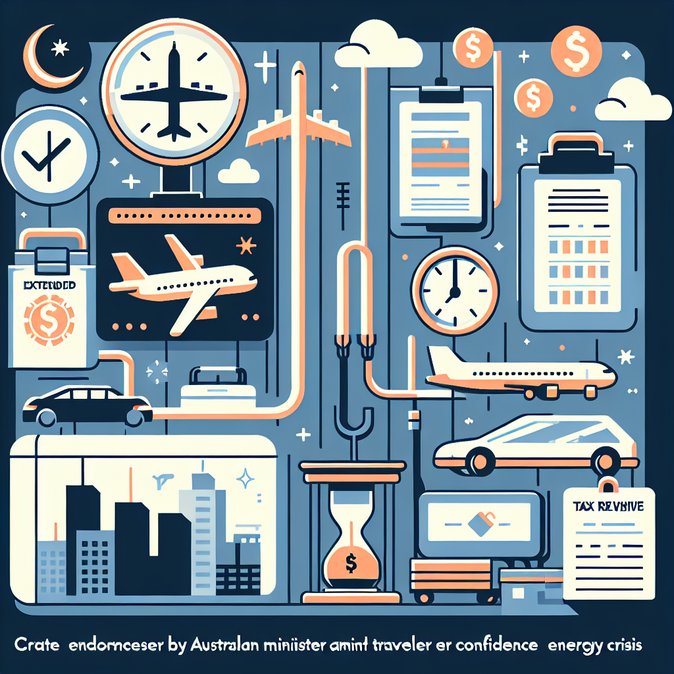
Meeting in Sydney on 30 April, Australia’s federal, state and territory tourism ministers issued a joint communique pledging coordinated action to cushion the visitor economy from global fuel-price volatility. Chaired by Trade and Tourism Minister Don Farrell, the gathering reviewed the National Fuel Security Plan and heard briefings from the Fuel Supply Taskforce on recent emergency cargoes arranged for aviation and road transport. Ministers agreed that clear public information on fuel availability is critical to sustaining interstate leisure travel and regional self-drive itineraries – segments that generate more than A$80 billion annually.
![Tourism Ministers back fuel-security measures to protect traveller confidence]()
Amid these discussions, travellers preparing journeys to Australia can streamline another critical component – visa processing. VisaHQ offers a user-friendly online service (https://www.visahq.com/australia/) that guides holidaymakers, corporate groups and event organisers through the latest entry requirements, ensuring documents are lodged correctly and quickly so attention can stay on budgeting for fuel and logistics.
They tasked the Northern Territory to lead work on a nationwide portal that would display real-time fuel-stock levels and retail prices, reducing panic-buying and alleviating the burden on remote operators. Austrade’s CEO Paul Grimes reported that international arrivals during Easter tracked at 86 % of 2019 levels, with Europe and North America rebounding fastest. While consumer sentiment surveys show travellers still view Australia as safe, high operating costs – especially jet fuel – risk dampening demand. Ministers therefore welcomed the Commonwealth’s decision to halve the fuel excise and pause the Heavy Vehicle User Charge through September. The meeting also touched on natural-disaster recovery after Cyclone Narelle and recent bushfires. States agreed to fast-track tourism-infrastructure rebuilds via the THRIVE 2030 strategy and to maintain close liaison with insurance regulators so that small tourism businesses can access affordable cover. For mobility managers the take-away is two-fold: first, the government is unlikely to re-impose Covid-style travel curbs despite geopolitical shocks, relying instead on supply-chain interventions; second, companies running staff roadshows or incentive trips in regional Australia should reference the forthcoming fuel-information portal when setting budgets and contingency plans.

Amid these discussions, travellers preparing journeys to Australia can streamline another critical component – visa processing. VisaHQ offers a user-friendly online service (https://www.visahq.com/australia/) that guides holidaymakers, corporate groups and event organisers through the latest entry requirements, ensuring documents are lodged correctly and quickly so attention can stay on budgeting for fuel and logistics.
They tasked the Northern Territory to lead work on a nationwide portal that would display real-time fuel-stock levels and retail prices, reducing panic-buying and alleviating the burden on remote operators. Austrade’s CEO Paul Grimes reported that international arrivals during Easter tracked at 86 % of 2019 levels, with Europe and North America rebounding fastest. While consumer sentiment surveys show travellers still view Australia as safe, high operating costs – especially jet fuel – risk dampening demand. Ministers therefore welcomed the Commonwealth’s decision to halve the fuel excise and pause the Heavy Vehicle User Charge through September. The meeting also touched on natural-disaster recovery after Cyclone Narelle and recent bushfires. States agreed to fast-track tourism-infrastructure rebuilds via the THRIVE 2030 strategy and to maintain close liaison with insurance regulators so that small tourism businesses can access affordable cover. For mobility managers the take-away is two-fold: first, the government is unlikely to re-impose Covid-style travel curbs despite geopolitical shocks, relying instead on supply-chain interventions; second, companies running staff roadshows or incentive trips in regional Australia should reference the forthcoming fuel-information portal when setting budgets and contingency plans.