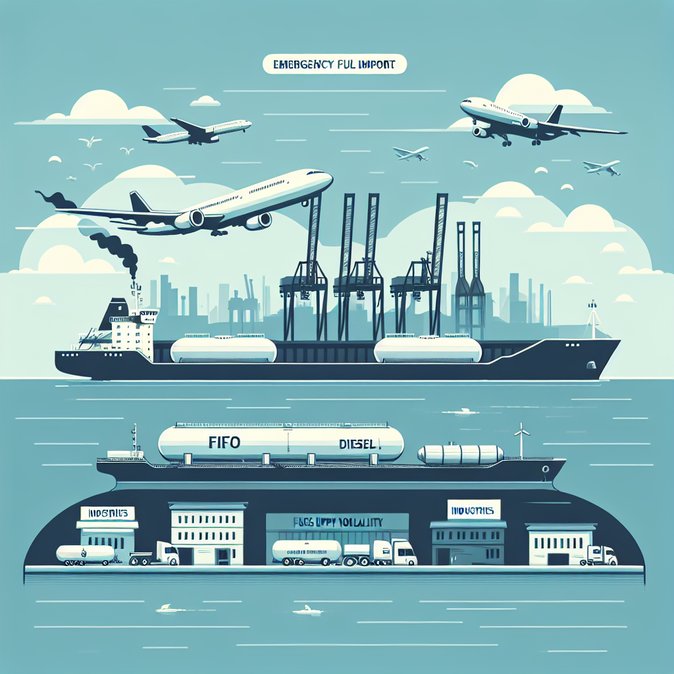
The Australian Government has moved quickly to shore up the country’s aviation fuel security, announcing on 1 May 2026 that two new cargoes carrying a combined 100 million litres of jet-A1 are bound for Brisbane and Perth, alongside an extra 50 million litres of diesel for Darwin. The shipments – negotiated under Strategic Reserve powers created in 2024 – come on top of eight earlier cargoes already scheduled for May–June. In total, more than 450 million litres of diesel and 100 million litres of jet fuel have now been secured in response to ongoing Middle-East supply disruptions. Prime Minister Anthony Albanese said the government was “leaving no stone unturned” to protect essential travel and freight links. Trade and Tourism Minister Don Farrell underlined the move’s importance for tourism-dependent regions and remote communities that rely on fly-in/fly-out (FIFO) workforces.
The fuel will be discharged at strategic terminals in Brisbane, Perth and Darwin before being blended into domestic supply chains.
Amid these operational considerations, travel planners should also keep visa and entry requirements front of mind. VisaHQ’s dedicated Australia portal (https://www.visahq.com/australia/) enables airlines, FIFO contractors and individual passengers to check the latest visa rules, file applications online and arrange express passport services—helping travellers stay compliant while the sector grapples with fuel-supply uncertainties.
![Canberra locks in 100 million litres of jet fuel to keep Australia flying]()
Aviation analysts note that Australia imports roughly 90 % of its refined jet fuel, making the industry highly exposed to global price spikes and shipping bottlenecks. Qantas and Virgin Australia have both flagged higher fuel bills in recent market updates, with Qantas projecting FY26 second-half fuel costs of up to A$3.3 billion – roughly A$1 billion above its previous guidance.
Additional government-backed cargoes should ease immediate price pressure and reduce the risk of ad-hoc flight cancellations during the busy southern-winter peak. For corporate travel managers the announcement provides welcome certainty. Many multinationals had begun inserting fuel-surcharge escalation clauses into travel budgets after seeing spot prices jump 18 % in April. The fresh supply also safeguards interstate FIFO rosters in the resources sector, where even short-term flight disruptions can cascade into costly site shutdowns.
Looking ahead, Canberra is working with refiners BP, Ampol and Viva Energy on a longer-term National Fuel Security Plan that includes minimum commercial stockholding obligations and tax incentives for new on-shore storage. Companies with large mobile workforces should track these developments closely; future regulatory settings may require updated travel-risk assessments and supplier contracts.
The fuel will be discharged at strategic terminals in Brisbane, Perth and Darwin before being blended into domestic supply chains.
Amid these operational considerations, travel planners should also keep visa and entry requirements front of mind. VisaHQ’s dedicated Australia portal (https://www.visahq.com/australia/) enables airlines, FIFO contractors and individual passengers to check the latest visa rules, file applications online and arrange express passport services—helping travellers stay compliant while the sector grapples with fuel-supply uncertainties.

Aviation analysts note that Australia imports roughly 90 % of its refined jet fuel, making the industry highly exposed to global price spikes and shipping bottlenecks. Qantas and Virgin Australia have both flagged higher fuel bills in recent market updates, with Qantas projecting FY26 second-half fuel costs of up to A$3.3 billion – roughly A$1 billion above its previous guidance.
Additional government-backed cargoes should ease immediate price pressure and reduce the risk of ad-hoc flight cancellations during the busy southern-winter peak. For corporate travel managers the announcement provides welcome certainty. Many multinationals had begun inserting fuel-surcharge escalation clauses into travel budgets after seeing spot prices jump 18 % in April. The fresh supply also safeguards interstate FIFO rosters in the resources sector, where even short-term flight disruptions can cascade into costly site shutdowns.
Looking ahead, Canberra is working with refiners BP, Ampol and Viva Energy on a longer-term National Fuel Security Plan that includes minimum commercial stockholding obligations and tax incentives for new on-shore storage. Companies with large mobile workforces should track these developments closely; future regulatory settings may require updated travel-risk assessments and supplier contracts.