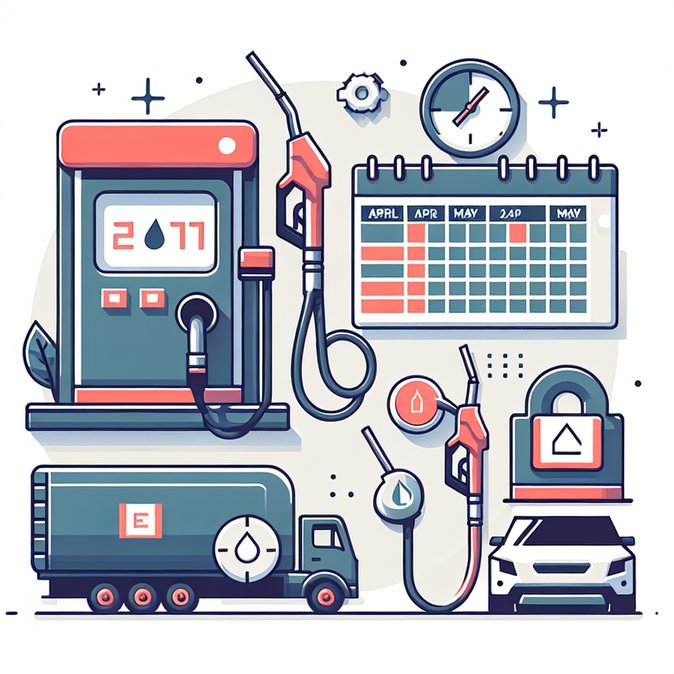
With petrol and diesel still well above their five-year averages, Austria’s coalition struck a last-minute deal on 30 April to prolong its so-called “Spritpreisbremse” (fuel-price brake) for a further month. Under the compromise—announced jointly by the finance, economy and infrastructure ministries—all motorists will benefit from a two-cent cut in mineral-oil duty throughout May, down from five cents in April. Retail margins on fuel will likewise be capped at two and-a-half cents per litre after an initial two-week grace period.
![Austrian government extends— but scales back— fuel-price ‘brake’, easing cost pressure on corporate road travel]()
For organisations sending employees or contractors to Austria during this period, VisaHQ can streamline the paperwork behind the trip. From business-visa applications to residence permits, the platform’s step-by-step wizards and live status dashboards help mobility managers keep travel compliant while they focus on fluctuating cost items such as fuel. Details of the services available for Austria can be found at https://www.visahq.com/austria/
Although positioned as relief for private households, the measure has immediate implications for mobility budgets. According to the Austrian Automobile Club ÖAMTC, the average price of unleaded in Vienna fell by 4.8 % in April thanks to the original brake. Fleet-management firm Arval calculates that a company car covering 2,000 kilometres a month saved around €18 in fuel costs. Extending the discount—albeit in reduced form—should hold pump prices roughly 3 % below the trajectory implied by current Rotterdam spot rates, cushioning travel-expense lines for field engineers, sales teams and assignees who rely on rental cars. The compromise also addresses supply-chain concerns raised by hauliers: capping margins rather than taxes for part of the period should leave smaller rural petrol stations with enough revenue to maintain deliveries, ensuring that cross-border trucking via Austria’s east-west corridors is not disrupted. However, the government made clear that the intervention will end on 31 May unless fresh energy-market turmoil materialises. Mobility managers are advised to update per-kilometre reimbursement tables for May, brief international assignees about the temporary nature of the savings and, where possible, accelerate fuel card reconciliations before a likely price rebound in June. Multinationals operating car-lease programmes should factor the policy shift into total-cost-of-ownership calculations when rolling over vehicle contracts in Q3. Looking ahead, a permanent reform of Austria’s energy-tax framework remains on the table. The finance ministry confirmed that it will publish a white paper before the summer recess reviewing index-linked excise duties—an exercise that could redefine mobility cost baselines for years to come.

For organisations sending employees or contractors to Austria during this period, VisaHQ can streamline the paperwork behind the trip. From business-visa applications to residence permits, the platform’s step-by-step wizards and live status dashboards help mobility managers keep travel compliant while they focus on fluctuating cost items such as fuel. Details of the services available for Austria can be found at https://www.visahq.com/austria/
Although positioned as relief for private households, the measure has immediate implications for mobility budgets. According to the Austrian Automobile Club ÖAMTC, the average price of unleaded in Vienna fell by 4.8 % in April thanks to the original brake. Fleet-management firm Arval calculates that a company car covering 2,000 kilometres a month saved around €18 in fuel costs. Extending the discount—albeit in reduced form—should hold pump prices roughly 3 % below the trajectory implied by current Rotterdam spot rates, cushioning travel-expense lines for field engineers, sales teams and assignees who rely on rental cars. The compromise also addresses supply-chain concerns raised by hauliers: capping margins rather than taxes for part of the period should leave smaller rural petrol stations with enough revenue to maintain deliveries, ensuring that cross-border trucking via Austria’s east-west corridors is not disrupted. However, the government made clear that the intervention will end on 31 May unless fresh energy-market turmoil materialises. Mobility managers are advised to update per-kilometre reimbursement tables for May, brief international assignees about the temporary nature of the savings and, where possible, accelerate fuel card reconciliations before a likely price rebound in June. Multinationals operating car-lease programmes should factor the policy shift into total-cost-of-ownership calculations when rolling over vehicle contracts in Q3. Looking ahead, a permanent reform of Austria’s energy-tax framework remains on the table. The finance ministry confirmed that it will publish a white paper before the summer recess reviewing index-linked excise duties—an exercise that could redefine mobility cost baselines for years to come.