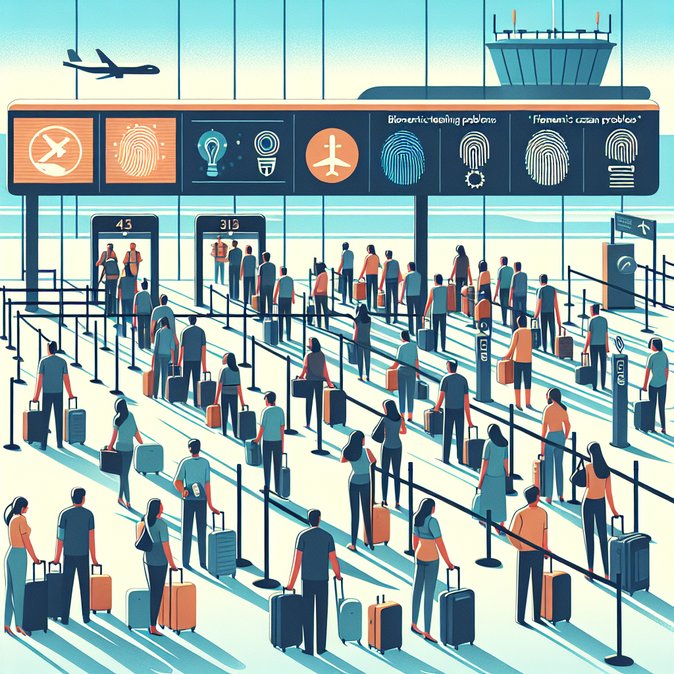
Less than three weeks after the European Union’s Entry/Exit System (EES) went fully live on 10 April, passengers are finding that the promised ‘fast biometrics’ experience can be anything but. The Guardian collected hundreds of traveller accounts published on 30 April, many detailing wait times of up to three hours at Schengen border posts. Among the worst-hit were Poland’s Kraków John Paul II International Airport and Warsaw Chopin, where malfunctioning kiosks forced border guards to improvise by taking photographs with mobile phones. EES replaces traditional passport stamps for non-EU travellers with a biometric record—face and fingerprints—stored in a central EU database. While the system is designed to tighten enforcement of the 90/180-day visa-free rule, the initial learning curve has exposed gaps in staffing, signage and contingency planning.
![New EU Entry/Exit System causes airport bottlenecks as Kraków and Warsaw report three-hour queues]()
Travellers looking to navigate these new requirements more smoothly can turn to VisaHQ (https://www.visahq.com/poland/) for personalised, real-time advice on Poland’s border formalities, including EES registration. The platform consolidates official updates, helps prepare the right documentation in advance and even offers concierge options—services that can shave precious minutes off airport processing and spare companies the knock-on costs of missed flights.
Kraków passengers on 4 February reported being kept on board for 30 minutes awaiting space in an overcrowded arrivals hall; those landing in Warsaw during the 1 May holiday getaway faced snaking queues that spilled into air-bridges. Polish Border Guard officials say throughput has improved since launch but concede that peak-hour delays remain above target. They have redeployed additional officers and installed “queue marshals” to guide confused travellers toward functioning kiosks, yet hardware reliability is still patchy—especially for fingerprint readers. For corporates, the disruption carries hard costs. European Low-Cost Carrier (LCC) EasyJet confirmed that 122 passengers missed a Milan–Manchester flight last week after biometric bottlenecks; LOT Polish Airlines has similarly recorded a spike in denied boardings attributed to late-arriving travellers. Mobility managers are now advising staff to arrive at least three hours before departure on Schengen-external itineraries and to complete first-time EES enrolment on the outbound leg when airport pressure is lower. The European Commission insists that performance will stabilise as both travellers and staff become familiar with the system. In the meantime, companies should update travel policies, brief assignees on the additional processing step and build extra buffer time into connecting itineraries through Polish hubs.

Travellers looking to navigate these new requirements more smoothly can turn to VisaHQ (https://www.visahq.com/poland/) for personalised, real-time advice on Poland’s border formalities, including EES registration. The platform consolidates official updates, helps prepare the right documentation in advance and even offers concierge options—services that can shave precious minutes off airport processing and spare companies the knock-on costs of missed flights.
Kraków passengers on 4 February reported being kept on board for 30 minutes awaiting space in an overcrowded arrivals hall; those landing in Warsaw during the 1 May holiday getaway faced snaking queues that spilled into air-bridges. Polish Border Guard officials say throughput has improved since launch but concede that peak-hour delays remain above target. They have redeployed additional officers and installed “queue marshals” to guide confused travellers toward functioning kiosks, yet hardware reliability is still patchy—especially for fingerprint readers. For corporates, the disruption carries hard costs. European Low-Cost Carrier (LCC) EasyJet confirmed that 122 passengers missed a Milan–Manchester flight last week after biometric bottlenecks; LOT Polish Airlines has similarly recorded a spike in denied boardings attributed to late-arriving travellers. Mobility managers are now advising staff to arrive at least three hours before departure on Schengen-external itineraries and to complete first-time EES enrolment on the outbound leg when airport pressure is lower. The European Commission insists that performance will stabilise as both travellers and staff become familiar with the system. In the meantime, companies should update travel policies, brief assignees on the additional processing step and build extra buffer time into connecting itineraries through Polish hubs.