India’s Civil Aviation Ministry has issued a Standard Operating Procedure (SOP) that finally clears the path for true hub-and-spoke flight operations—an essential building block for Delhi, Mumbai and Bengaluru to compete with Dubai or Singapore as global transit hubs.
![New Hub-and-Spoke SOP Sets Out Immigration Playbook for Domestic–International Connections]()
For corporate mobility managers navigating these changes, VisaHQ’s India portal (https://www.visahq.com/india/) can streamline visa and documentation checks for travellers transiting through the new hubs, integrating real-time alerts and compliance guidance into booking workflows.
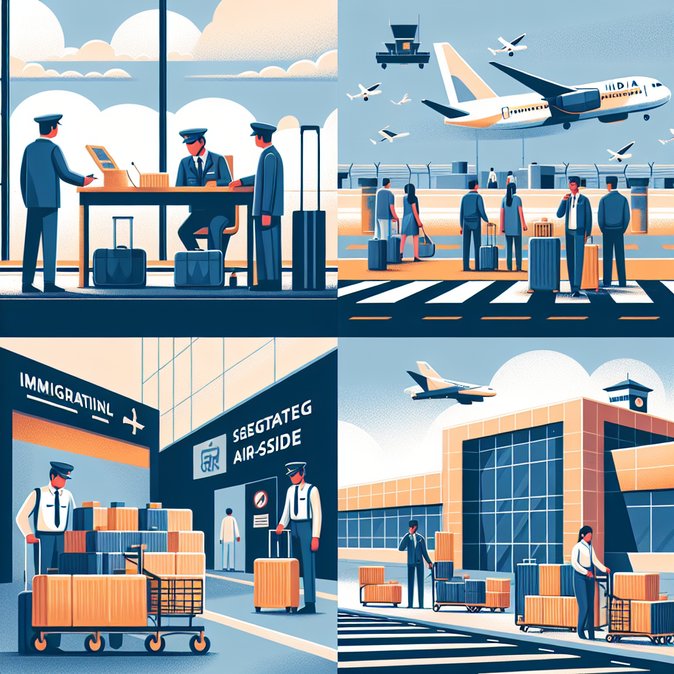
Published on 30 April 2026, the SOP re-classifies the spoke-to-hub domestic leg of a through-ticket as an ‘international’ service. That simple phrasing has far-reaching immigration consequences. Under the new model, passengers originating in Tier-II cities such as Varanasi or Coimbatore will complete immigration, customs and security at their point of departure, drop their checked bags and board a domestic flight to the hub. On arrival at Delhi, for example, they enter a sterile international zone and proceed directly to their long-haul gate—no baggage reclaim, no second passport inspection and, crucially, no mingling with true domestic passengers. The SOP mandates strict segregation channels, dual boarding-pass issuance marked ‘D’ (domestic) and ‘I’ (international), and places the onus on airlines to transmit Advance Passenger Information System (APIS) data from the spoke airport to immigration officers at the hub in real time. Web check-in is disabled for such itineraries until the architecture is proven secure. Air India will pilot the system from 1 June with Varanasi-Delhi-London flights; IndiGo and Vistara are expected to follow. For global mobility teams, the practical win is a shorter Minimum Connection Time (MCT) and the ability to route staff through Indian hubs rather than paying Gulf or Southeast Asian carriers. Freight forwarders also see upside: cargo transferred air-side avoids double X-ray screening, shaving hours off transit. Yet compliance officers warn that any passenger who misses their onward flight will technically be considered ‘arrived’ in India and must re-clear immigration, a scenario that could complicate duty of-care and tax-residency calculations. Companies are therefore urged to update travel policies and booking tools to flag hub-and-spoke sectors and build in contingency buffers.

For corporate mobility managers navigating these changes, VisaHQ’s India portal (https://www.visahq.com/india/) can streamline visa and documentation checks for travellers transiting through the new hubs, integrating real-time alerts and compliance guidance into booking workflows.
Published on 30 April 2026, the SOP re-classifies the spoke-to-hub domestic leg of a through-ticket as an ‘international’ service. That simple phrasing has far-reaching immigration consequences. Under the new model, passengers originating in Tier-II cities such as Varanasi or Coimbatore will complete immigration, customs and security at their point of departure, drop their checked bags and board a domestic flight to the hub. On arrival at Delhi, for example, they enter a sterile international zone and proceed directly to their long-haul gate—no baggage reclaim, no second passport inspection and, crucially, no mingling with true domestic passengers. The SOP mandates strict segregation channels, dual boarding-pass issuance marked ‘D’ (domestic) and ‘I’ (international), and places the onus on airlines to transmit Advance Passenger Information System (APIS) data from the spoke airport to immigration officers at the hub in real time. Web check-in is disabled for such itineraries until the architecture is proven secure. Air India will pilot the system from 1 June with Varanasi-Delhi-London flights; IndiGo and Vistara are expected to follow. For global mobility teams, the practical win is a shorter Minimum Connection Time (MCT) and the ability to route staff through Indian hubs rather than paying Gulf or Southeast Asian carriers. Freight forwarders also see upside: cargo transferred air-side avoids double X-ray screening, shaving hours off transit. Yet compliance officers warn that any passenger who misses their onward flight will technically be considered ‘arrived’ in India and must re-clear immigration, a scenario that could complicate duty of-care and tax-residency calculations. Companies are therefore urged to update travel policies and booking tools to flag hub-and-spoke sectors and build in contingency buffers.