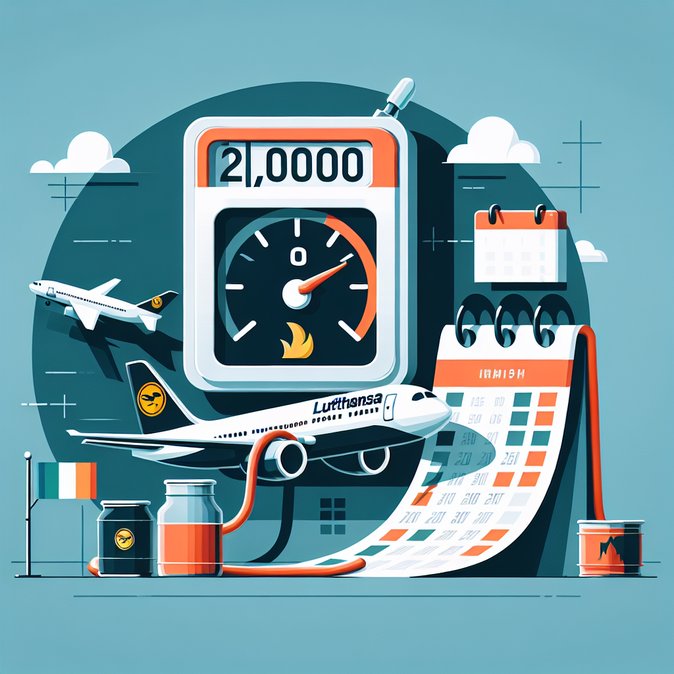
A looming global jet-fuel crunch triggered by the closure of the Strait of Hormuz is beginning to hit Irish air connectivity. Lufthansa on Friday cancelled 20,000 short-haul legs—including Frankfurt–Cork rotations—while Aer Lingus quietly trimmed two per cent of its peak-summer schedule, affecting an estimated 23,000 passengers on 430 flights. Analysts expect further reductions as carriers scramble to contain spiralling fuel bills.
![Fuel Crisis Forces Airlines to Slash Irish Flights and Raise Fares]()
For companies suddenly having to reroute staff through unexpected hubs, ensuring that travel documents and transit visas are in order becomes an additional headache. VisaHQ’s Irish portal (https://www.visahq.com/ireland/) can ease that burden by fast-tracking visa and eTA applications, providing up-to-date entry guidance, and even arranging passport courier services—an invaluable resource when itineraries keep shifting at short notice.
Irish aviation entrepreneur Ulick McEvaddy likened the situation to a “slow-motion repeat of the Covid shutdown”, predicting months of disruption if Gulf shipments remain blocked. European carriers are hedged for roughly 60 per cent of 2026 fuel needs, but Ryanair’s 80 per cent hedge still leaves it exposed on marginal routes; industry sources say the low-cost giant is reviewing secondary city-pairs such as Dublin–Trieste and Shannon–Manchester. The crisis is already inflating corporate-travel budgets. Air France has imposed surcharges of €50-€200 per ticket, and US majors say they will pass 70-80 per cent of extra costs to customers by Q3. Dublin-based firms with regional project teams are weighing modal shifts to rail for mainland-Europe hops and revisiting virtual-meeting policies revived during the pandemic. Airport operators face knock-on effects. Dublin Airport, which relies on high aircraft-movement volumes to amortise its new pier, warned that a protracted capacity cut could delay its €1 bn capital-investment plan. Shannon Airport’s bid to attract a second US carrier this winter is also at risk as trans-Atlantic margins narrow. Practical steps: mobility managers should lock in Q3 fare quotes now where possible, build contingency for rerouting via London or Amsterdam, and advise relocating staff to choose fully-refundable fares until market capacity stabilises.
For companies suddenly having to reroute staff through unexpected hubs, ensuring that travel documents and transit visas are in order becomes an additional headache. VisaHQ’s Irish portal (https://www.visahq.com/ireland/) can ease that burden by fast-tracking visa and eTA applications, providing up-to-date entry guidance, and even arranging passport courier services—an invaluable resource when itineraries keep shifting at short notice.
Irish aviation entrepreneur Ulick McEvaddy likened the situation to a “slow-motion repeat of the Covid shutdown”, predicting months of disruption if Gulf shipments remain blocked. European carriers are hedged for roughly 60 per cent of 2026 fuel needs, but Ryanair’s 80 per cent hedge still leaves it exposed on marginal routes; industry sources say the low-cost giant is reviewing secondary city-pairs such as Dublin–Trieste and Shannon–Manchester. The crisis is already inflating corporate-travel budgets. Air France has imposed surcharges of €50-€200 per ticket, and US majors say they will pass 70-80 per cent of extra costs to customers by Q3. Dublin-based firms with regional project teams are weighing modal shifts to rail for mainland-Europe hops and revisiting virtual-meeting policies revived during the pandemic. Airport operators face knock-on effects. Dublin Airport, which relies on high aircraft-movement volumes to amortise its new pier, warned that a protracted capacity cut could delay its €1 bn capital-investment plan. Shannon Airport’s bid to attract a second US carrier this winter is also at risk as trans-Atlantic margins narrow. Practical steps: mobility managers should lock in Q3 fare quotes now where possible, build contingency for rerouting via London or Amsterdam, and advise relocating staff to choose fully-refundable fares until market capacity stabilises.