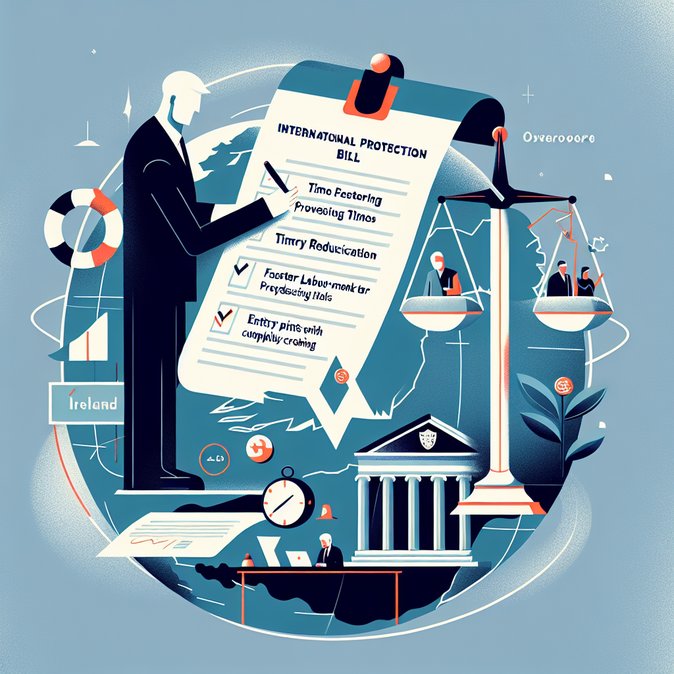
President Catherine Connolly’s decision on 23 April to sign the International Protection Bill 2026 has ended weeks of constitutional speculation and set Ireland on a fast-track to implementing the EU’s new Migration and Asylum Pact. The law compresses the asylum timeline from an average of two years to a target of six months by introducing a mandatory screening stage at ports of entry, wider use of accelerated procedures for manifestly unfounded claims, and a single-instance appeals system. New biometric enrolment at Dublin Airport and regional Garda stations will replace paper-based ID checks, while a digital case-management portal will allow applicants and legal advisers to track files in real time. For businesses, the most immediate impact is the promised clearance of a backlog exceeding 18,000 cases.
![International Protection Bill 2026 Signed Into Law, Ushering in the Biggest Overhaul of Irish Asylum Rules in a Generation]()
At this juncture, organisations and individual travellers looking to navigate Ireland’s shifting entry rules can turn to VisaHQ for up-to-the-minute visa and documentation support. The platform’s Ireland portal (https://www.visahq.com/ireland/) consolidates the latest requirements—including the new biometric and screening obligations—so HR teams and applicants alike can submit compliant paperwork in a single online workflow, reducing the risk of last-minute boarding refusals.
Employers who hire asylum seekers—permitted after six months in the process—should see labour-market access granted as early as six weeks after the initial interview. The Department of Justice has already budgeted for 220 extra case-workers and confirmed to the Public Accounts Committee that a purpose-built reception centre near Dublin Airport will open before the summer peak, reducing hotel-room displacement in the capital. The Bill also revises removal powers. Unsuccessful applicants can still seek judicial review, but the law tightens the timeline for lodging challenges and allows the Garda National Immigration Bureau to use commercial flights for deportations when cheaper than charters. Companies that sponsor graduate trainees or intra-corporate transferees must ensure that any dependent family members who claim asylum—as has occasionally happened—receive independent legal advice, since the new fast-track rules could see cases resolved before HR departments even become aware. Politically, the legislation closes a fraught chapter. Connolly convened the Council of State earlier in the week but ultimately decided not to refer the Bill to the Supreme Court, leaving the door open for future case-law to fine-tune contentious sections on age assessment and safe-country lists. Opposition parties have promised to monitor implementation closely, while NGOs warn that the six-month target is only achievable if promised staffing materialises. Practical tip: mobility managers should audit any template assignment letters that reference the now-superseded International Protection Act 2015 and update briefing notes for assignees arriving from high-risk regions. The new screening stage means travellers who previously entered as visitors before lodging a claim may be refused boarding in the country of origin if they lack the appropriate Irish visa.
At this juncture, organisations and individual travellers looking to navigate Ireland’s shifting entry rules can turn to VisaHQ for up-to-the-minute visa and documentation support. The platform’s Ireland portal (https://www.visahq.com/ireland/) consolidates the latest requirements—including the new biometric and screening obligations—so HR teams and applicants alike can submit compliant paperwork in a single online workflow, reducing the risk of last-minute boarding refusals.
Employers who hire asylum seekers—permitted after six months in the process—should see labour-market access granted as early as six weeks after the initial interview. The Department of Justice has already budgeted for 220 extra case-workers and confirmed to the Public Accounts Committee that a purpose-built reception centre near Dublin Airport will open before the summer peak, reducing hotel-room displacement in the capital. The Bill also revises removal powers. Unsuccessful applicants can still seek judicial review, but the law tightens the timeline for lodging challenges and allows the Garda National Immigration Bureau to use commercial flights for deportations when cheaper than charters. Companies that sponsor graduate trainees or intra-corporate transferees must ensure that any dependent family members who claim asylum—as has occasionally happened—receive independent legal advice, since the new fast-track rules could see cases resolved before HR departments even become aware. Politically, the legislation closes a fraught chapter. Connolly convened the Council of State earlier in the week but ultimately decided not to refer the Bill to the Supreme Court, leaving the door open for future case-law to fine-tune contentious sections on age assessment and safe-country lists. Opposition parties have promised to monitor implementation closely, while NGOs warn that the six-month target is only achievable if promised staffing materialises. Practical tip: mobility managers should audit any template assignment letters that reference the now-superseded International Protection Act 2015 and update briefing notes for assignees arriving from high-risk regions. The new screening stage means travellers who previously entered as visitors before lodging a claim may be refused boarding in the country of origin if they lack the appropriate Irish visa.