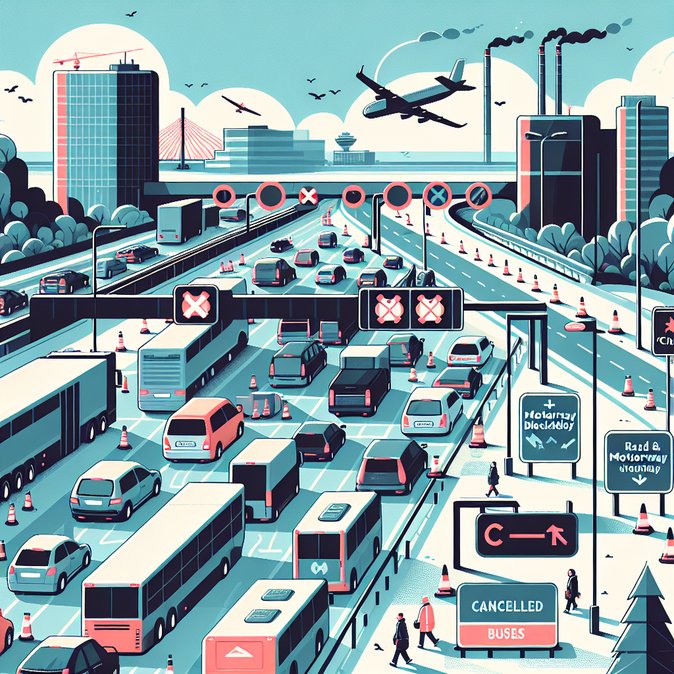
Rolling roadblocks and stationary convoys protesting spiralling fuel costs brought sections of Ireland’s motorway network to a standstill on 22 April, with the M50, M7 and approaches to Dublin Port and Whitegate oil refinery among the worst affected. Travellers trying to reach Dublin Airport were forced to walk along the hard shoulder after buses and taxis became trapped in tailbacks stretching up to ten kilometres. The ad-hoc demonstrations – led by a loose coalition of farmers, hauliers and small-business owners – began earlier this month but escalated overnight when convoys regrouped at strategic choke-points. Bus Éireann issued an extraordinary service bulletin cancelling or delaying more than a dozen routes, including its flagship 101 Dublin–Drogheda airport connector. Private coach operators reported average journey-time extensions of 90 minutes, jeopardising flight connections for business travellers. While the protests are ostensibly about fuel excise duties, the Irish Congress of Trade Unions warned the government that mounting transport disruption risks damaging the country’s reputation as a reliable hub for time-critical sectors such as pharma and tech. Supply-chain managers for multinational exporters noted that container pickups at Dublin Port missed several evening sailings. Airlines told The Irish Times they feared crew-duty infringements if staff could not reach the airport on time. The Department of Transport has convened an inter-agency task-force and urged employers to allow remote work where feasible.
![Fuel-price protest blockades snarl road access to Dublin Airport and major trade corridors]()
Whether you end up rerouting through another country or extending your stay in Ireland because of the gridlock, VisaHQ can smooth the process by quickly confirming visa requirements and submitting applications online. Their Ireland portal (https://www.visahq.com/ireland/) gives up-to-date entry guidance and courier options, so unexpected schedule changes don’t turn into paperwork headaches.
Contingency plans being drafted include temporary hard-shoulder bus lanes and expanded use of the Port Tunnel for airport traffic. Mobility advisers recommend that expatriate employees flying over the next 72 hours build in at least two extra hours for ground travel and monitor Transport for Ireland alerts. Although most blockades dispersed after night-fall, organisers have threatened renewed action if the government does not announce further diesel rebates before the May bank-holiday weekend. Businesses with field-based staff should update duty-of-care assessments and consider alternative regional airports such as Shannon or Cork for urgent travel.
Whether you end up rerouting through another country or extending your stay in Ireland because of the gridlock, VisaHQ can smooth the process by quickly confirming visa requirements and submitting applications online. Their Ireland portal (https://www.visahq.com/ireland/) gives up-to-date entry guidance and courier options, so unexpected schedule changes don’t turn into paperwork headaches.
Contingency plans being drafted include temporary hard-shoulder bus lanes and expanded use of the Port Tunnel for airport traffic. Mobility advisers recommend that expatriate employees flying over the next 72 hours build in at least two extra hours for ground travel and monitor Transport for Ireland alerts. Although most blockades dispersed after night-fall, organisers have threatened renewed action if the government does not announce further diesel rebates before the May bank-holiday weekend. Businesses with field-based staff should update duty-of-care assessments and consider alternative regional airports such as Shannon or Cork for urgent travel.
More From Ireland
View all
Ireland enacts International Protection Bill 2026, creating new EU-aligned asylum screening regime

Aer Lingus pilot’s High Court action signals simmering industrial tensions ahead of summer schedule