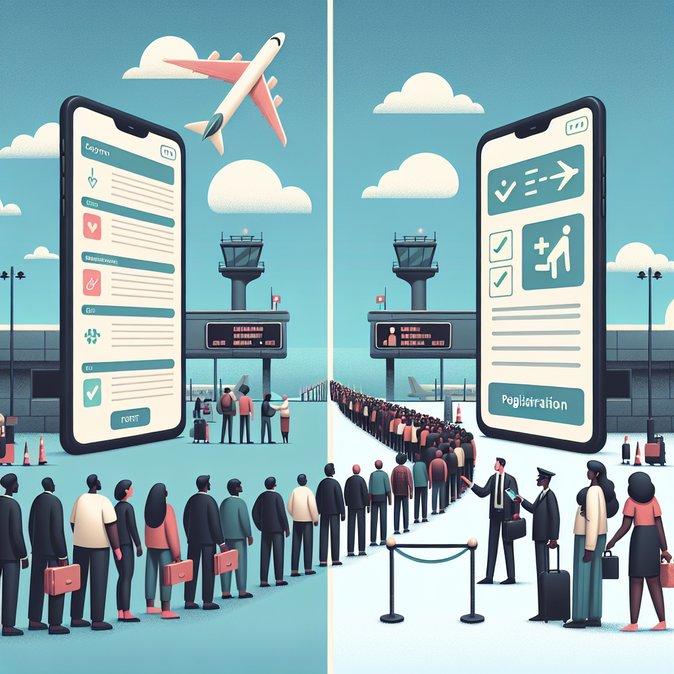
Two weeks after the EU’s biometric Entry/Exit System (EES) became mandatory at all external Schengen borders, crowd-sourcing platform Qsensor has released the first independent snapshot of how the technology is affecting waiting times. The 26 April blog post analysed real-time queue data from seven major hubs, including Amsterdam, Zurich and Frankfurt, comparing the ten days before and after the 10 April switchover. Average delays rose roughly 25 percent, but the headline figure masks sharp spikes: Amsterdam’s longest recorded wait stretched to 100 minutes, while Zurich and Frankfurt each hit 120 minutes. Elsewhere, Milan Linate saw passengers miss flights when non-EU lines surged past three hours; Paris-CDG and Madrid reported similar ‘kiosk bottlenecks’ during the evening long-haul bank. So far Helsinki Airport has avoided the worst congestion, thanks in part to Finavia’s early-adopter rollout of 25 self-service biometric kiosks last autumn and its policy of funnelling Finnair’s overnight Asian arrivals into staggered time-slots. Nonetheless, the Finnish Business Travel Association says members are already adding 90 minutes to connection buffers when routings involve large transit hubs such as Frankfurt or Paris. Finnish tour operators are advising leisure travellers to download the EU’s new ‘Travel to Europe’ mobile app—which allows pre-registration of facial and fingerprint templates—well before departure.
![Data show EU Entry/Exit System pushing passport-control peaks above two hours – Finns told to pad summer itineraries]()
For those looking for extra assistance navigating these evolving border controls, VisaHQ’s online platform offers step-by-step visa processing and real-time travel requirement updates for Finland and the wider Schengen region. Travellers can start their application or simply check the latest EES and ETIAS information at https://www.visahq.com/finland/ streamlining preparations and reducing the risk of unexpected delays.
Airlines, meanwhile, warn that connecting passengers who miss flights due to EES delays may not be entitled to EU261 compensation because border processing is outside carriers’ control. With the summer peak only eight weeks away and the separate ETIAS pre-travel authorisation slated for Q4 2026, mobility managers should: 1) build three-hour layovers into booking tools for long-haul arrivals into Schengen; 2) brief assignees about the one-time biometric enrolment; and 3) monitor Finavia’s hourly queue dashboard, which is expected to go live in May. The European Commission will publish its first formal performance report in June, but the Qsensor figures already suggest companies should budget for longer ground times and potential overnight stops on multi-sector itineraries.

For those looking for extra assistance navigating these evolving border controls, VisaHQ’s online platform offers step-by-step visa processing and real-time travel requirement updates for Finland and the wider Schengen region. Travellers can start their application or simply check the latest EES and ETIAS information at https://www.visahq.com/finland/ streamlining preparations and reducing the risk of unexpected delays.
Airlines, meanwhile, warn that connecting passengers who miss flights due to EES delays may not be entitled to EU261 compensation because border processing is outside carriers’ control. With the summer peak only eight weeks away and the separate ETIAS pre-travel authorisation slated for Q4 2026, mobility managers should: 1) build three-hour layovers into booking tools for long-haul arrivals into Schengen; 2) brief assignees about the one-time biometric enrolment; and 3) monitor Finavia’s hourly queue dashboard, which is expected to go live in May. The European Commission will publish its first formal performance report in June, but the Qsensor figures already suggest companies should budget for longer ground times and potential overnight stops on multi-sector itineraries.