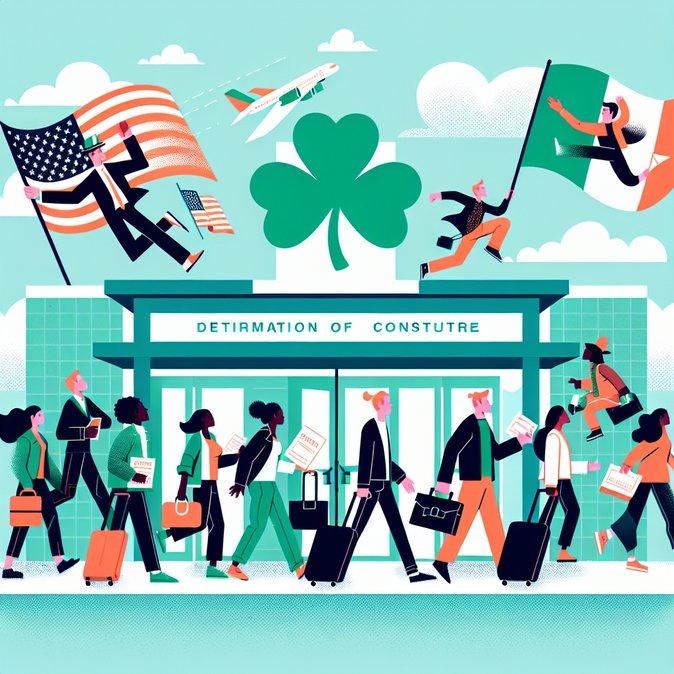
Demand for an Irish passport continues to soar among US citizens with ancestral ties: new figures released on 24 April show 18,910 applications through the Foreign Birth Register (FBR) last year, a 63 per cent jump on 2024 and more than double the 2023 total. Immigration lawyer Carol Sinnott links the spike directly to the re-election of Donald Trump in November 2024 and subsequent executive orders on healthcare and civil rights, which prompted many Americans to seek a European ‘Plan B’. The FBR allows anyone with at least one Irish-born grandparent to claim citizenship. Possession of an Irish passport confers the right to live and work across the EU—an especially attractive prospect for remote workers who can avoid post-Brexit UK rules and the tightening US tax net on digital nomads.
![Record 18,910 Americans Applied for Irish Passports in 2025 Amid Post-Election Uncertainty]()
For those unsure where to start, VisaHQ’s Ireland portal (https://www.visahq.com/ireland/) offers step-by-step guidance on Foreign Birth Register filings, Irish passport applications and the supporting documents—such as apostilles and certified copies—often requested by consulates. Its digital trackers and optional document pre-check can spare HR teams and individual applicants costly delays, while live agents field niche queries about dual-citizenship implications in real time.
Central Statistics Office data show that almost 10,000 Americans relocated to Ireland in 2025, up from fewer than 5,000 the previous year, suggesting that the passport is more than just symbolic. Corporate mobility teams are already feeling the ripple effects. Several multinationals told The Irish Times they now routinely ask US staff whether they qualify for Irish or other EU ancestry visas before initiating traditional work-permit processes, saving both time and legal fees. The Department of Foreign Affairs has redeployed consular staff from quieter missions to embassies in Washington, Chicago and San Francisco to tackle waiting lists that can stretch to nine months. Practically, HR managers should flag that FBR certificates can be expedited for ‘urgent business travel’ with supporting letters, but only after the underlying citizenship has been approved—a point often misunderstood by employees. Experts also advise checking whether newly naturalised staff need updated A1 certificates for EU social-security coverage when seconded outside Ireland. Long term, policy analysts warn that sustained American demand could strain the passport service’s 1.2 million-book annual printing capacity, already stretched by post-pandemic renewals. The Government is studying options such as outsourcing parts of the verification process to trusted notaries and piloting secure video-ID interviews to keep queues under control.

For those unsure where to start, VisaHQ’s Ireland portal (https://www.visahq.com/ireland/) offers step-by-step guidance on Foreign Birth Register filings, Irish passport applications and the supporting documents—such as apostilles and certified copies—often requested by consulates. Its digital trackers and optional document pre-check can spare HR teams and individual applicants costly delays, while live agents field niche queries about dual-citizenship implications in real time.
Central Statistics Office data show that almost 10,000 Americans relocated to Ireland in 2025, up from fewer than 5,000 the previous year, suggesting that the passport is more than just symbolic. Corporate mobility teams are already feeling the ripple effects. Several multinationals told The Irish Times they now routinely ask US staff whether they qualify for Irish or other EU ancestry visas before initiating traditional work-permit processes, saving both time and legal fees. The Department of Foreign Affairs has redeployed consular staff from quieter missions to embassies in Washington, Chicago and San Francisco to tackle waiting lists that can stretch to nine months. Practically, HR managers should flag that FBR certificates can be expedited for ‘urgent business travel’ with supporting letters, but only after the underlying citizenship has been approved—a point often misunderstood by employees. Experts also advise checking whether newly naturalised staff need updated A1 certificates for EU social-security coverage when seconded outside Ireland. Long term, policy analysts warn that sustained American demand could strain the passport service’s 1.2 million-book annual printing capacity, already stretched by post-pandemic renewals. The Government is studying options such as outsourcing parts of the verification process to trusted notaries and piloting secure video-ID interviews to keep queues under control.