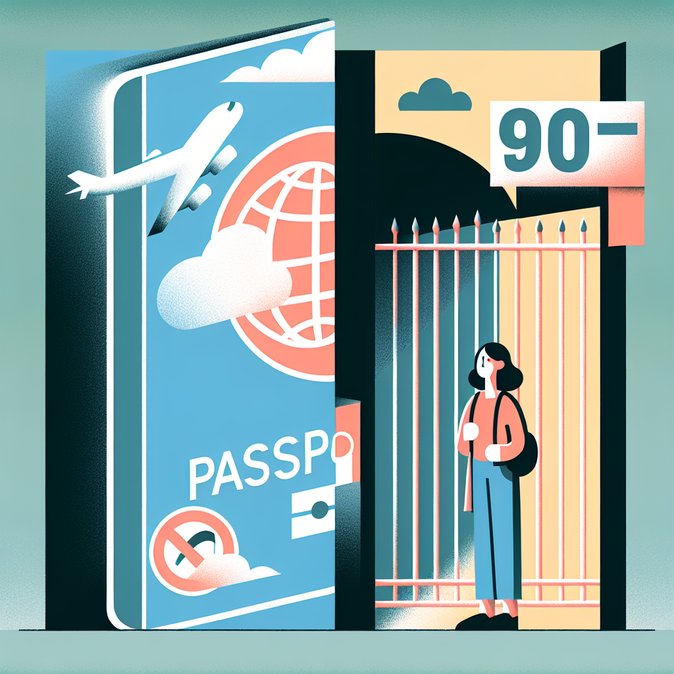
The Czech Republic’s Ministry of Foreign Affairs (MFA) quietly revised the "Bezvízový styk" (visa-free travel) section of its foreigners’ portal on the morning of 23 April 2026. The update does not change the list of countries whose nationals may enter the Schengen Area visa-free, but it adds prominent wording that visa-free entry applies **only to short-term, non-remunerated stays**. Anyone planning to perform *any* paid activity—even for a single day—must obtain an appropriate Schengen work visa or a national long-term permit before arrival. Why now? Czech consular officials told local media that the clarification follows a spike this spring in travellers who tried to start work assignments on a tourist stamp, particularly in IT and seasonal hospitality. Border police at Václav Havel Airport Prague reported a 17 % increase (year-on-year) in secondary inspections for “suspected undeclared work.”
![Czech MFA updates visa-waiver page, reminds travellers that work still requires a visa]()
Unsure whether your trip might cross the line from tourist visit to remunerated work? VisaHQ’s step-by-step Czech Republic portal (https://www.visahq.com/czech-republic/) helps travellers and HR coordinators check the exact permit required, outlines document lists, and offers application support—an easy way to avoid last-minute surprises at the consulate or the airport.
By spelling out the distinction on the MFA website—and soon in a social-media campaign in English, Russian and Vietnamese—the ministry hopes to reduce refusals of entry at the airport and to ease pressure on consulates. For employers, the change is a reminder that Schengen’s 90-/180-day visa-free rule is **not** a work authorisation. HR teams sending staff to Czechia, even for short “on-site” tasks or client meetings that may involve hands-on technical work, should verify whether a category “C” work visa is required. Failure to do so can result in fines of up to CZK 500,000 for the host entity under the Employment Act. Immigration practitioners welcome the clearer wording but call for more digital tools. “The next step should be a simple online checker that tells travellers what permit they need based on activity and duration,” says Jana Nováková, a Prague-based business-immigration attorney. Practical tip: Because Schengen work-purpose visas must be lodged in the traveller’s country of residence—and appointment slots at some Czech consulates can run eight weeks out—companies should build **a three-month lead time** into project planning. Travellers already in Czechia under visa-free status cannot switch to a work visa without leaving the country. In short, the updated guidance does not tighten the rules, but it does make the consequences of ignoring them far clearer. Businesses should circulate the link to mobile workers and remind them that “tourist” and “business” are not interchangeable when remuneration is involved.

Unsure whether your trip might cross the line from tourist visit to remunerated work? VisaHQ’s step-by-step Czech Republic portal (https://www.visahq.com/czech-republic/) helps travellers and HR coordinators check the exact permit required, outlines document lists, and offers application support—an easy way to avoid last-minute surprises at the consulate or the airport.
By spelling out the distinction on the MFA website—and soon in a social-media campaign in English, Russian and Vietnamese—the ministry hopes to reduce refusals of entry at the airport and to ease pressure on consulates. For employers, the change is a reminder that Schengen’s 90-/180-day visa-free rule is **not** a work authorisation. HR teams sending staff to Czechia, even for short “on-site” tasks or client meetings that may involve hands-on technical work, should verify whether a category “C” work visa is required. Failure to do so can result in fines of up to CZK 500,000 for the host entity under the Employment Act. Immigration practitioners welcome the clearer wording but call for more digital tools. “The next step should be a simple online checker that tells travellers what permit they need based on activity and duration,” says Jana Nováková, a Prague-based business-immigration attorney. Practical tip: Because Schengen work-purpose visas must be lodged in the traveller’s country of residence—and appointment slots at some Czech consulates can run eight weeks out—companies should build **a three-month lead time** into project planning. Travellers already in Czechia under visa-free status cannot switch to a work visa without leaving the country. In short, the updated guidance does not tighten the rules, but it does make the consequences of ignoring them far clearer. Businesses should circulate the link to mobile workers and remind them that “tourist” and “business” are not interchangeable when remuneration is involved.