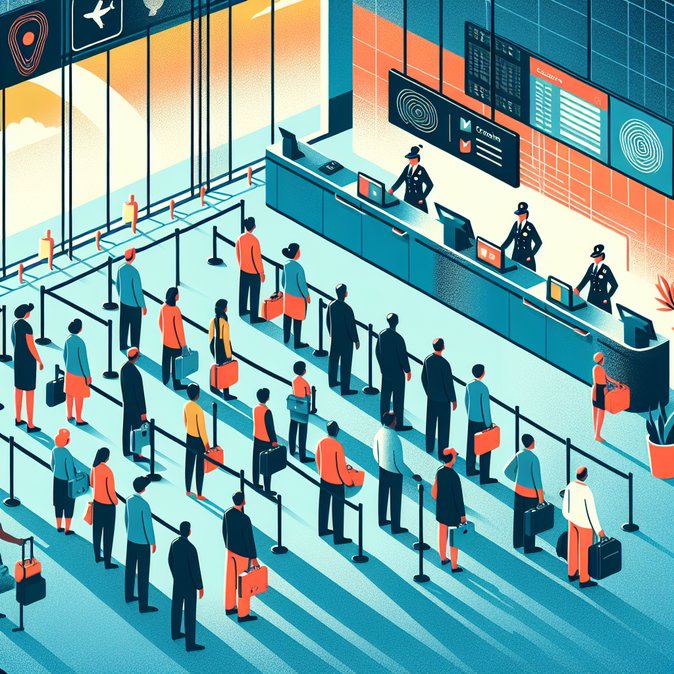
Barely five days after the EU’s new biometric Entry/Exit System (EES) went live in full on 10 April, Vienna-Schwechat Airport has become a focal point for the operational growing pains that airports across Europe are reporting. According to Airports Council International (ACI) Europe, travellers from non-EU countries are facing queues of up to three hours at border control, with several morning departures from Vienna leaving with empty seats because passengers were still waiting to register fingerprints and facial images. Austria’s Interior Ministry confirmed late on 14 April that an extra 60 border-police officers will be redeployed from land crossings to Vienna and Salzburg airports for the Easter-holiday peak. The ministry said early experience shows the first-time registration takes an average of four minutes per traveller—well above the EU’s 70-second benchmark—because many passengers arrive unprepared for the biometric capture and questionnaire. Employers with international assignees are being advised to build longer connection windows through Vienna and to provide staff with printed evidence of Schengen travel history to expedite secondary checks. Airlines are already adjusting. Austrian Airlines has issued a travel alert urging non-EU passengers to be at the airport “no later than three hours before departure” and is allowing same-day rebooking without fees for missed connections.
![Austria scrambles to ease Vienna-Airport queues as EU Entry/Exit System triggers three-hour waits]()
For travellers who prefer to have every paperwork detail squared away in advance, VisaHQ offers a convenient safety net. Its Austria-specific portal (https://www.visahq.com/austria/) walks non-EU nationals through current Schengen entry requirements, helps secure any necessary visas or transit authorisations, and double-checks that supporting documents meet the newest biometric and photo standards—small steps that can shave precious minutes off the border process once you land in Vienna.
Travel-management companies told the KURIER newspaper that corporate clients are rerouting some US and UK executives through Zurich or Munich until throughput improves. Behind the scenes, the government is weighing targeted exemptions. ACI Europe director Olivier Jankovec has publicly asked Brussels for the power to suspend EES registration when queues become “unmanageable”, but Vienna’s Flughafenbehörde says a blanket suspension would undermine security goals. Instead, officials are testing a fast-track lane for short-stay business visitors who hold APEC cards or EU Trusted Traveller equivalents, mirroring a scheme already piloted at Schiphol. For mobility managers, the immediate takeaway is pragmatic: non-EU travellers entering Austria must now budget significant extra time, carry proof of onward travel and stay alert for ad-hoc process changes. Longer term, companies may need to review Vienna’s hub status for regional meetings until the border-control learning curve flattens—something officials insist will happen once the majority of frequent travellers are enrolled in the system.

For travellers who prefer to have every paperwork detail squared away in advance, VisaHQ offers a convenient safety net. Its Austria-specific portal (https://www.visahq.com/austria/) walks non-EU nationals through current Schengen entry requirements, helps secure any necessary visas or transit authorisations, and double-checks that supporting documents meet the newest biometric and photo standards—small steps that can shave precious minutes off the border process once you land in Vienna.
Travel-management companies told the KURIER newspaper that corporate clients are rerouting some US and UK executives through Zurich or Munich until throughput improves. Behind the scenes, the government is weighing targeted exemptions. ACI Europe director Olivier Jankovec has publicly asked Brussels for the power to suspend EES registration when queues become “unmanageable”, but Vienna’s Flughafenbehörde says a blanket suspension would undermine security goals. Instead, officials are testing a fast-track lane for short-stay business visitors who hold APEC cards or EU Trusted Traveller equivalents, mirroring a scheme already piloted at Schiphol. For mobility managers, the immediate takeaway is pragmatic: non-EU travellers entering Austria must now budget significant extra time, carry proof of onward travel and stay alert for ad-hoc process changes. Longer term, companies may need to review Vienna’s hub status for regional meetings until the border-control learning curve flattens—something officials insist will happen once the majority of frequent travellers are enrolled in the system.