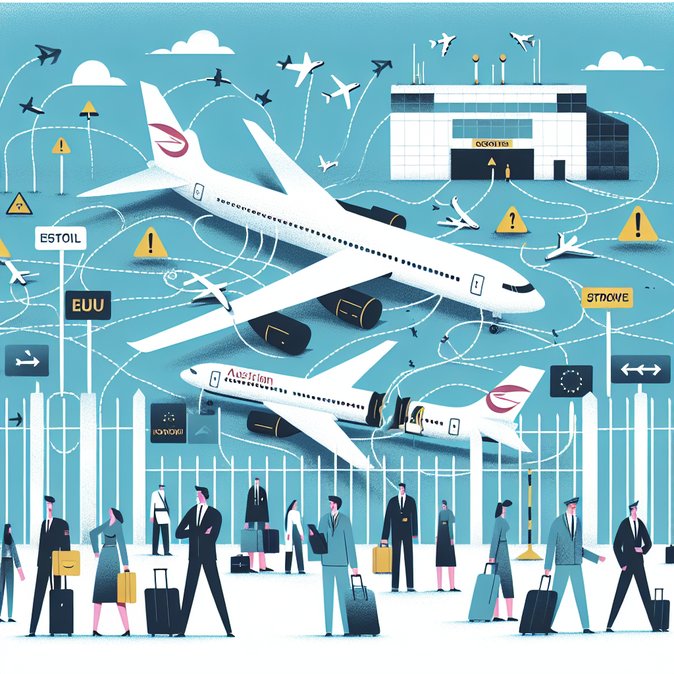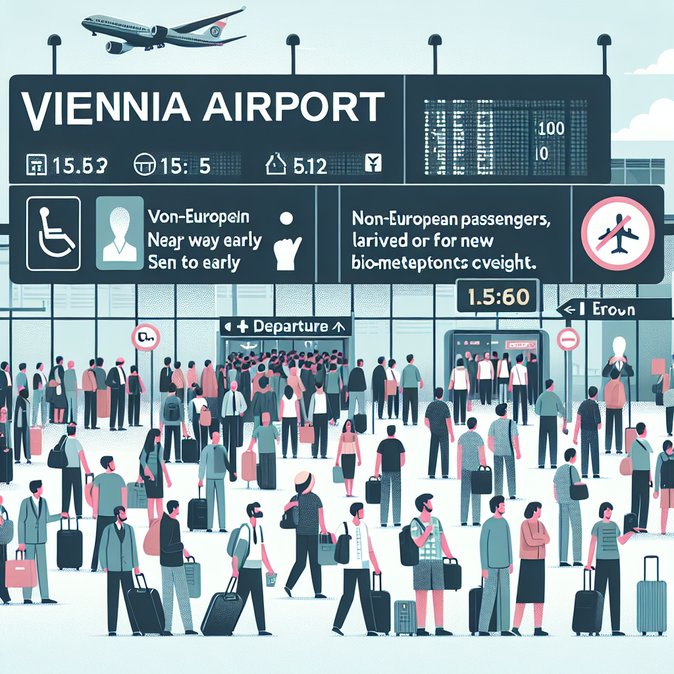
Just three days after the European Union’s biometric Entry/Exit System (EES) became mandatory, airports across the continent are reporting **queues of up to three hours** for third-country nationals. Travel site Greek City Times chronicled scenes of “chaos” on 13 April, noting that some aircraft pushed back with dozens of missing passengers. Vienna-Schwechat, Austria’s primary international gateway, confirmed to local media that several morning departures left with unoccupied seats after non-EU passengers were still waiting at border control.
Under EES, border guards must collect four fingerprints and a facial image the first time a traveller enters the Schengen Area, replacing the traditional passport stamp. While the European Commission claims the process averages 70 seconds, industry group ACI Europe says real-world trials show initial enrolment can exceed two minutes, creating bottlenecks when multiple wide-body flights land simultaneously.
Vienna Airport has responded by deploying additional “floorwalker” staff to direct passengers towards the correct e-gates and by publishing **new guidance that recommends arriving at least three hours before departure if you hold a non-EU passport**. Airlines are updating pre-departure e-mails with EES reminders and warning that no-show fees will still apply if travellers miss flights due to border delays.
![New EU Entry/Exit System causes hours-long queues—Vienna Airport urges non-EU travellers to arrive early]()
If you’re concerned about staying compliant amid the new biometric checks, VisaHQ can simplify the paperwork before you fly. The platform offers step-by-step assistance with Schengen visas, real-time tracking, and personalised alerts so you know exactly where you stand against the 90-in-180-day rule—see https://www.visahq.com/austria/ for details.
For corporate mobility managers, the disruption has immediate compliance implications. Because EES automatically calculates days spent in Schengen, any unscheduled overnight stay caused by a missed connection is now visible to authorities and may bring travellers closer to the 90-in-180-day limit. Companies are therefore advising employees to carry evidence of business purpose and to alert immigration counsel if re-routing extends their stay.
Although Austrian officials say wait times should stabilise once the bulk of frequent travellers are enrolled, they concede that Easter-holiday traffic exposed weaknesses in staffing models. A contingency plan—allowing officers to fall back on manual stamping during peak surges—is under discussion at the Interior Ministry. Until then, travellers should build generous buffers into itineraries and, where possible, choose flights outside the morning bank.
Under EES, border guards must collect four fingerprints and a facial image the first time a traveller enters the Schengen Area, replacing the traditional passport stamp. While the European Commission claims the process averages 70 seconds, industry group ACI Europe says real-world trials show initial enrolment can exceed two minutes, creating bottlenecks when multiple wide-body flights land simultaneously.
Vienna Airport has responded by deploying additional “floorwalker” staff to direct passengers towards the correct e-gates and by publishing **new guidance that recommends arriving at least three hours before departure if you hold a non-EU passport**. Airlines are updating pre-departure e-mails with EES reminders and warning that no-show fees will still apply if travellers miss flights due to border delays.
If you’re concerned about staying compliant amid the new biometric checks, VisaHQ can simplify the paperwork before you fly. The platform offers step-by-step assistance with Schengen visas, real-time tracking, and personalised alerts so you know exactly where you stand against the 90-in-180-day rule—see https://www.visahq.com/austria/ for details.
For corporate mobility managers, the disruption has immediate compliance implications. Because EES automatically calculates days spent in Schengen, any unscheduled overnight stay caused by a missed connection is now visible to authorities and may bring travellers closer to the 90-in-180-day limit. Companies are therefore advising employees to carry evidence of business purpose and to alert immigration counsel if re-routing extends their stay.
Although Austrian officials say wait times should stabilise once the bulk of frequent travellers are enrolled, they concede that Easter-holiday traffic exposed weaknesses in staffing models. A contingency plan—allowing officers to fall back on manual stamping during peak surges—is under discussion at the Interior Ministry. Until then, travellers should build generous buffers into itineraries and, where possible, choose flights outside the morning bank.
More From Austria
View all
Austrian Airlines deploys larger jets to cushion impact of Lufthansa pilot strike

Austrian Airlines A320 returns to service after emergency engine swap, restoring capacity on intra-European network