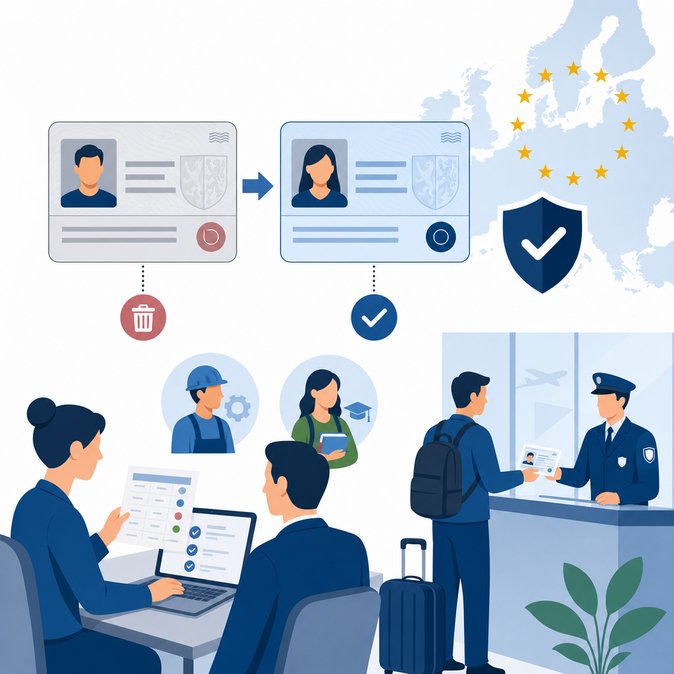
The Czech Ministry of the Interior quietly launched a technical but far-reaching reform of its immigration paperwork on 1 June 2026. From this date every biometric residence card, long-term visa and long-term residence sticker issued by Czech authorities bears a brand-new three-digit purpose code. What looks like a cosmetic change in fact modernises a system that had barely evolved since the 1999 Aliens Act. Under the old regime a handful of generic codes were reused for students, intra-company transferees and researchers, making it difficult for border guards, labour inspectors and human-resources departments to recognise a foreigner’s true right to work. The enlarged code set now distinguishes, for example, between university degree students and participants in short vocational courses, between standard Employee-Card holders and ICT Card assignees, and between EU-funded visiting scholars and privately financed researchers.
For employers the immediate implication is more transparent compliance checks.
![Czech Republic Overhauls Numeric Codes on Long-Term Visas & Residence Permits]()
If your organisation or traveling staff need help deciphering the new purpose codes or securing the correct Czech visa or residence permit, VisaHQ can streamline the entire process. Their online platform and local experts (https://www.visahq.com/czech-republic/) monitor the latest Ministry directives, prepare the right application forms, and provide deadline reminders so HR teams and assignees remain fully compliant without added administrative burden.
Auditors will be able to verify at a glance whether a foreign employee is allowed to perform the advertised role or to switch jobs without extra approval. The Interior Ministry insists that existing cards and visa labels remain valid until their natural expiry, so companies do not need to recall staff for re-issuance. Nevertheless, HR teams are advised to update internal databases because new hires will arrive with unfamiliar codes. Business-travel managers should also brief international assignees about the change. Airline staff and land-border police across the Schengen Area rely on these numbers to validate a passenger’s status; presenting an outdated explanatory letter or a code table downloaded before 1 June could trigger unnecessary secondary screening. The ministry has published an official bilingual table of all old and new codes, which companies can attach to mobility policies and onboarding packs. Finally, the reform paves the way for the EU-wide Entry/Exit System (EES) and expanded Eurodac database, both of which depend on harmonised status identifiers. By aligning its national codes with the latest European standards, Czechia positions itself to reap the benefits of faster automated checks once EES becomes fully mandatory for air carriers later this year.
For employers the immediate implication is more transparent compliance checks.

If your organisation or traveling staff need help deciphering the new purpose codes or securing the correct Czech visa or residence permit, VisaHQ can streamline the entire process. Their online platform and local experts (https://www.visahq.com/czech-republic/) monitor the latest Ministry directives, prepare the right application forms, and provide deadline reminders so HR teams and assignees remain fully compliant without added administrative burden.
Auditors will be able to verify at a glance whether a foreign employee is allowed to perform the advertised role or to switch jobs without extra approval. The Interior Ministry insists that existing cards and visa labels remain valid until their natural expiry, so companies do not need to recall staff for re-issuance. Nevertheless, HR teams are advised to update internal databases because new hires will arrive with unfamiliar codes. Business-travel managers should also brief international assignees about the change. Airline staff and land-border police across the Schengen Area rely on these numbers to validate a passenger’s status; presenting an outdated explanatory letter or a code table downloaded before 1 June could trigger unnecessary secondary screening. The ministry has published an official bilingual table of all old and new codes, which companies can attach to mobility policies and onboarding packs. Finally, the reform paves the way for the EU-wide Entry/Exit System (EES) and expanded Eurodac database, both of which depend on harmonised status identifiers. By aligning its national codes with the latest European standards, Czechia positions itself to reap the benefits of faster automated checks once EES becomes fully mandatory for air carriers later this year.