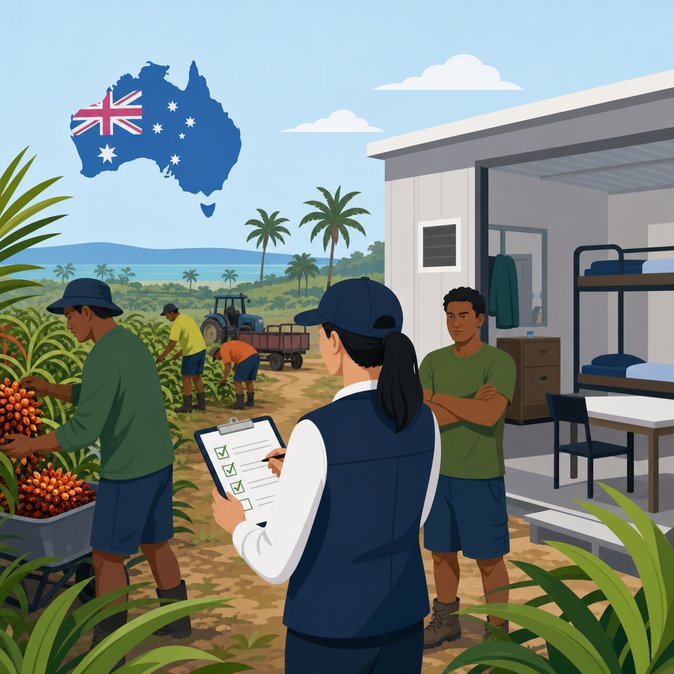
The Department of Employment and Workplace Relations and the Australian Border Force have launched a fresh round of unannounced audits on farms and food-processing sites that employ Pacific Australia Labour Mobility (PALM) workers after a string of exploitation allegations went viral last week. In a statement carried by the Australian Banana Growers’ Council on 2 June 2026, inspectors confirmed that more than 60 businesses across Queensland, New South Wales and Victoria will be reviewed over the winter harvest. Officials will scrutinise payslips, accommodation standards and transport charges, and will interview workers in their first language—with interpreters flown in from Fiji, Vanuatu and Timor-Leste— to ensure they can speak freely. The crackdown follows social-media footage of a Fijian PALM participant sleeping rough under a Sydney overpass, a case now under investigation by both Fijian and Australian authorities. Advocacy groups argue that tying visas to a single approved employer leaves workers vulnerable to sudden job loss and homelessness; unions are calling for portable visas that would let participants change jobs within the same sector. For agribusiness HR teams the message is clear: expect zero tolerance for paperwork lapses. Companies must keep time-and-attendance data, photographs of housing, and evidence that deductions for meals or transport meet Fair Work limits.
![Government steps up compliance blitz on Pacific Australia Labour Mobility (PALM) employers]()
For organisations looking to streamline the visa side of that paperwork, VisaHQ offers an end-to-end service that prepares and lodges Australian work-permit applications, tracks their progress and flags any missing documentation. By using the dedicated portal at https://www.visahq.com/australia/ growers and labour-hire firms can manage multiple PALM candidates in one dashboard, access professional document translation, and receive real-time compliance updates—helping them stay audit-ready without diverting staff from core farm operations.
Many growers are booking external audits in advance so they can show ‘reasonable steps’ were taken to prevent breaches—a key defence under the Migrant Workers Protection Act 2025. Longer term, officials hinted that next year’s PALM deed of agreement will mandate digital onboarding and a hot-line QR code on every payslip. Businesses with strong compliance records, however, may gain priority access to the expanded 45,000-place PALM cap foreshadowed in the Federal Budget.

For organisations looking to streamline the visa side of that paperwork, VisaHQ offers an end-to-end service that prepares and lodges Australian work-permit applications, tracks their progress and flags any missing documentation. By using the dedicated portal at https://www.visahq.com/australia/ growers and labour-hire firms can manage multiple PALM candidates in one dashboard, access professional document translation, and receive real-time compliance updates—helping them stay audit-ready without diverting staff from core farm operations.
Many growers are booking external audits in advance so they can show ‘reasonable steps’ were taken to prevent breaches—a key defence under the Migrant Workers Protection Act 2025. Longer term, officials hinted that next year’s PALM deed of agreement will mandate digital onboarding and a hot-line QR code on every payslip. Businesses with strong compliance records, however, may gain priority access to the expanded 45,000-place PALM cap foreshadowed in the Federal Budget.
More From Australia
View all
Australian Border Force signs US$1.5 billion aerial-surveillance deal to strengthen migration and fisheries patrols

‘Temporary-Visa Crackdown’ sees higher refusal rates and stricter checks across five visa classes