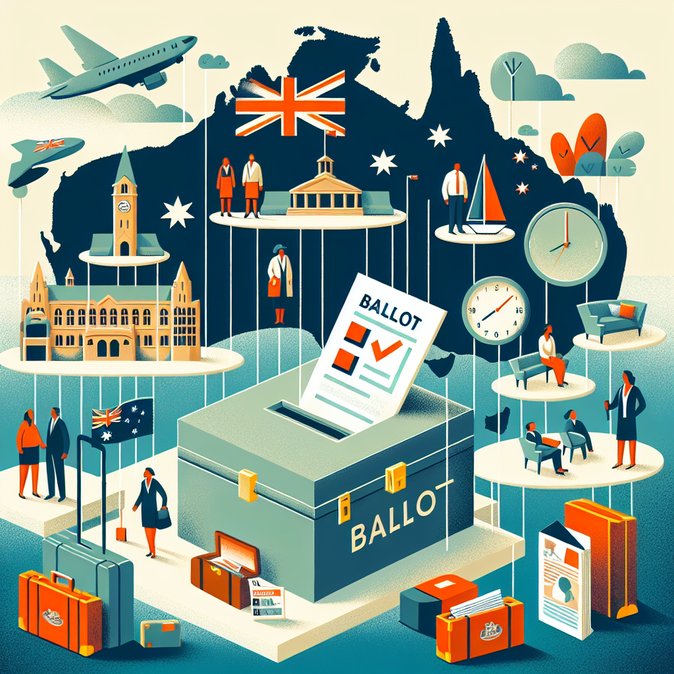
The Australia–Tuvalu Falepili Union Treaty took another step forward today with Canberra and Funafuti jointly announcing the second ballot for the Falepili Mobility Pathway visa. From 1 May to 1 June 2026, up to 280 Tuvaluan citizens will be selected at random to receive a five-year, renewable visa that permits work, study and access to Australian public services. The scheme—sometimes dubbed the Pacific’s answer to New Zealand’s Recognised Seasonal Employer programme—aims to provide a climate-resilient future for the low-lying atoll nation while filling critical labour shortages in regional Australia. More than 100 Tuvaluans have already settled in Queensland and New South Wales under the inaugural 2025 ballot, with many employed in aged care, construction and agri-business.
![Falepili Mobility Pathway Re-opens: 280 New Visas for Tuvaluans to Live and Work in Australia]()
For Tuvaluans—and indeed anyone planning to navigate Australia’s visa system—VisaHQ provides an online one-stop service with up-to-date requirements, document checklists and application support for work, study and family permits. A quick visit to https://www.visahq.com/australia/ can clarify eligibility and streamline the paperwork, making the Falepili Mobility Pathway or any other visa application far less daunting.
Key to the model is its circular design. Participants may bring immediate family, build skills in Australia and later return to Tuvalu, supported by a dedicated transition service that helps with Medicare enrolment, housing, schooling and recognition of Australian qualifications back home. Officials say this prevents the “brain drain” criticisms levelled at earlier guest-worker programmes. For Australian employers, the timing is welcome. ABS data released last week showed vacancy rates in regional healthcare still running at 1.8 times the national average. Companies that sign up to the Pathway must commit to fair wages, training and culturally appropriate pastoral care, but in return gain access to a reliable Pacific workforce immune from the churn of backpacker visas. Strategically, the visa deepens Australia’s diplomatic footprint in the Pacific at a time of intensifying competition with China. Prime Minister Feleti Teo hailed the announcement as “mobility with dignity”, while Australia’s High Commissioner David Charlton said the Pathway “strengthens people-to-people links that underpin regional security”. With climate pressures mounting, other micro-states are lobbying Canberra for similar visa channels.

For Tuvaluans—and indeed anyone planning to navigate Australia’s visa system—VisaHQ provides an online one-stop service with up-to-date requirements, document checklists and application support for work, study and family permits. A quick visit to https://www.visahq.com/australia/ can clarify eligibility and streamline the paperwork, making the Falepili Mobility Pathway or any other visa application far less daunting.
Key to the model is its circular design. Participants may bring immediate family, build skills in Australia and later return to Tuvalu, supported by a dedicated transition service that helps with Medicare enrolment, housing, schooling and recognition of Australian qualifications back home. Officials say this prevents the “brain drain” criticisms levelled at earlier guest-worker programmes. For Australian employers, the timing is welcome. ABS data released last week showed vacancy rates in regional healthcare still running at 1.8 times the national average. Companies that sign up to the Pathway must commit to fair wages, training and culturally appropriate pastoral care, but in return gain access to a reliable Pacific workforce immune from the churn of backpacker visas. Strategically, the visa deepens Australia’s diplomatic footprint in the Pacific at a time of intensifying competition with China. Prime Minister Feleti Teo hailed the announcement as “mobility with dignity”, while Australia’s High Commissioner David Charlton said the Pathway “strengthens people-to-people links that underpin regional security”. With climate pressures mounting, other micro-states are lobbying Canberra for similar visa channels.