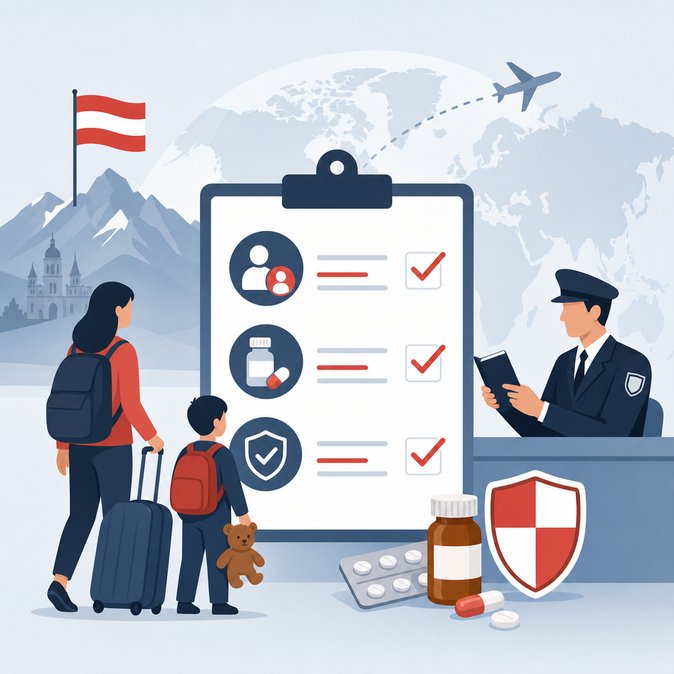
The Austrian Foreign Ministry (BMEIA) quietly issued a package of travel-advisory updates on 31 May and 1 June covering more than a dozen destinations – from Burkina Faso and Haiti to Bahrain and Luxembourg. While the overall security levels for most countries remained unchanged, the notices contain important procedural tweaks that could catch business travellers and accompanying family members off-guard. The most immediate change concerns minors: with immediate effect, children under 18 who travel without *both* legal guardians must carry a notarised consent letter in addition to their own passport in Bahrain, Luxembourg and several other jurisdictions. Airline check-in agents have begun enforcing the requirement, and Austrian tour operators say families have already been denied boarding for lacking the new document.
A second red-flag item is prescription medicine. Following incidents of on-the-spot fines and confiscations, the ministry now urges travellers to carry a doctor’s certificate – translated into the destination country’s language where possible – when transporting painkillers, ADHD medication or even common asthma inhalers. In Gulf states, some over-the-counter products sold in Austria fall under national narcotics legislation.
![Vienna updates global travel advisories: new rules for minors and medicines highlighted]()
For travellers who would rather outsource the paperwork headache, VisaHQ’s Austria portal (https://www.visahq.com/austria/) can prepare destination-specific consent letters, obtain notarisation, and issue translated medication certificates in one bundled service. Their team tracks BMEIA advisories in real time and alerts clients whenever requirements change, providing a practical safety net for busy mobility managers.
Security advice was also refreshed. For Burkina Faso and Haiti the ministry reiterates its highest warning (Level 4) for areas outside the capital cities because of kidnappings and gang violence. Companies dispatching project staff or NGO workers must register them on the BMEIA’s online crisis list *before* departure and arrange armoured transfers from the airport.
Why does this matter for mobility managers? Consent-letter checks can derail time-critical rotations of expatriate families, while improper medication paperwork can lead to entry refusals that jeopardise project timelines. HR and travel teams should incorporate the updated rules into pre-trip briefings, double-check family travel packs and ensure mobile employees sign up to the Foreign Ministry’s SMS alert service. The ministry plans further updates in the run-up to the summer travel peak, so continuous monitoring is advised.
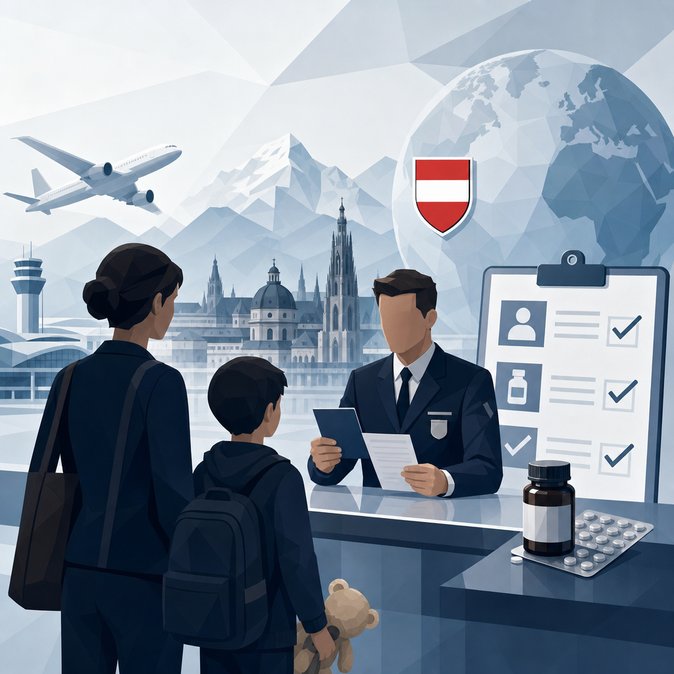
A second red-flag item is prescription medicine. Following incidents of on-the-spot fines and confiscations, the ministry now urges travellers to carry a doctor’s certificate – translated into the destination country’s language where possible – when transporting painkillers, ADHD medication or even common asthma inhalers. In Gulf states, some over-the-counter products sold in Austria fall under national narcotics legislation.
For travellers who would rather outsource the paperwork headache, VisaHQ’s Austria portal (https://www.visahq.com/austria/) can prepare destination-specific consent letters, obtain notarisation, and issue translated medication certificates in one bundled service. Their team tracks BMEIA advisories in real time and alerts clients whenever requirements change, providing a practical safety net for busy mobility managers.
Security advice was also refreshed. For Burkina Faso and Haiti the ministry reiterates its highest warning (Level 4) for areas outside the capital cities because of kidnappings and gang violence. Companies dispatching project staff or NGO workers must register them on the BMEIA’s online crisis list *before* departure and arrange armoured transfers from the airport.
Why does this matter for mobility managers? Consent-letter checks can derail time-critical rotations of expatriate families, while improper medication paperwork can lead to entry refusals that jeopardise project timelines. HR and travel teams should incorporate the updated rules into pre-trip briefings, double-check family travel packs and ensure mobile employees sign up to the Foreign Ministry’s SMS alert service. The ministry plans further updates in the run-up to the summer travel peak, so continuous monitoring is advised.