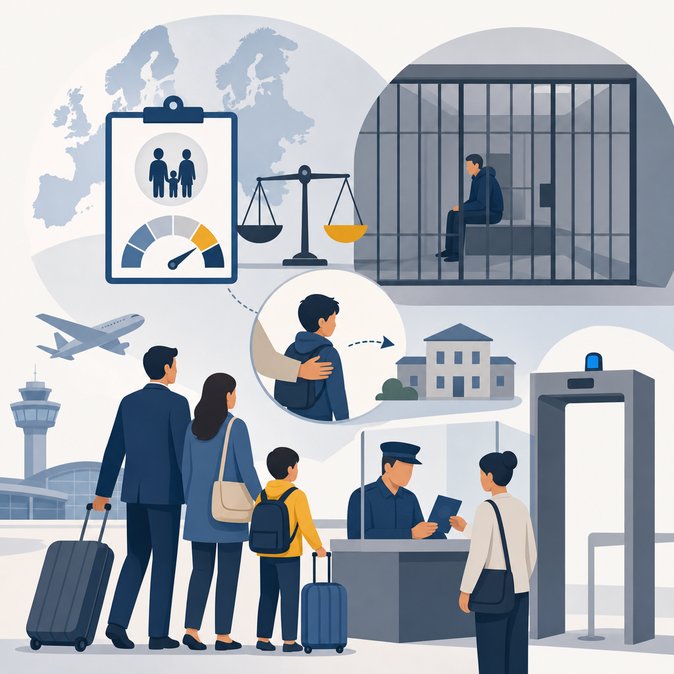
On 22 May the Austrian National Council (Nationalrat) adopted sweeping amendments to the Aliens Act, transposing key elements of the EU Migration and Asylum Pact into national law. Backed by the governing ÖVP, opposition SPÖ and liberal NEOS – with partial support from the Greens – the bill introduces a quota system for family reunification, lengthens border-procedure detention and shifts responsibility for unaccompanied minors to provincial youth services from the moment of arrival. Under the new rules, applications for relatives of recognised refugees will move from the asylum track to the general settlement regime, allowing the government to set annual ceilings.
![Austrian Parliament passes migration-pact law, capping family reunification and expanding border procedures]()
For corporate mobility teams and affected families alike, VisaHQ’s Austria portal (https://www.visahq.com/austria/) can be a useful ally in navigating the coming changes. The site consolidates real-time quota updates, eligibility checklists and appointment-booking support, streamlining what could otherwise be a complex path to securing work, settlement or family-reunion permits under the revised framework.
Interior Minister Gerhard Karner said the objective is to “strike a balance between humanity and order” and to ensure that integration resources are not overstretched. Parliamentary critics from the FPÖ denounced the law as capitulation to Brussels, while NGOs warned that vulnerable families face extended separation. For employers, the most immediate effect is on global-mobility programmes that rely on dependants’ visas for key talent. Corporate HR teams will need to factor additional waiting times and quota availability into assignment timelines, particularly for tech workers from Syria, Afghanistan and other high-admission countries. Immigration lawyers note that, because the change sits in settlement law, the quota could in theory also affect Blue-Card holders who later fall back on family-reunion provisions. The legislation also formalises a new preliminary screening procedure at external borders that may last up to 14 days, even though Austria’s only external Schengen borders are its airports. Vienna and Innsbruck airports are preparing dedicated facilities where travellers whose asylum claims are deemed ‘manifestly unfounded’ can be processed and potentially returned without entering the country. The Ombudsman Board will monitor compliance with human-rights standards. Most provisions will enter into force on 1 July 2026, giving businesses little time to adjust. Mobility advisers recommend updating assignment policies, communicating changes to candidates, and considering alternative EU hubs for urgent deployments involving larger family groups.

For corporate mobility teams and affected families alike, VisaHQ’s Austria portal (https://www.visahq.com/austria/) can be a useful ally in navigating the coming changes. The site consolidates real-time quota updates, eligibility checklists and appointment-booking support, streamlining what could otherwise be a complex path to securing work, settlement or family-reunion permits under the revised framework.
Interior Minister Gerhard Karner said the objective is to “strike a balance between humanity and order” and to ensure that integration resources are not overstretched. Parliamentary critics from the FPÖ denounced the law as capitulation to Brussels, while NGOs warned that vulnerable families face extended separation. For employers, the most immediate effect is on global-mobility programmes that rely on dependants’ visas for key talent. Corporate HR teams will need to factor additional waiting times and quota availability into assignment timelines, particularly for tech workers from Syria, Afghanistan and other high-admission countries. Immigration lawyers note that, because the change sits in settlement law, the quota could in theory also affect Blue-Card holders who later fall back on family-reunion provisions. The legislation also formalises a new preliminary screening procedure at external borders that may last up to 14 days, even though Austria’s only external Schengen borders are its airports. Vienna and Innsbruck airports are preparing dedicated facilities where travellers whose asylum claims are deemed ‘manifestly unfounded’ can be processed and potentially returned without entering the country. The Ombudsman Board will monitor compliance with human-rights standards. Most provisions will enter into force on 1 July 2026, giving businesses little time to adjust. Mobility advisers recommend updating assignment policies, communicating changes to candidates, and considering alternative EU hubs for urgent deployments involving larger family groups.