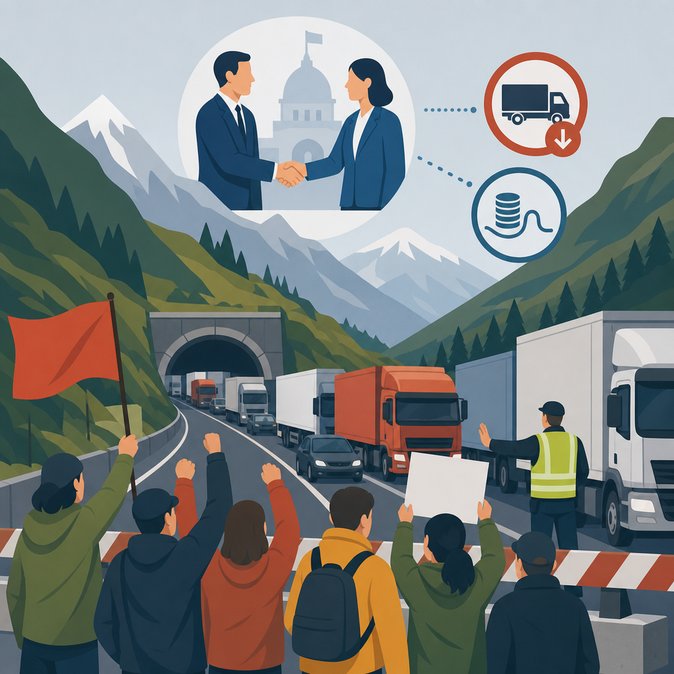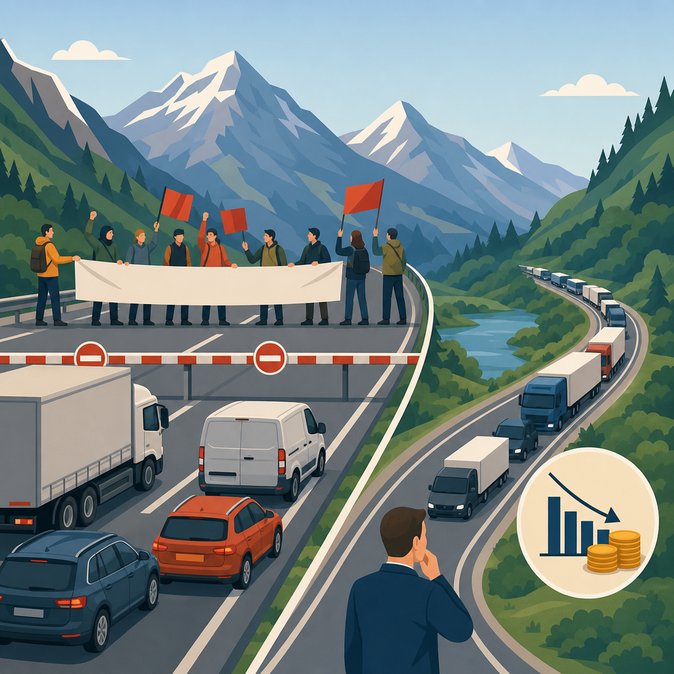
Traffic is once again flowing over the Brenner Pass after Austrian police cleared an eight-hour blockade mounted on 30 May by some 3,000 climate and anti-transit protesters. Demonstrators—including the Tyrolean Transit Forum and the pan-European “Letzte Generation” movement—formed a human chain and parked vehicles across all lanes of the A13 motorway and parallel B182 road from 11:00 to 19:00, forcing authorities to close the entire Brenner corridor in both directions. Rail services on the parallel Verona-Brenner line were also disrupted after a suspected arson attack on signalling equipment in northern Italy.
![Brenner Pass reopens after eight-hour climate protest that paralysed Austria-Italy trade corridor]()
Meanwhile, for hauliers or business travellers who suddenly find themselves rerouting through non-EU territories or juggling crew changes that require fresh travel documents, VisaHQ can take the sting out of emergency paperwork. The company’s Austria page (https://www.visahq.com/austria/) provides fast, online visa and permit processing along with real-time advisory updates—useful insurance when protests or policy shifts upend carefully laid itineraries.
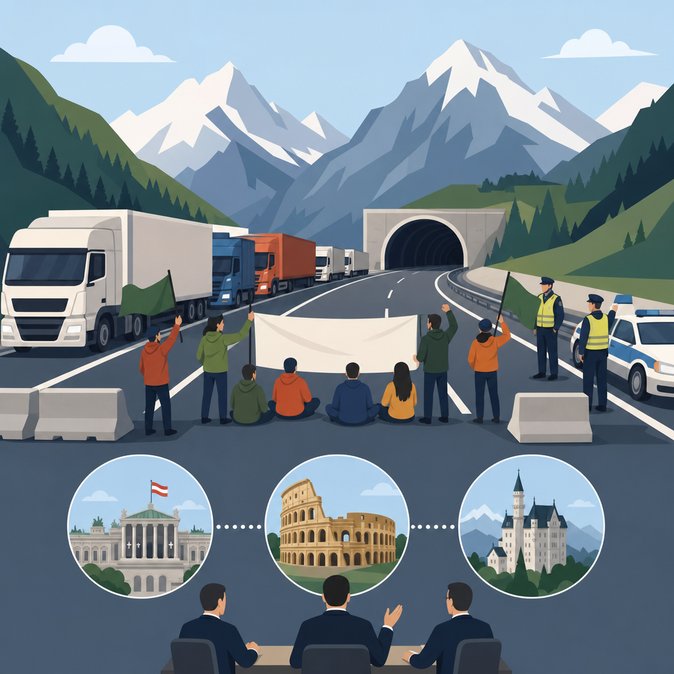
Although the action coincided with the peak of Austria’s Pfingsten (Whitsun) holiday getaway, the feared mega-jam never materialised. Hauliers and holidaymakers largely heeded advance warnings from ÖAMTC, ASFINAG and Italy’s A22 operator to avoid the route. Austrian traffic monitors reported only moderate detours via the Tauern (A10) and Pyhrn (A9) motorways, while Salzburg24 spoke of “surprisingly calm” roads on Sunday. Nevertheless, the Austrian hauliers’ association AISÖ estimates that each hour of closure cost Alpine supply chains around €2 million in penalty fees and lost productivity. Vienna and Rome have long sparred over how to curb the 2.5 million lorries that thunder through the narrow Wipp Valley each year. Tyrol already imposes weekend HGV bans, night-time driving curbs and a controversial “sectoral” toll, measures Germany and Italy claim breach EU single-market rules. Saturday’s protest is likely to strengthen the Austrian government’s hand as it convenes an "Alpine Mobility Round-Table" with Italy’s South Tyrol and Bavaria on 20 June to discuss a cross-border truck-toll and mandatory rail-shuttle quota system. For corporate travel and logistics managers the episode is a stark reminder that the Brenner corridor—Europe’s second-busiest land freight route after Calais—remains highly vulnerable to both civil-society actions and ad-hoc government restrictions. Contingency planning should include real-time monitoring of ASFINAG and A22 feeds, pre-booking of intermodal ‘Rolling Highway’ wagons, and the identification of alternative routings via the Gotthard, Tauern or Swiss A2. Companies should also brief drivers on Austria’s tailback fines and Italy’s Green Pass requirements for fuel stops south of the border.

Meanwhile, for hauliers or business travellers who suddenly find themselves rerouting through non-EU territories or juggling crew changes that require fresh travel documents, VisaHQ can take the sting out of emergency paperwork. The company’s Austria page (https://www.visahq.com/austria/) provides fast, online visa and permit processing along with real-time advisory updates—useful insurance when protests or policy shifts upend carefully laid itineraries.
Although the action coincided with the peak of Austria’s Pfingsten (Whitsun) holiday getaway, the feared mega-jam never materialised. Hauliers and holidaymakers largely heeded advance warnings from ÖAMTC, ASFINAG and Italy’s A22 operator to avoid the route. Austrian traffic monitors reported only moderate detours via the Tauern (A10) and Pyhrn (A9) motorways, while Salzburg24 spoke of “surprisingly calm” roads on Sunday. Nevertheless, the Austrian hauliers’ association AISÖ estimates that each hour of closure cost Alpine supply chains around €2 million in penalty fees and lost productivity. Vienna and Rome have long sparred over how to curb the 2.5 million lorries that thunder through the narrow Wipp Valley each year. Tyrol already imposes weekend HGV bans, night-time driving curbs and a controversial “sectoral” toll, measures Germany and Italy claim breach EU single-market rules. Saturday’s protest is likely to strengthen the Austrian government’s hand as it convenes an "Alpine Mobility Round-Table" with Italy’s South Tyrol and Bavaria on 20 June to discuss a cross-border truck-toll and mandatory rail-shuttle quota system. For corporate travel and logistics managers the episode is a stark reminder that the Brenner corridor—Europe’s second-busiest land freight route after Calais—remains highly vulnerable to both civil-society actions and ad-hoc government restrictions. Contingency planning should include real-time monitoring of ASFINAG and A22 feeds, pre-booking of intermodal ‘Rolling Highway’ wagons, and the identification of alternative routings via the Gotthard, Tauern or Swiss A2. Companies should also brief drivers on Austria’s tailback fines and Italy’s Green Pass requirements for fuel stops south of the border.