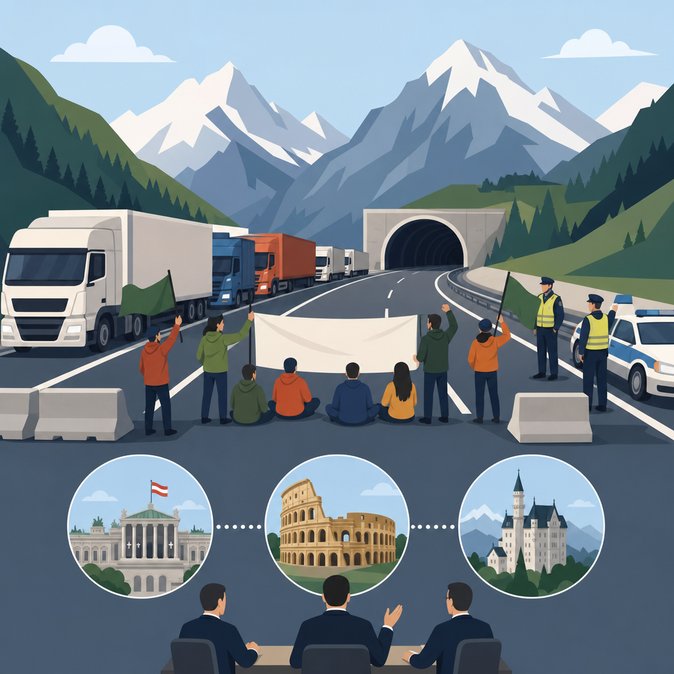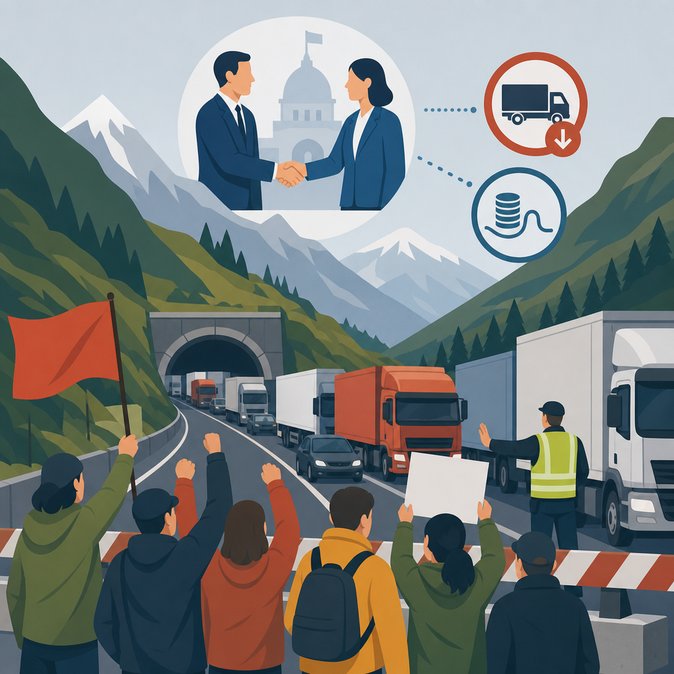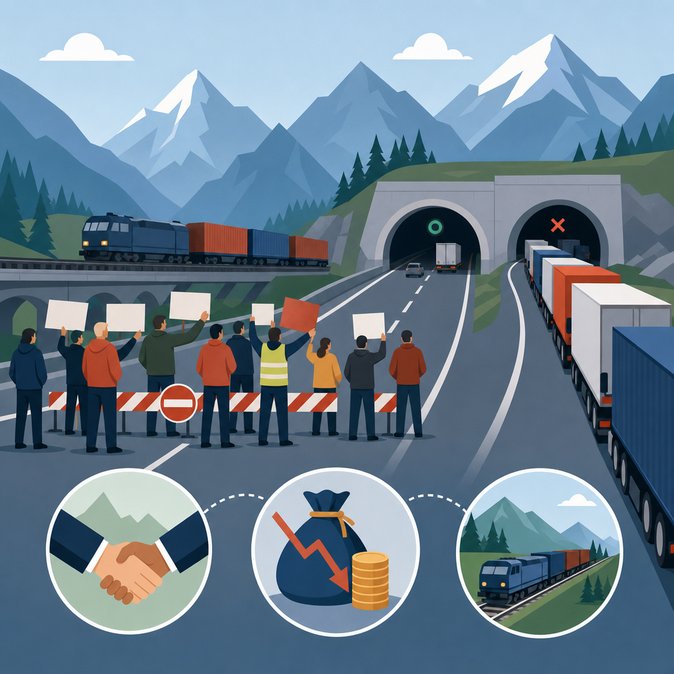
Traffic on the Brenner corridor – the key alpine motorway and rail axis linking Austria with Italy and southern Germany – was moving again late on Sunday, 31 May, after an eight-hour blockade by around 3,000 local residents and environmental activists brought trucks, tourist coaches and private cars to a stand-still earlier in the day. According to motorway operator ASFINAG and the Tyrolean police, protesters formed a human chain and parked vehicles across all lanes of the A13 and the parallel B182 between 11:00 and 19:00. Officers turned back 219 heavy-goods vehicles at upstream checkpoints on both sides of the frontier, while passenger traffic was diverted over alternative alpine crossings such as the Fern and Tauern passes. No serious clashes were reported and organisers hailed the action as a “wake-up call” to reduce transit volumes, noise and diesel emissions in the narrow Wipp Valley.
![Brenner Pass reopens after Tyrolean traffic protest halted cross-border freight flow]()
For travellers, tourists and supply-chain staff crossing the Brenner, having the proper travel documentation is another crucial piece of the puzzle. VisaHQ’s Austria page (https://www.visahq.com/austria/) lets you check visa requirements, submit applications online and arrange courier collection anywhere in the world, ensuring paperwork never becomes an added obstacle when physical routes are already under pressure.
The Brenner is Europe’s busiest north-south road freight artery, carrying roughly 2.5 million lorries a year – 40 % more than in 2010. Tyrol already imposes weekend truck bans, night-time speed limits and a sectoral driving prohibition on certain goods, but local councils argue that EU and national measures have failed to shift long-haul cargo from road to rail fast enough. Hauliers’ association AISÖ, by contrast, described the blockade as “economic sabotage”, estimating direct supply-chain losses at about €2 million per hour. For corporate mobility managers the incident is a reminder of the corridor’s fragility. Companies with just-in-time deliveries to Italian plants or German distribution hubs should review contingency routings via the Tauern or Pyhrn corridors and build additional lead time into perishable-goods schedules. Passenger travel was less affected, but coach operators reported delays of up to three hours; rail services on the parallel Brenner line ran more or less to timetable. The Tyrolean and Italian provincial governments will meet in June to discuss longer-term solutions, including differentiated tolls, a night-time HGV cap and incentives for combined truck-on-train services. Any regulatory tightening would have a direct impact on exporters in Austria’s booming automotive-parts and food sectors, which rely heavily on predictable over-the-alps logistics.
For travellers, tourists and supply-chain staff crossing the Brenner, having the proper travel documentation is another crucial piece of the puzzle. VisaHQ’s Austria page (https://www.visahq.com/austria/) lets you check visa requirements, submit applications online and arrange courier collection anywhere in the world, ensuring paperwork never becomes an added obstacle when physical routes are already under pressure.
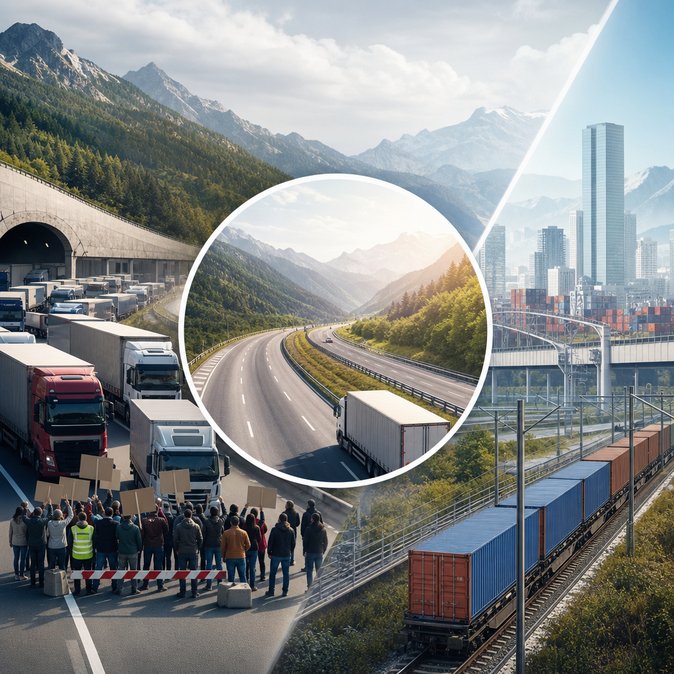
The Brenner is Europe’s busiest north-south road freight artery, carrying roughly 2.5 million lorries a year – 40 % more than in 2010. Tyrol already imposes weekend truck bans, night-time speed limits and a sectoral driving prohibition on certain goods, but local councils argue that EU and national measures have failed to shift long-haul cargo from road to rail fast enough. Hauliers’ association AISÖ, by contrast, described the blockade as “economic sabotage”, estimating direct supply-chain losses at about €2 million per hour. For corporate mobility managers the incident is a reminder of the corridor’s fragility. Companies with just-in-time deliveries to Italian plants or German distribution hubs should review contingency routings via the Tauern or Pyhrn corridors and build additional lead time into perishable-goods schedules. Passenger travel was less affected, but coach operators reported delays of up to three hours; rail services on the parallel Brenner line ran more or less to timetable. The Tyrolean and Italian provincial governments will meet in June to discuss longer-term solutions, including differentiated tolls, a night-time HGV cap and incentives for combined truck-on-train services. Any regulatory tightening would have a direct impact on exporters in Austria’s booming automotive-parts and food sectors, which rely heavily on predictable over-the-alps logistics.