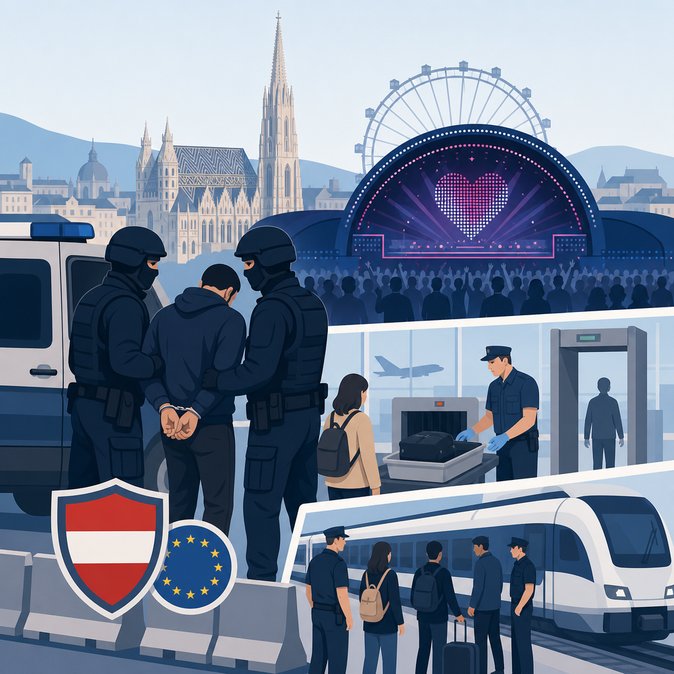
Austria’s Directorate for State Protection and Intelligence (DSN) has arrested six people aged 14–45 on terrorism-related charges following a month-long nationwide operation targeting Islamist extremist networks. The raids—which culminated in a “Joint Action Day” on 27 May and were publicly confirmed on 31 May—also saw 14 house searches and the seizure of phones, laptops, weapons and IS propaganda material. Interior Minister Gerhard Karner said the crackdown was timed to secure the influx of tens of thousands of foreign visitors arriving for the Eurovision Song Contest final at Vienna’s Stadthalle on 1 June.
![Austrian security sweep nets six Islamist suspects ahead of Eurovision influx]()
For assistance obtaining or renewing the necessary travel documents, companies can turn to VisaHQ, which offers streamlined visa and passport services for Austria at https://www.visahq.com/austria/ Their online platform and customer support help travellers and mobility managers secure the correct paperwork quickly, reducing the risk of delays amid the current heightened security environment.
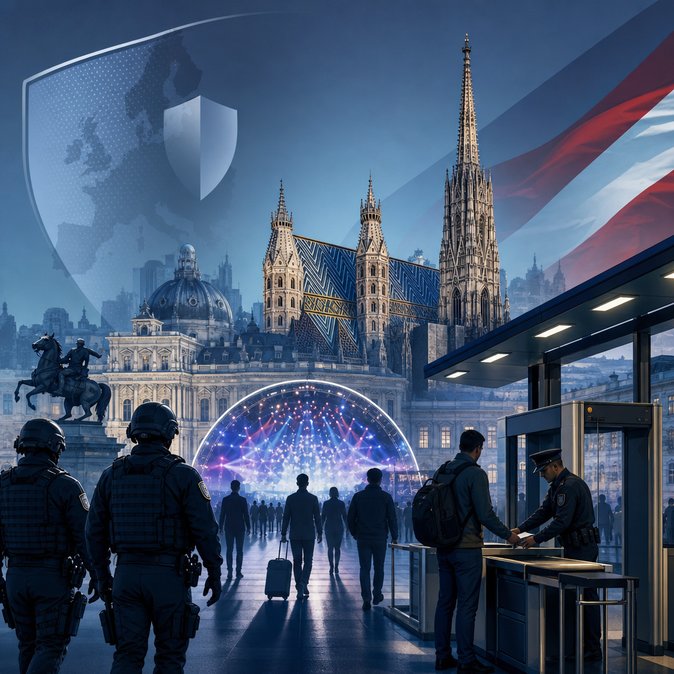
Since mid-April police have conducted 140 mandatory check-ins and 40 “Gefährderansprachen” (warnings to potential threats) focused on transport hubs, hotels and fan-zones. For global mobility teams the main impact is heightened security at Vienna Airport (VIE) and major rail stations. Travellers can expect longer document checks, random bag searches and occasional roadblocks on the A4 airport motorway. Employers should advise staff to carry passports—not just national ID cards—even on Schengen-internal flights, and to factor an extra 30–45 minutes into journeys to and from the venue. Event logistics companies bringing stage equipment into Austria report customs clearing times of up to six hours. Looking beyond Eurovision, Karner signalled that Austria will maintain “intensified flexible” border policing introduced in 2022, arguing that a 95 % drop in illegal crossings justifies the continued suspension of full Schengen free-travel rules with Hungary and Slovenia. Businesses should therefore anticipate periodic passport checks on road and rail routes until at least mid-2026.
For assistance obtaining or renewing the necessary travel documents, companies can turn to VisaHQ, which offers streamlined visa and passport services for Austria at https://www.visahq.com/austria/ Their online platform and customer support help travellers and mobility managers secure the correct paperwork quickly, reducing the risk of delays amid the current heightened security environment.
Since mid-April police have conducted 140 mandatory check-ins and 40 “Gefährderansprachen” (warnings to potential threats) focused on transport hubs, hotels and fan-zones. For global mobility teams the main impact is heightened security at Vienna Airport (VIE) and major rail stations. Travellers can expect longer document checks, random bag searches and occasional roadblocks on the A4 airport motorway. Employers should advise staff to carry passports—not just national ID cards—even on Schengen-internal flights, and to factor an extra 30–45 minutes into journeys to and from the venue. Event logistics companies bringing stage equipment into Austria report customs clearing times of up to six hours. Looking beyond Eurovision, Karner signalled that Austria will maintain “intensified flexible” border policing introduced in 2022, arguing that a 95 % drop in illegal crossings justifies the continued suspension of full Schengen free-travel rules with Hungary and Slovenia. Businesses should therefore anticipate periodic passport checks on road and rail routes until at least mid-2026.