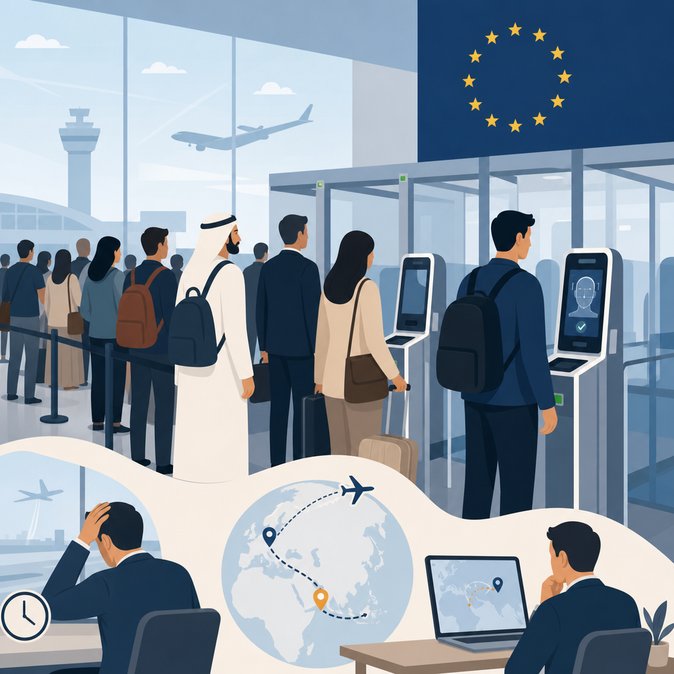
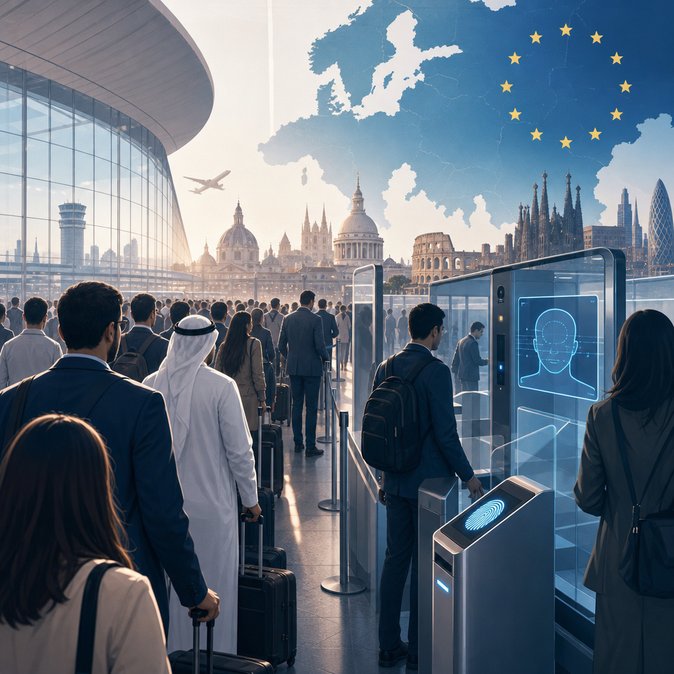
UAE-based holiday-makers and business executives connecting through Europe encountered their worst weekend of disruption yet as the EU’s new Entry/Exit System (EES) moved from pilot mode to full operation on May 31. The biometric programme replaces passport stamping with fingerprint and facial-recognition enrolment for all non-EU nationals on every trip in and out of the Schengen area. By Monday, June 1 queues of two-plus hours were reported at Amsterdam Schiphol, Lisbon, Milan Malpensa and Warsaw Chopin. UAE travel agencies told Gulf News that missed onward flights are now routine; shipping-crew movements to the US via European hubs are proving especially vulnerable.
![EES rollout snarls European airports, UAE travellers urged to build in 4-hour buffers]()
If you’re trying to stay ahead of the new requirements, VisaHQ can help: through its UAE portal (https://www.visahq.com/united-arab-emirates/) travellers can book Schengen visa appointments, receive biometric guidance, and get real-time alerts on EES updates—cutting paperwork stress before you ever reach the airport.
Airlines are re-booking passengers free of charge, but seat availability is tight as the summer peak begins. For corporates running short-stay rotations, mobility managers are advising: 1) minimum four-hour connection times, 2) pre-clearing Advance Passenger Information to avoid manual document checks, and 3) scheduling Schengen meetings at the start—not the end—of multi-leg trips so travellers are not caught at departure. European officials insist that the process will drop below one minute per passenger once the biometric database is fully populated. Airports Council International-Europe, however, warned last week that average wait times have already climbed to 3½ hours at 45 surveyed airports and “are deteriorating.” While Dubai International’s Smart Gate technology clears enrolled passengers in under 10 seconds, the EES episode is a stark reminder that frictionless travel still depends on policy harmony. Until Europe fine-tunes its system, UAE companies are budgeting extra layover nights—and extra cost—into their 2026 travel plans.
If you’re trying to stay ahead of the new requirements, VisaHQ can help: through its UAE portal (https://www.visahq.com/united-arab-emirates/) travellers can book Schengen visa appointments, receive biometric guidance, and get real-time alerts on EES updates—cutting paperwork stress before you ever reach the airport.
Airlines are re-booking passengers free of charge, but seat availability is tight as the summer peak begins. For corporates running short-stay rotations, mobility managers are advising: 1) minimum four-hour connection times, 2) pre-clearing Advance Passenger Information to avoid manual document checks, and 3) scheduling Schengen meetings at the start—not the end—of multi-leg trips so travellers are not caught at departure. European officials insist that the process will drop below one minute per passenger once the biometric database is fully populated. Airports Council International-Europe, however, warned last week that average wait times have already climbed to 3½ hours at 45 surveyed airports and “are deteriorating.” While Dubai International’s Smart Gate technology clears enrolled passengers in under 10 seconds, the EES episode is a stark reminder that frictionless travel still depends on policy harmony. Until Europe fine-tunes its system, UAE companies are budgeting extra layover nights—and extra cost—into their 2026 travel plans.