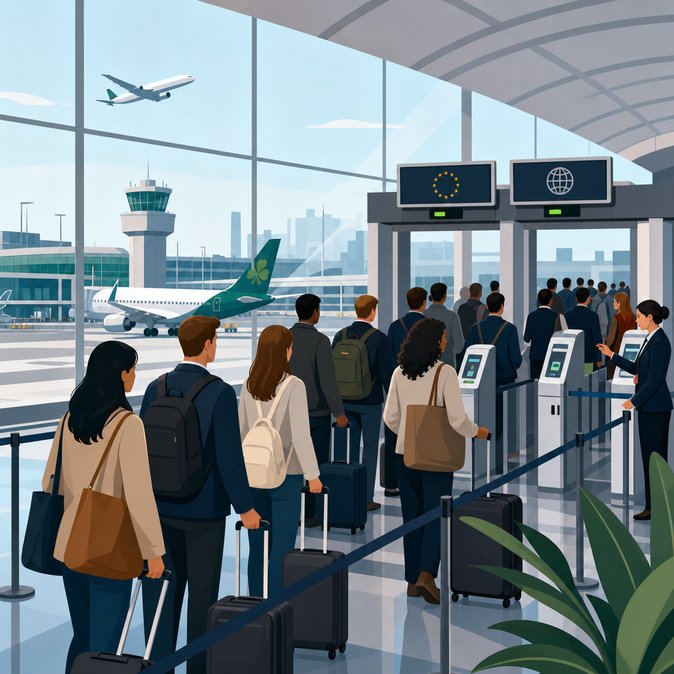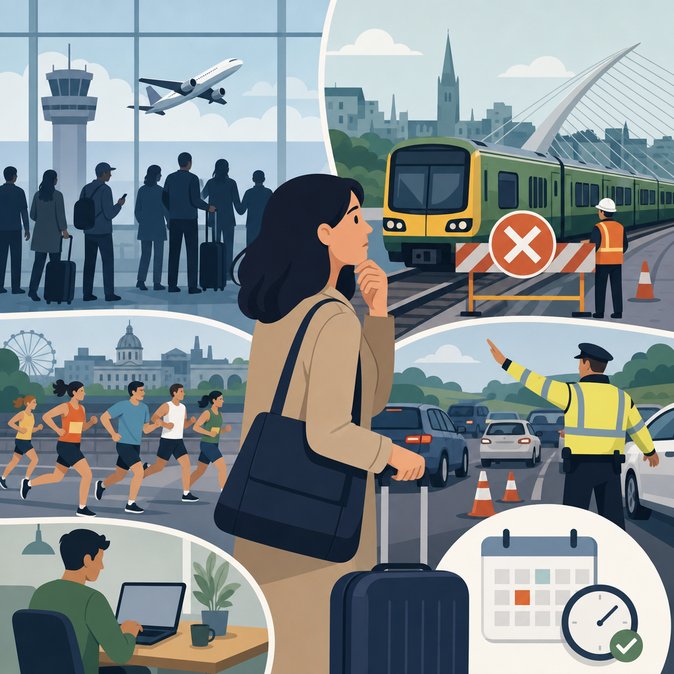
Travelling across Ireland this Bank Holiday Sunday has become a logistical headache as multiple transport and policing events collide. An estimated 131,000 passengers are funnelling through Dublin Airport at the same time that 18 DART stations between Connolly and Bray are shut for engineering works, leaving large sections of the capital’s coastal commuter belt without rail service.
![‘Perfect-Storm’ Travel Disruption: Rail Closures, Marathons and Garda Crack-Down Snarl Bank-Holiday Mobility]()
For international visitors who might also be navigating visa or travel-document questions amid the transport chaos, VisaHQ can at least remove the paperwork stress. The online platform – available at https://www.visahq.com/ireland/ – provides quick visa checks, step-by-step application support and expedited processing options, ensuring that documentation issues don’t compound the day’s travel frustrations.
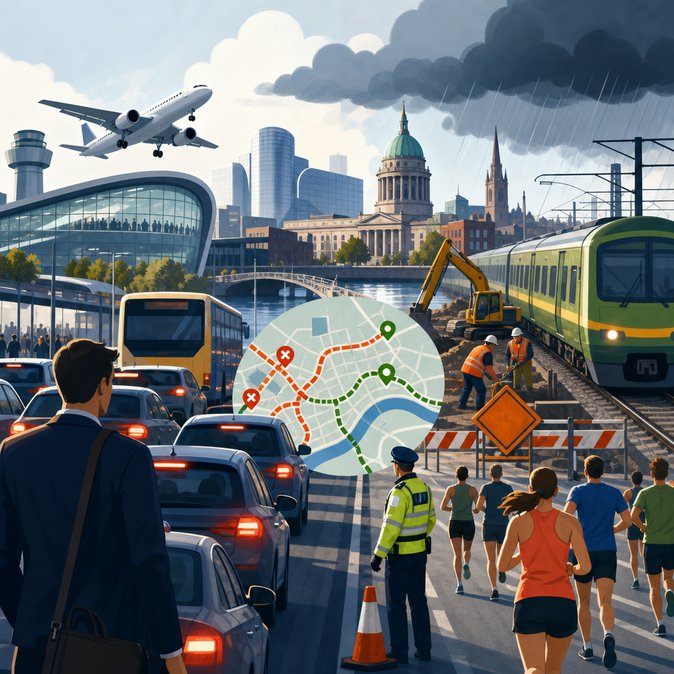
The closures, which continue through Monday, have forced thousands of travellers onto already-busy road and bus networks. Compounding matters, 30,000 runners are taking to Dublin’s streets for the VHI Women’s Mini-Marathon, while 12,000 athletes contest the Cork City Marathon and shorter races farther south. Road closures and rolling traffic diversions around both events are generating lengthy detours for airport coaches, ride-shares and private vehicles. Public-transport agency Transport for Ireland is honouring rail tickets on Dublin Bus routes, but capacity remains tight. On the roads, Gardaí have launched an all-Ireland enforcement operation targeting speed, seat-belt and alcohol offences. By Sunday morning, more than 100 motorists had been clocked speeding and over 50 drivers arrested for drink or drug driving. The heightened policing presence, although welcomed from a safety standpoint, is adding to congestion on major arteries such as the M1, M7 and M50. Business travellers arriving for Monday client meetings—or seeking to exit the country after brief assignments—face the risk of missed connections. Mobility managers are advising staff to budget at least one additional hour for transfers between the city centre and Dublin Airport and to monitor real-time traffic apps. For rail-dependent commuters, contingency plans include remote work on Tuesday morning or overnight stays near the airport to guarantee flight check-in. Iarnród Éireann says the engineering works are part of a €290 million upgrade programme to prepare the Dublin coastal corridor for battery-electric DART+ rolling stock. While future gains in frequency and sustainability are anticipated, today’s disruptions highlight the acute need for better multi-modal contingency planning when large-scale infrastructure work coincides with national events.
For international visitors who might also be navigating visa or travel-document questions amid the transport chaos, VisaHQ can at least remove the paperwork stress. The online platform – available at https://www.visahq.com/ireland/ – provides quick visa checks, step-by-step application support and expedited processing options, ensuring that documentation issues don’t compound the day’s travel frustrations.
The closures, which continue through Monday, have forced thousands of travellers onto already-busy road and bus networks. Compounding matters, 30,000 runners are taking to Dublin’s streets for the VHI Women’s Mini-Marathon, while 12,000 athletes contest the Cork City Marathon and shorter races farther south. Road closures and rolling traffic diversions around both events are generating lengthy detours for airport coaches, ride-shares and private vehicles. Public-transport agency Transport for Ireland is honouring rail tickets on Dublin Bus routes, but capacity remains tight. On the roads, Gardaí have launched an all-Ireland enforcement operation targeting speed, seat-belt and alcohol offences. By Sunday morning, more than 100 motorists had been clocked speeding and over 50 drivers arrested for drink or drug driving. The heightened policing presence, although welcomed from a safety standpoint, is adding to congestion on major arteries such as the M1, M7 and M50. Business travellers arriving for Monday client meetings—or seeking to exit the country after brief assignments—face the risk of missed connections. Mobility managers are advising staff to budget at least one additional hour for transfers between the city centre and Dublin Airport and to monitor real-time traffic apps. For rail-dependent commuters, contingency plans include remote work on Tuesday morning or overnight stays near the airport to guarantee flight check-in. Iarnród Éireann says the engineering works are part of a €290 million upgrade programme to prepare the Dublin coastal corridor for battery-electric DART+ rolling stock. While future gains in frequency and sustainability are anticipated, today’s disruptions highlight the acute need for better multi-modal contingency planning when large-scale infrastructure work coincides with national events.