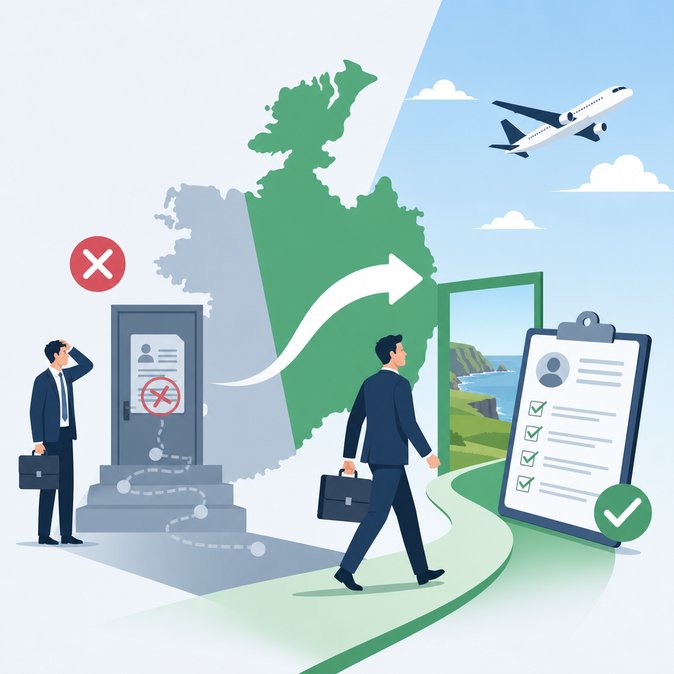
Ireland’s Department of Justice, Home Affairs and Migration has confirmed that, from 1 June 2026, foreign nationals who are refused a short-stay “Type C” visa will no longer be able to lodge an administrative appeal. The measure, announced late on 29 May and published by specialist outlet *The Visa Wire* the following day, removes a step that has been part of the Irish visa system for more than two decades.
Officials say appeals absorbed scarce resources that are now being redeployed to tackle backlogs in family-reunification, work-permit and study applications. The only exception will be refusals governed by the EU Free Movement Directive, which will retain a statutory right of review.
The immediate practical consequence is that applicants denied a Type C visa—used for business meetings, conferences, short-term assignments, tourism or family visits of up to 90 days—will have only one remedy: a fresh application at full fee. Immigration lawyers warn that this raises the stakes for first-time submissions; missing documents or vague itineraries that might once have been cured on appeal will now require an entirely new filing.
Employers should therefore build additional lead-time into travel planning and double-check invitation letters, financial statements and accommodation proofs before submission.
At this juncture, many organisations and individual travellers seek external support to ensure their paperwork is flawless the first time around. VisaHQ, for instance, offers an online Irish-visa concierge service featuring step-by-step guidance, document pre-screening and real-time status alerts—details are available at https://www.visahq.com/ireland/ Leveraging such a platform can materially reduce the risk of an avoidable refusal in a system where appeals will soon disappear.
![Ireland Scraps Appeals for Short-Stay Visa Refusals from 1 June]()
Irish missions processed almost 135,000 Type C applications last year, with refusal rates averaging 11 per cent on key business corridors such as India, Nigeria and China. The Department argues that eliminating appeals could free up as many as 25 experienced visa officers—enough to cut decision times on more complex long-stay D-visa categories by “several weeks”.
Business associations cautiously welcomed the reform but stressed that predictable service standards will be critical if Ireland is to compete for post-pandemic conference traffic and short-cycle project work.
For mobility managers, the message is clear: invest in robust document checklists and consider premium processing where available. Travellers who do receive a refusal should act quickly—fresh applications that address the stated grounds can be submitted immediately, and seasoned practitioners believe that well-prepared re-files still stand a good chance of success.
However, those facing tight deadlines may need to explore virtual participation or reschedule in-person meetings until a new visa is secured.
The Department has promised a formal review of the change after six months and says it will publish updated refusal statistics in early 2027. Until then, corporate mobility teams and travel planners should treat the first application as the only shot at travel approval—and budget accordingly.
Officials say appeals absorbed scarce resources that are now being redeployed to tackle backlogs in family-reunification, work-permit and study applications. The only exception will be refusals governed by the EU Free Movement Directive, which will retain a statutory right of review.
The immediate practical consequence is that applicants denied a Type C visa—used for business meetings, conferences, short-term assignments, tourism or family visits of up to 90 days—will have only one remedy: a fresh application at full fee. Immigration lawyers warn that this raises the stakes for first-time submissions; missing documents or vague itineraries that might once have been cured on appeal will now require an entirely new filing.
Employers should therefore build additional lead-time into travel planning and double-check invitation letters, financial statements and accommodation proofs before submission.
At this juncture, many organisations and individual travellers seek external support to ensure their paperwork is flawless the first time around. VisaHQ, for instance, offers an online Irish-visa concierge service featuring step-by-step guidance, document pre-screening and real-time status alerts—details are available at https://www.visahq.com/ireland/ Leveraging such a platform can materially reduce the risk of an avoidable refusal in a system where appeals will soon disappear.

Irish missions processed almost 135,000 Type C applications last year, with refusal rates averaging 11 per cent on key business corridors such as India, Nigeria and China. The Department argues that eliminating appeals could free up as many as 25 experienced visa officers—enough to cut decision times on more complex long-stay D-visa categories by “several weeks”.
Business associations cautiously welcomed the reform but stressed that predictable service standards will be critical if Ireland is to compete for post-pandemic conference traffic and short-cycle project work.
For mobility managers, the message is clear: invest in robust document checklists and consider premium processing where available. Travellers who do receive a refusal should act quickly—fresh applications that address the stated grounds can be submitted immediately, and seasoned practitioners believe that well-prepared re-files still stand a good chance of success.
However, those facing tight deadlines may need to explore virtual participation or reschedule in-person meetings until a new visa is secured.
The Department has promised a formal review of the change after six months and says it will publish updated refusal statistics in early 2027. Until then, corporate mobility teams and travel planners should treat the first application as the only shot at travel approval—and budget accordingly.