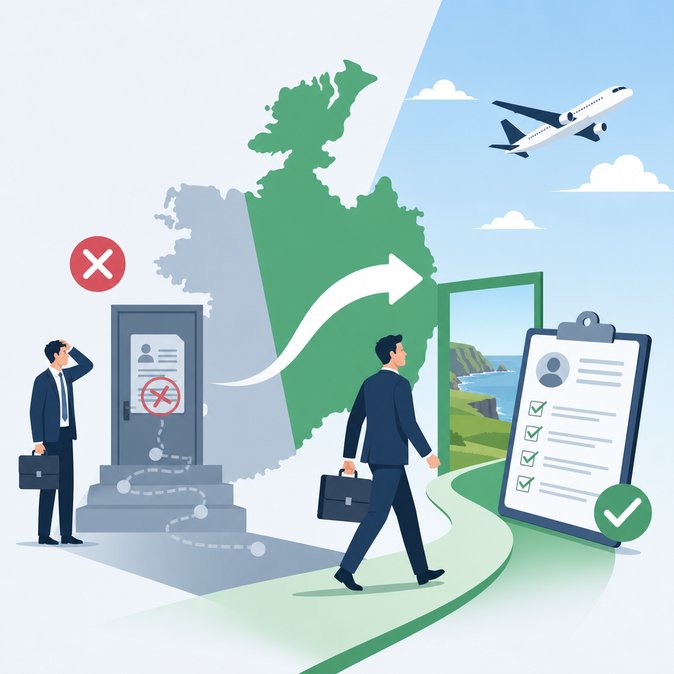
The Department of Justice, Home Affairs and Migration has confirmed that, from 1 June 2026, applicants refused an Irish short-stay (Type C) visa will no longer be able to lodge an administrative appeal. Announcing the measure, Minister of State for Migration Colm Brophy said that appeals in the visitor, business-travel and family-visit categories often take longer to process than the underlying trip is valid for, making the current mechanism “largely futile”.
![Ireland removes appeal right for most short-stay visa refusals]()
For travellers looking to get their Irish visa applications right the first time—or to turn around a fresh submission quickly after a refusal—VisaHQ can provide invaluable help. Through its Ireland portal (https://www.visahq.com/ireland/), the company supplies personalised document checklists, real-time status tracking and expert customer support that can significantly improve the chances of obtaining a timely approval.
Under the new policy an applicant whose visa is refused may file a fresh application immediately, addressing the reasons for refusal, instead of waiting several weeks—or in some cases months—for an appeal decision. The change does not affect long-stay (Type D) visas covering work, study and family-reunification, nor does it apply to EU/EEA nationals’ family members who fall under the Free Movement Directive. The Department emphasises that no statutory amendment is required; the right of appeal for Type C visas exists only at the Department’s discretion and is being withdrawn by administrative decision. For business travellers the move promises faster clarity: companies that rely on short-term visits—from installation engineers to executives—will be able to re-apply immediately after a refusal rather than risk losing the window for a critical project. Immigration advisers nonetheless warn that it will become even more important to file a “decision-ready” application first time, because a second refusal could damage the applicant’s credibility. They recommend including robust evidence of ties to the home country and sufficient funds, the two most common refusal grounds. Longer term, the Department expects the redeployment of appeals officers to cut processing times for complex Type D appeals such as intra-company transfers and dependent-parent visas. Employers with pending Critical Skills Employment Permit (CSEP) cases—where delays can mean losing key talent—should benefit directly. Overall, the change is part of a wider push to reduce backlogs across Ireland’s visa system ahead of the country’s assumption of the rotating EU Presidency on 1 July 2026.

For travellers looking to get their Irish visa applications right the first time—or to turn around a fresh submission quickly after a refusal—VisaHQ can provide invaluable help. Through its Ireland portal (https://www.visahq.com/ireland/), the company supplies personalised document checklists, real-time status tracking and expert customer support that can significantly improve the chances of obtaining a timely approval.
Under the new policy an applicant whose visa is refused may file a fresh application immediately, addressing the reasons for refusal, instead of waiting several weeks—or in some cases months—for an appeal decision. The change does not affect long-stay (Type D) visas covering work, study and family-reunification, nor does it apply to EU/EEA nationals’ family members who fall under the Free Movement Directive. The Department emphasises that no statutory amendment is required; the right of appeal for Type C visas exists only at the Department’s discretion and is being withdrawn by administrative decision. For business travellers the move promises faster clarity: companies that rely on short-term visits—from installation engineers to executives—will be able to re-apply immediately after a refusal rather than risk losing the window for a critical project. Immigration advisers nonetheless warn that it will become even more important to file a “decision-ready” application first time, because a second refusal could damage the applicant’s credibility. They recommend including robust evidence of ties to the home country and sufficient funds, the two most common refusal grounds. Longer term, the Department expects the redeployment of appeals officers to cut processing times for complex Type D appeals such as intra-company transfers and dependent-parent visas. Employers with pending Critical Skills Employment Permit (CSEP) cases—where delays can mean losing key talent—should benefit directly. Overall, the change is part of a wider push to reduce backlogs across Ireland’s visa system ahead of the country’s assumption of the rotating EU Presidency on 1 July 2026.