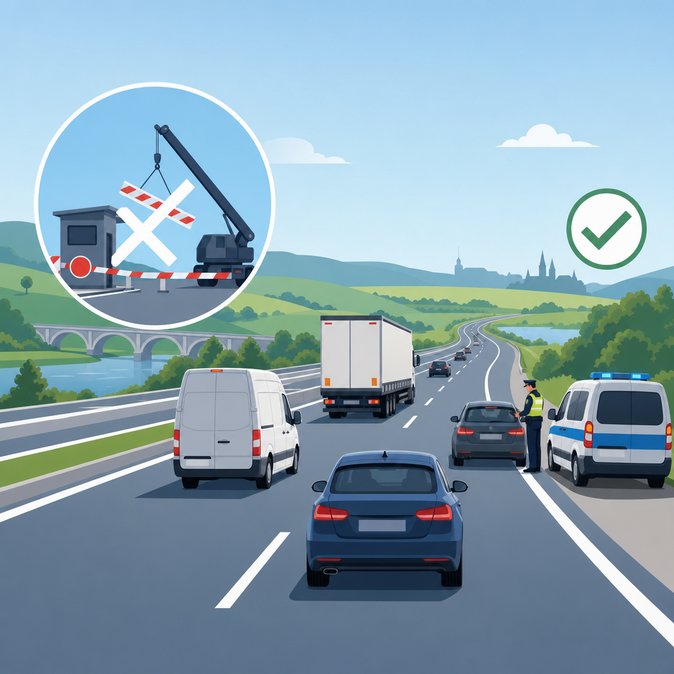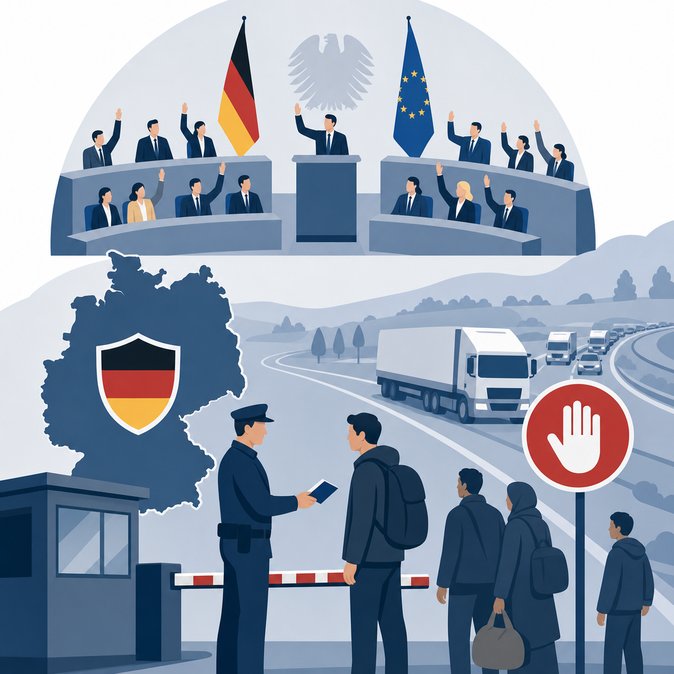
Germany’s parliament on 23 May rejected two opposition motions that sought to halt the practice of turning away asylum seekers at the country’s internal Schengen borders and to abolish stationary checkpoints with Austria and the Czech Republic. The proposals—tabled separately by the Greens and The Left—argued that recent court rulings had deemed blanket refusals and fixed controls incompatible with EU law. But a majority coalition of CDU/CSU and SPD lawmakers voted them down, citing ongoing migratory pressure and security threats.
![Bundestag Rejects Motions to End Pushbacks and Stationary Border Controls]()
Amid the policy back-and-forth, travelers still need clear guidance on what documents they should carry. VisaHQ simplifies that task by letting users verify entry requirements, obtain visas or residence permits, and receive real-time updates for Germany through its online platform (https://www.visahq.com/germany/), ensuring corporate mobility managers and individual visitors stay compliant despite the evolving landscape.
Interior Minister Alexander Dobrindt welcomed the outcome, insisting that current controls are “targeted, proportionate and necessary until the EU’s new Pact on Migration and Asylum is fully operational.” He confirmed that roughly 14,000 Federal Police officers remain deployed across all nine land borders, though the ministry is experimenting with more mobile tactics to minimise trade disruption. For corporate mobility managers the vote means status-quo: travellers—especially non-EU assignees—should still carry passports and residence permits on domestic rail and road legs near border regions. Logistics firms moving just-in-time components through Bavaria warned of continued delays; however, the government said it is working on a “green-lane” pilot for registered trusted carriers. On the legal front, NGOs say they will press ahead with complaints at the European Commission, arguing that Germany’s checks breach Article 22 of the Schengen Code. Any infringement ruling could force Berlin to redesign its regime later this year, adding more uncertainty for businesses planning cross-border projects.

Amid the policy back-and-forth, travelers still need clear guidance on what documents they should carry. VisaHQ simplifies that task by letting users verify entry requirements, obtain visas or residence permits, and receive real-time updates for Germany through its online platform (https://www.visahq.com/germany/), ensuring corporate mobility managers and individual visitors stay compliant despite the evolving landscape.
Interior Minister Alexander Dobrindt welcomed the outcome, insisting that current controls are “targeted, proportionate and necessary until the EU’s new Pact on Migration and Asylum is fully operational.” He confirmed that roughly 14,000 Federal Police officers remain deployed across all nine land borders, though the ministry is experimenting with more mobile tactics to minimise trade disruption. For corporate mobility managers the vote means status-quo: travellers—especially non-EU assignees—should still carry passports and residence permits on domestic rail and road legs near border regions. Logistics firms moving just-in-time components through Bavaria warned of continued delays; however, the government said it is working on a “green-lane” pilot for registered trusted carriers. On the legal front, NGOs say they will press ahead with complaints at the European Commission, arguing that Germany’s checks breach Article 22 of the Schengen Code. Any infringement ruling could force Berlin to redesign its regime later this year, adding more uncertainty for businesses planning cross-border projects.