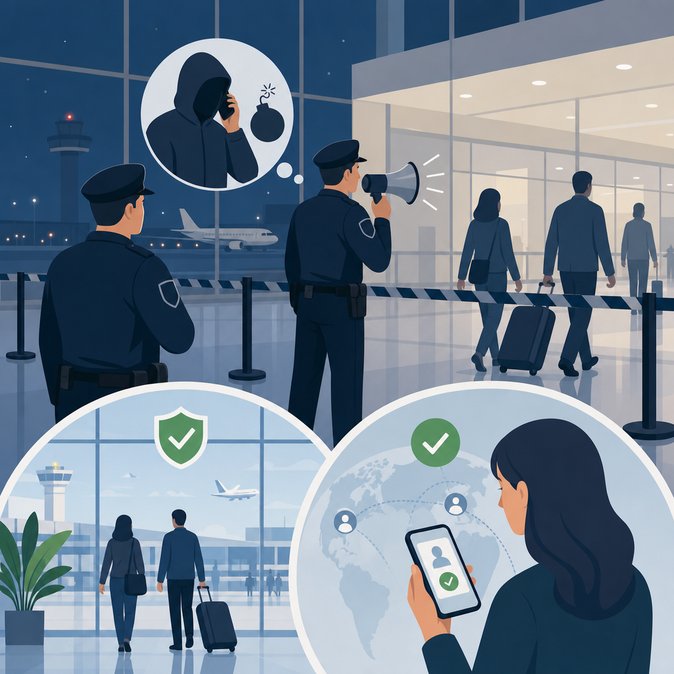
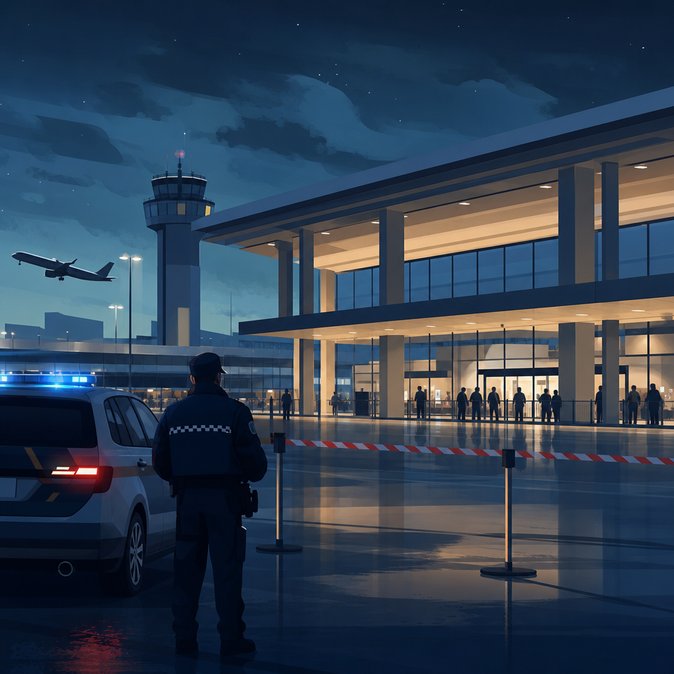
Berlin Brandenburg Airport (BER) experienced a security scare overnight when an anonymous caller claimed explosives had been hidden in Terminal 2. Police evacuated the public concourse shortly after 21:15 CEST on 29 May and blocked road access, leaving late-arriving passengers to queue outside in unseasonably cold weather. Flight operations behind security continued, but one Ryanair departure was delayed by 35 minutes, according to the airline. Specialist bomb-disposal teams searched the building for nearly five hours before giving the all-clear at 02:00. No device was found, and the criminal police have opened an investigation into ‘disturbance of the public peace by threat of crime.’ The scare hit just as tens of thousands of visitors were flying in for a sold-out Metallica concert and ahead of Monday-morning corporate travel peaks. BER management emphasised that its evacuation and business-continuity protocols worked as intended. However, the incident revives criticism that the airport—already notorious for long security queues—still lacks sufficient landside space to manage large-scale evacuations without pushing passengers into the open. Travel-risk consultants urge companies to remind employees transiting through Berlin to build extra time into journeys and to use the airport’s real-time notification app.
![Bomb threat briefly closes Terminal 2 at Berlin Brandenburg Airport]()
To help mitigate at least one layer of travel stress, VisaHQ offers a fast, digital way to confirm and obtain the correct travel documents for Germany and neighbouring countries. Its platform (https://www.visahq.com/germany/) lets both individual passengers and corporate travel managers check entry rules in real time, submit applications online, and track approvals, ensuring that when disruptions like bomb scares strike, paperwork is one thing you don’t have to worry about.
Frequent flyers note that this is the fourth bomb threat at BER since 2021; none have resulted in an actual device being found, but each has caused varying degrees of disruption. For mobility and travel managers, the lesson is clear: maintain up-to-date passenger contact details so that last-minute gate changes or delays can be communicated quickly, and ensure that duty-of-care tracking systems cover smaller German airports such as Leipzig/Halle or Dresden in case travellers divert to alternate gateways.
To help mitigate at least one layer of travel stress, VisaHQ offers a fast, digital way to confirm and obtain the correct travel documents for Germany and neighbouring countries. Its platform (https://www.visahq.com/germany/) lets both individual passengers and corporate travel managers check entry rules in real time, submit applications online, and track approvals, ensuring that when disruptions like bomb scares strike, paperwork is one thing you don’t have to worry about.
Frequent flyers note that this is the fourth bomb threat at BER since 2021; none have resulted in an actual device being found, but each has caused varying degrees of disruption. For mobility and travel managers, the lesson is clear: maintain up-to-date passenger contact details so that last-minute gate changes or delays can be communicated quickly, and ensure that duty-of-care tracking systems cover smaller German airports such as Leipzig/Halle or Dresden in case travellers divert to alternate gateways.