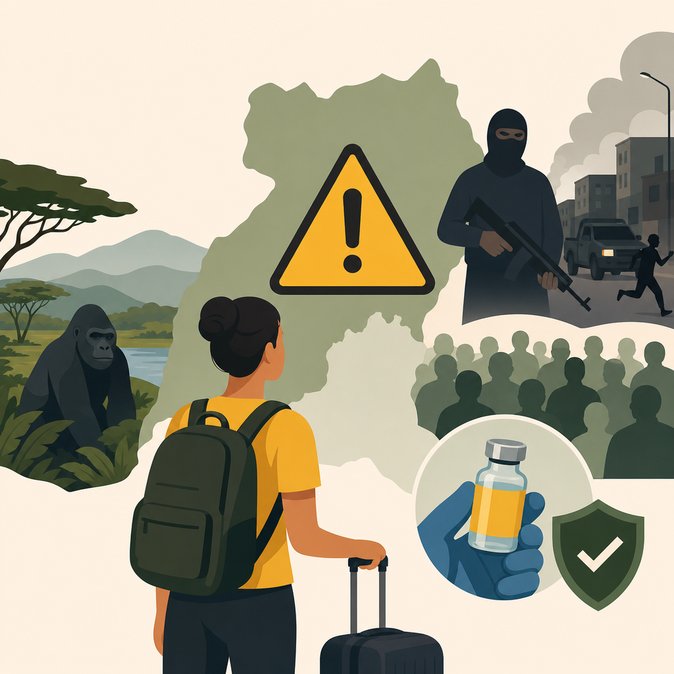
The Australian Department of Foreign Affairs and Trade (DFAT) updated its Smartraveller advisory for Uganda on 30 May 2026, retaining the overall level “Exercise a high degree of caution” but adding fresh warnings about terrorism, violent crime and an Ebola outbreak in neighbouring Democratic Republic of Congo. The notice highlights the possibility of curfews, movement restrictions and internet shutdowns during periods of political tension, and reminds travellers that border areas with South Sudan and the DRC carry higher-level advice.
![DFAT Updates Uganda Travel Advice: Terrorism and Ebola Risks Keep ‘Exercise High Caution’ Rating]()
For visas and essential travel documentation, Australian travellers can streamline their preparations through VisaHQ, which offers an easy online application service and real-time status updates tailored to Ugandan entry requirements; see https://www.visahq.com/australia/ for details.
For corporate security managers the key message is that threat levels remain elevated ahead of Uganda’s post-election period. DFAT notes increased security screenings at hotels, malls and Entebbe International Airport, and urges Australians to avoid large gatherings, music festivals and places of worship that could be targeted by extremists. The advisory also flags kidnapping risks in western national parks—popular with Australian eco-tourists and expatriate staff posted to regional infrastructure projects. Health considerations are equally serious. The World Health Organization has recorded new cases of the Bundibugyo strain of Ebola across the DRC–Uganda frontier. Travellers must show proof of yellow-fever vaccination on arrival and are urged to maintain strict hygiene and carry adequate medical insurance, as advanced facilities are limited outside Kampala. Businesses sending staff to Uganda should review crisis-management plans, confirm medevac coverage and verify that local partners have robust security protocols. DFAT’s alert underscores that travel approvals should be contingent on up-to-date intelligence and the ability to relocate personnel quickly if the security environment deteriorates.

For visas and essential travel documentation, Australian travellers can streamline their preparations through VisaHQ, which offers an easy online application service and real-time status updates tailored to Ugandan entry requirements; see https://www.visahq.com/australia/ for details.
For corporate security managers the key message is that threat levels remain elevated ahead of Uganda’s post-election period. DFAT notes increased security screenings at hotels, malls and Entebbe International Airport, and urges Australians to avoid large gatherings, music festivals and places of worship that could be targeted by extremists. The advisory also flags kidnapping risks in western national parks—popular with Australian eco-tourists and expatriate staff posted to regional infrastructure projects. Health considerations are equally serious. The World Health Organization has recorded new cases of the Bundibugyo strain of Ebola across the DRC–Uganda frontier. Travellers must show proof of yellow-fever vaccination on arrival and are urged to maintain strict hygiene and carry adequate medical insurance, as advanced facilities are limited outside Kampala. Businesses sending staff to Uganda should review crisis-management plans, confirm medevac coverage and verify that local partners have robust security protocols. DFAT’s alert underscores that travel approvals should be contingent on up-to-date intelligence and the ability to relocate personnel quickly if the security environment deteriorates.