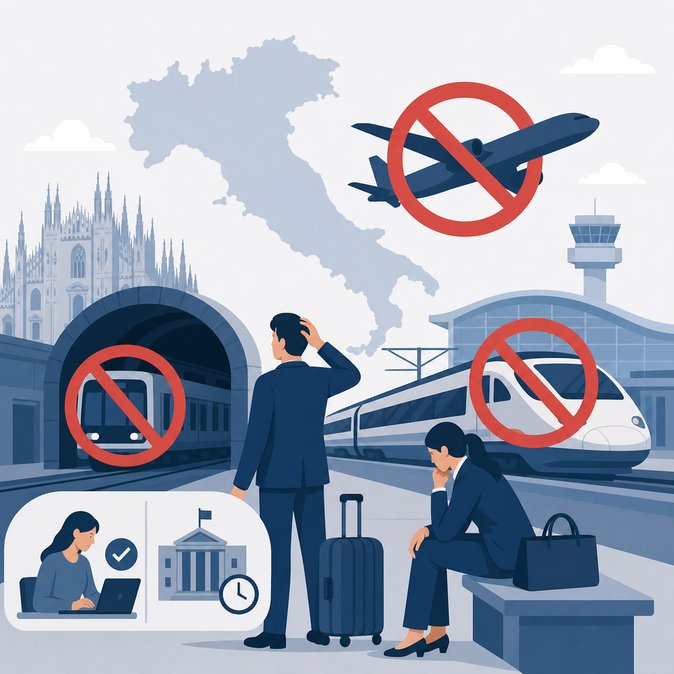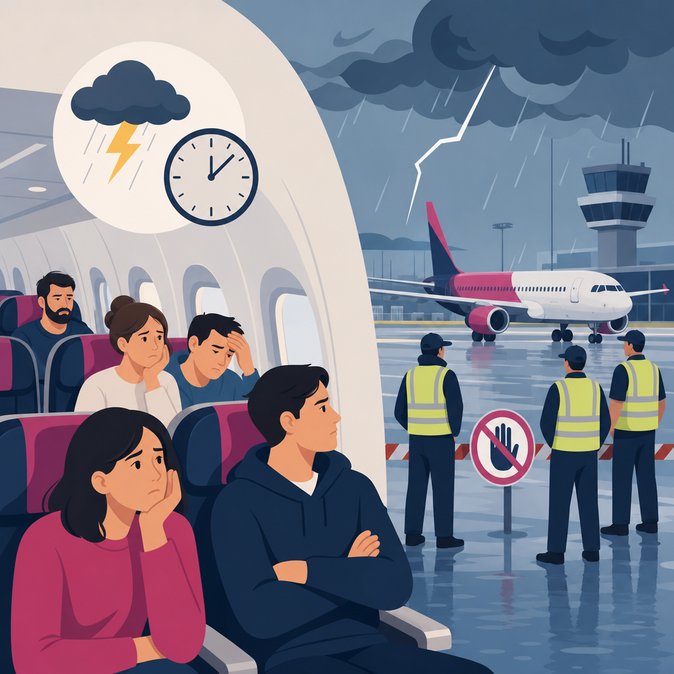
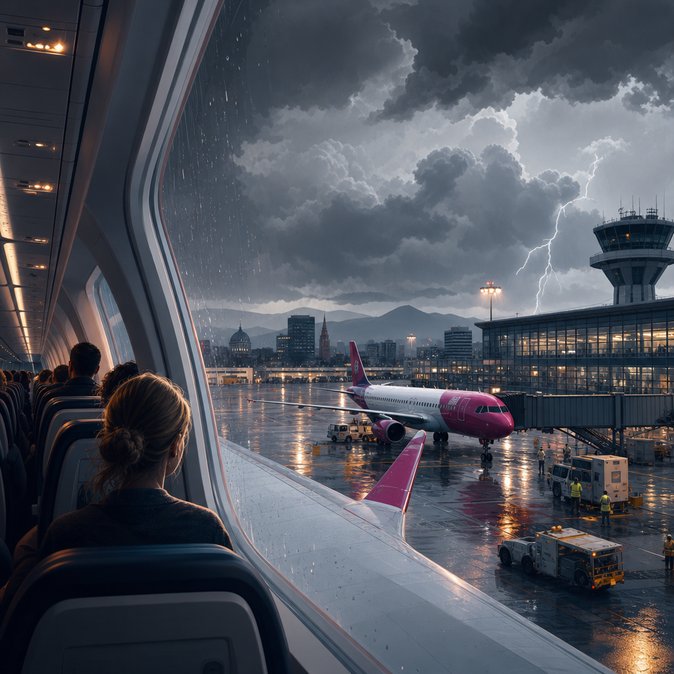
As storms lashed northern Italy on the evening of 28 May and strike preparations emptied staff rosters, passengers on flight W6 3813 from Bergamo – Orio al Serio (BGY) to Bucharest endured a six-hour ordeal that has since gone viral on Italian social media. According to eyewitness accounts reported by Corriere della Sera, the Airbus A321 boarded on time around 16:00 but remained parked on the apron until nearly 22:30. Cabin crew told passengers the aircraft could not taxi because ground staff were both short-handed and juggling weather-related runway closures. With catering already loaded, the airline refused to reopen the doors, citing security protocol, and obliged passengers to pay for drinking water after their complimentary stock ran out.
Orio al Serio is Italy’s third-busiest airport for low-cost carriers and a critical feeder for the Lombardy manufacturing belt. Business travellers heading to early-morning factory visits in Cluj-Napoca or Sofia often choose the evening wave of eastern-European departures to avoid an overnight stay. The six-hour delay forced many to miss connecting ground transport and violate the EU posted-workers rest rules, according to logistics firm DHL Freight, which had nine technicians on board.
Amid such uncertainty, travellers should also check that their travel documents are in flawless order before departure. VisaHQ’s online portal (https://www.visahq.com/italy/) can quickly verify visa requirements, secure electronic travel authorisations and even arrange courier pickups for passport renewals, helping passengers and corporate mobility teams sidestep additional hurdles when strikes or weather disrupt already tight itineraries.
![Six-hour tarmac delay at Bergamo Orio exposes staffing gaps during Italy’s strike chaos]()
Under EU Regulation 261/2004, passengers are entitled to meals and refreshments “in reasonable relation to the waiting time” and, for delays over five hours, the option to abandon the journey with ticket reimbursement. Consumer-rights group Codacons has already announced a class action seeking €250 per person in compensation, arguing that staff shortages were foreseeable because the strike had been announced more than two weeks earlier.
For corporate mobility managers, the lesson is two-fold. First, allow generous transit buffers when scheduling assignee travel around Italian public-sector strikes: even flights the day before can face crew-rotation or handling issues. Second, remind travellers to keep physical or digital copies of boarding passes and delay notifications; these are essential for reclaiming costs under EU 261 or company travel insurance.
Employers with high-volume traffic through Bergamo should also monitor the airport’s slot-allocation bulletins, as the operator has warned of possible overnight curfews if weather and staffing disruptions persist.
The airport authority SACBO has promised an internal review and better coordination with ground-handling contractors, but unions counter that chronic understaffing—particularly among ramp agents—cannot be fixed without a new national contract. With peak summer traffic only weeks away, mobility stakeholders will watch closely whether the Orio incident is an isolated aberration or a harbinger of further chaos.
Orio al Serio is Italy’s third-busiest airport for low-cost carriers and a critical feeder for the Lombardy manufacturing belt. Business travellers heading to early-morning factory visits in Cluj-Napoca or Sofia often choose the evening wave of eastern-European departures to avoid an overnight stay. The six-hour delay forced many to miss connecting ground transport and violate the EU posted-workers rest rules, according to logistics firm DHL Freight, which had nine technicians on board.
Amid such uncertainty, travellers should also check that their travel documents are in flawless order before departure. VisaHQ’s online portal (https://www.visahq.com/italy/) can quickly verify visa requirements, secure electronic travel authorisations and even arrange courier pickups for passport renewals, helping passengers and corporate mobility teams sidestep additional hurdles when strikes or weather disrupt already tight itineraries.
Under EU Regulation 261/2004, passengers are entitled to meals and refreshments “in reasonable relation to the waiting time” and, for delays over five hours, the option to abandon the journey with ticket reimbursement. Consumer-rights group Codacons has already announced a class action seeking €250 per person in compensation, arguing that staff shortages were foreseeable because the strike had been announced more than two weeks earlier.
For corporate mobility managers, the lesson is two-fold. First, allow generous transit buffers when scheduling assignee travel around Italian public-sector strikes: even flights the day before can face crew-rotation or handling issues. Second, remind travellers to keep physical or digital copies of boarding passes and delay notifications; these are essential for reclaiming costs under EU 261 or company travel insurance.
Employers with high-volume traffic through Bergamo should also monitor the airport’s slot-allocation bulletins, as the operator has warned of possible overnight curfews if weather and staffing disruptions persist.
The airport authority SACBO has promised an internal review and better coordination with ground-handling contractors, but unions counter that chronic understaffing—particularly among ramp agents—cannot be fixed without a new national contract. With peak summer traffic only weeks away, mobility stakeholders will watch closely whether the Orio incident is an isolated aberration or a harbinger of further chaos.