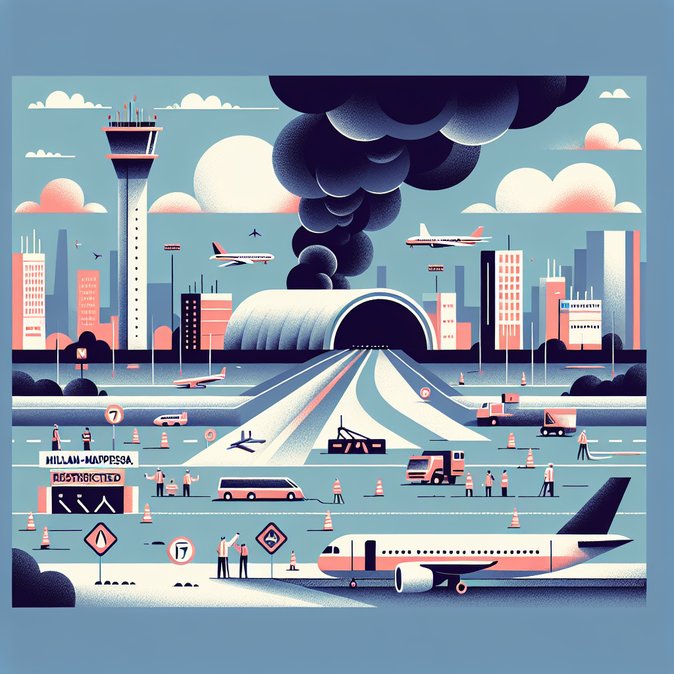
Emergency services rushed to Milan-Malpensa Airport at around 13:00 on 2 May after a short circuit in a service tunnel triggered smoke alarms beneath Terminal 1. Fire-fighters from Busto Arsizio and Somma Lombardo contained the incident within minutes and began ventilating the area, which is used mainly by suppliers and is not open to passengers. No injuries or service disruptions were reported, and the terminal continued to operate normally throughout the day.
![Smoke Incident at Milan-Malpensa Terminal 1 Highlights Airport Resilience Measures]()
For international passengers planning journeys through Italy, ensuring that travel documents are in order can be just as critical as monitoring operational updates. VisaHQ’s platform (https://www.visahq.com/italy/) streamlines visa and passport services, offers real-time status tracking and sends proactive alerts, helping travelers stay compliant and flexible when unexpected airport events like these occur.
The episode nonetheless underscores the vulnerability of Italy’s busiest intercontinental gateway just as summer schedules ramp up. Airlines operating from Malpensa are increasing frequencies by 18 % between May and August, according to aviation-data firm OAG. A seemingly minor electrical fault can therefore have outsized ripple effects if contingency protocols are not watertight. SEA, the airport’s management company, said the event validated recent investments in redundant power circuits and smoke-detection systems installed during the 2025 terminal refurbishment. Business-travel risk specialists note that Malpensa now meets EU-wide “gold standard” resilience guidelines, which require containment of fires or smoke within ten minutes and full passenger notification within fifteen. Corporate mobility managers should still remind travellers transiting through Milan to register with airline alert apps and carry travel-insurance policies that cover missed onward connections. Although Wednesday’s incident caused no delays, a similar fault in a public area could quickly escalate into terminal closures and diversions to Linate or Bergamo.
For international passengers planning journeys through Italy, ensuring that travel documents are in order can be just as critical as monitoring operational updates. VisaHQ’s platform (https://www.visahq.com/italy/) streamlines visa and passport services, offers real-time status tracking and sends proactive alerts, helping travelers stay compliant and flexible when unexpected airport events like these occur.
The episode nonetheless underscores the vulnerability of Italy’s busiest intercontinental gateway just as summer schedules ramp up. Airlines operating from Malpensa are increasing frequencies by 18 % between May and August, according to aviation-data firm OAG. A seemingly minor electrical fault can therefore have outsized ripple effects if contingency protocols are not watertight. SEA, the airport’s management company, said the event validated recent investments in redundant power circuits and smoke-detection systems installed during the 2025 terminal refurbishment. Business-travel risk specialists note that Malpensa now meets EU-wide “gold standard” resilience guidelines, which require containment of fires or smoke within ten minutes and full passenger notification within fifteen. Corporate mobility managers should still remind travellers transiting through Milan to register with airline alert apps and carry travel-insurance policies that cover missed onward connections. Although Wednesday’s incident caused no delays, a similar fault in a public area could quickly escalate into terminal closures and diversions to Linate or Bergamo.